Department of Surgery, Universitas Pelita Harapan, Tangerang, Banten, Indonesia.
Department of Medicine, Universitas Tarumanagara, Jakarta, Indonesia.
Medicine (Baltimore). 2023 Feb 22;102(8):e32938. doi: 10.1097/MD.0000000000032938.
In malnourished patients with colorectal cancer, hypoalbuminemia is common and was proposed to determine the postoperative outcome of colorectal surgery. Mounting articles published but have not been evaluated. We aim to assess the predictive value of preoperative hypoalbuminemia in patients undergoing colorectal surgery.
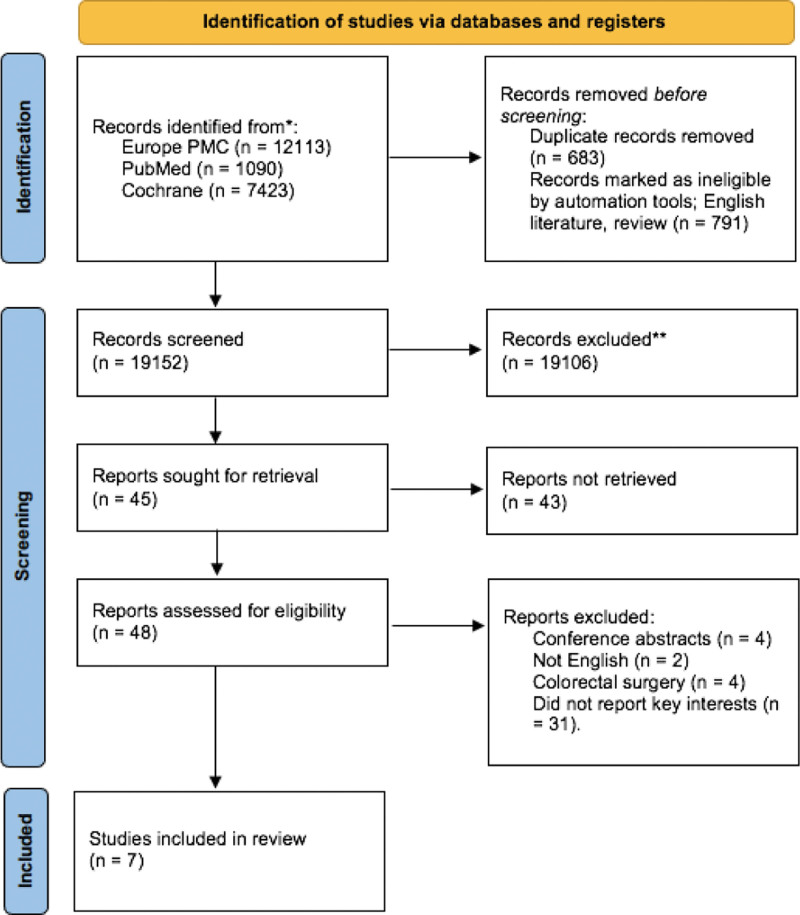
We performed a literature search from PubMed, Euro PMC, and Cochrane with the terms serum albumin, hypoalbuminemia, prognosis, outcome, colorectal cancer, and neoplasm. We also hand-searched and included any relevant papers. Hypoalbuminemia is defined as plasma albumin level < 3.5 mg/dL. We restricted the included studies to English language and adults undergoing colectomy, laparotomy, laparoscopy, or abdominoperineal resection. Any types of articles were included, except an abstract-only publication and those that did not report the key exposure or outcome of interest. The key exposures were mortality, hospitalization time, and morbid conditions (thrombosis, surgical site infection, sepsis, and wound events). We pooled the odds ratio from each included literature as effect size. The Newcastle Ottawa scale and GRADE were used to determine the quality of each included study.
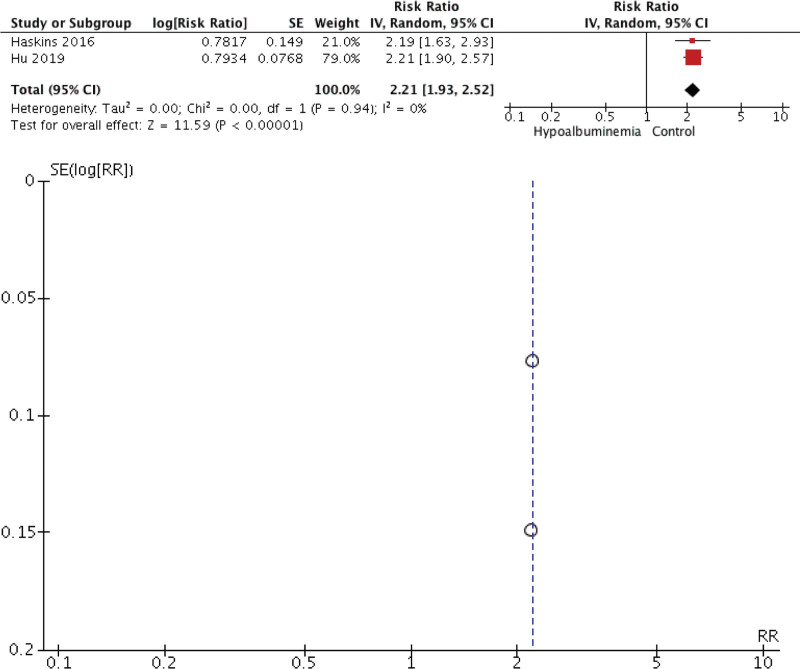
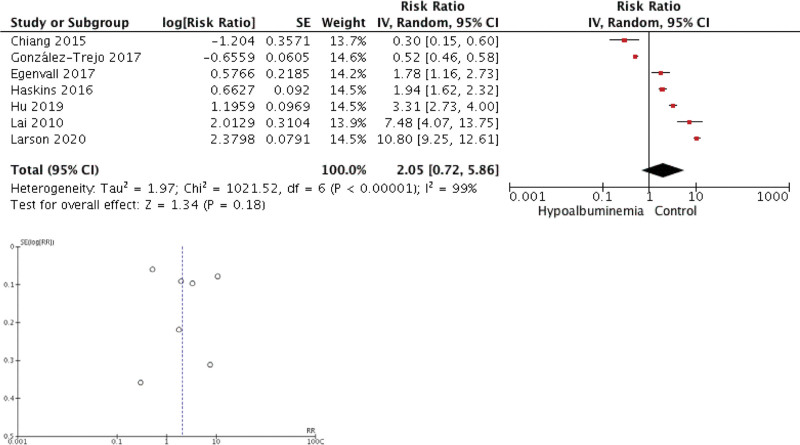
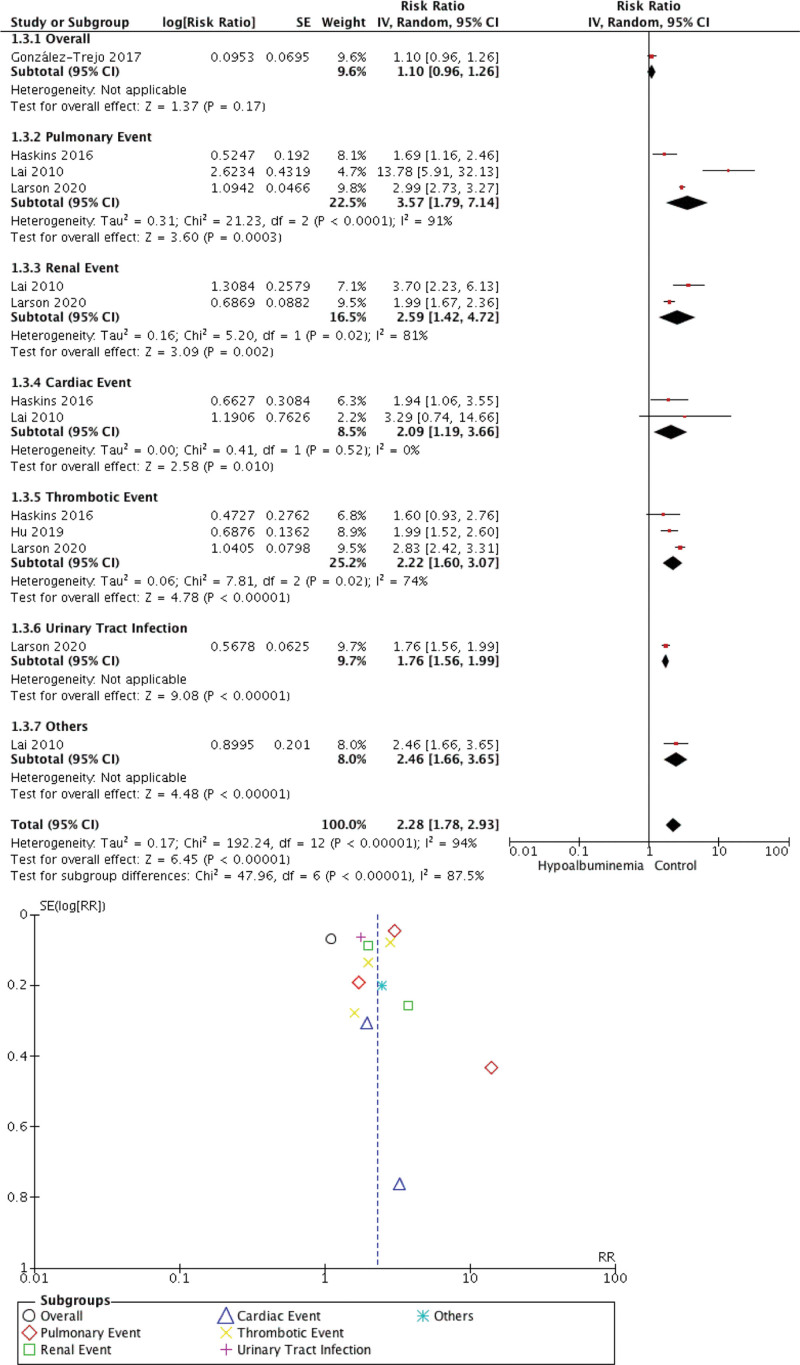
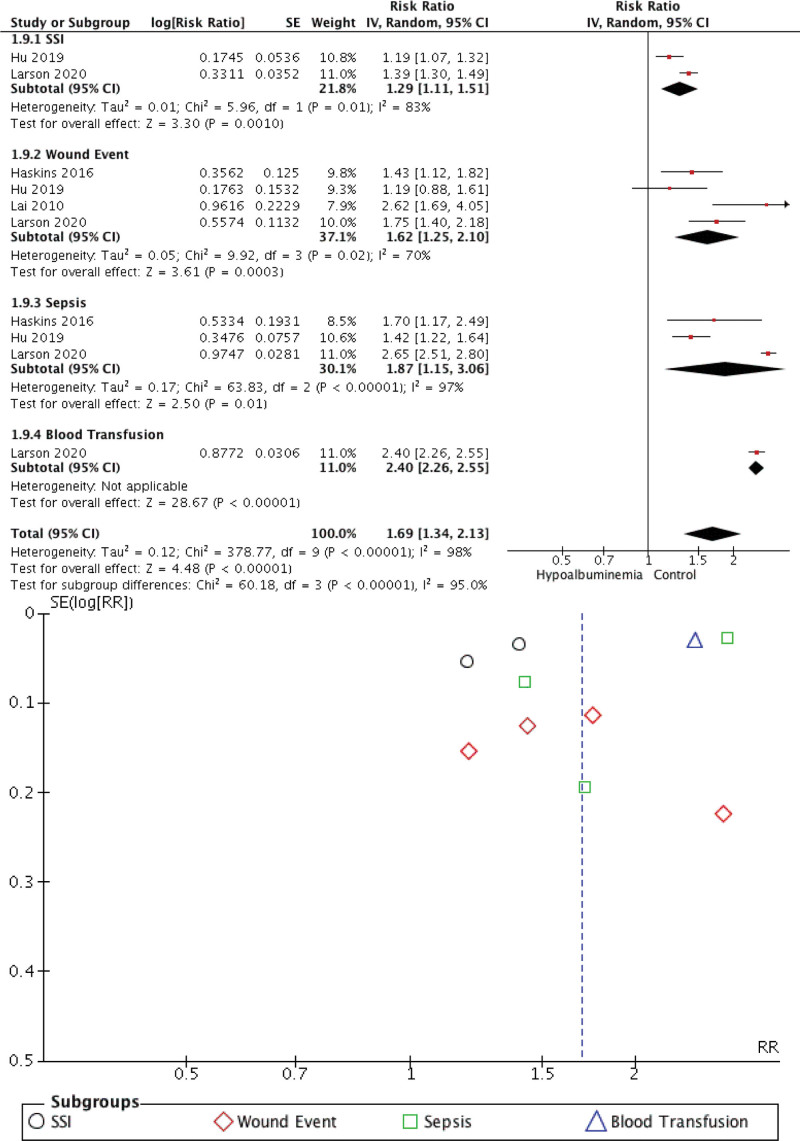
Hereof 7 observational studies (236,480 individuals) were included. Our meta-analysis found that preoperative hypoalbuminemia can predict the postoperative outcome in colorectal cancer patients. Individuals with hypoalbuminemia were not associated with 30-day mortality (risk ratio [RR] 2.05 [0.72, 5.86], P = .18, I2 = 99%) but were associated with morbidity (RR 2.28 [1.78, 2.93], P < .00001, I2 = 87.5%), surgical complication (RR 1.69 [1.34, 2.13], P < .00001, I2 = 98%), and hospitalization (RR 2.21 [1.93, 2.52], P < .00001, I2 = 0%). According to newcastle ottawa scale, the included studies are of moderate to sound quality.
The current systematic review and meta-analysis showed that preoperative hypoalbuminemia was significantly associated with morbidity, length of stay, and surgical complication but not mortality.
在患有结直肠癌的营养不良患者中,低蛋白血症很常见,并被提议来确定结直肠手术后的结果。发表了大量的文章,但尚未进行评估。我们旨在评估术前低蛋白血症对接受结直肠手术的患者的预测价值。
我们使用 PubMed、Euro PMC 和 Cochrane 中的血清白蛋白、低蛋白血症、预后、结果、结直肠癌和肿瘤等术语进行了文献检索。我们还进行了手工检索并纳入了任何相关的论文。低蛋白血症定义为血浆白蛋白水平<3.5mg/dL。我们将纳入的研究限制为英语和接受结肠切除术、剖腹术、腹腔镜或腹会阴切除术的成年人。纳入的任何类型的文章,除外仅摘要发表的和未报告关键暴露或感兴趣结局的文章。关键暴露为死亡率、住院时间和病态(血栓形成、手术部位感染、败血症和伤口事件)。我们将纳入文献的比值比作为效应量进行汇总。纽卡斯尔-渥太华量表和 GRADE 用于确定纳入研究的质量。
本研究共纳入 7 项观察性研究(236480 人)。我们的荟萃分析发现,术前低蛋白血症可以预测结直肠癌患者的术后结局。低蛋白血症个体与 30 天死亡率无关(风险比[RR]2.05[0.72,5.86],P=0.18,I2=99%),但与发病率(RR2.28[1.78,2.93],P<0.00001,I2=87.5%)、手术并发症(RR1.69[1.34,2.13],P<0.00001,I2=98%)和住院时间(RR2.21[1.93,2.52],P<0.00001,I2=0%)相关。根据纽卡斯尔-渥太华量表,纳入的研究质量为中等或良好。
本系统评价和荟萃分析表明,术前低蛋白血症与发病率、住院时间和手术并发症显著相关,但与死亡率无关。