Dong Kuan, Yu Tenghao, Chun Buongo
Graduate School of Physical Education, Myongji University, Yongin 17058, Republic of Korea.
Behav Sci (Basel). 2023 Feb 9;13(2):148. doi: 10.3390/bs13020148.
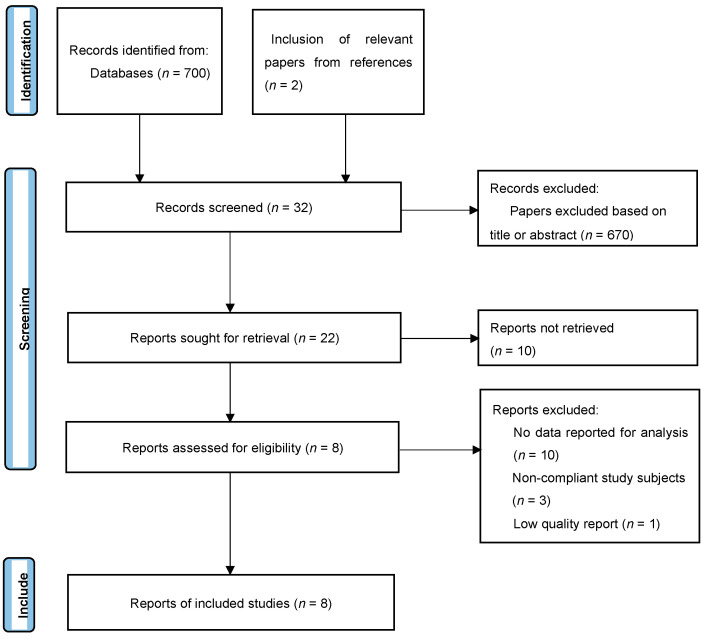
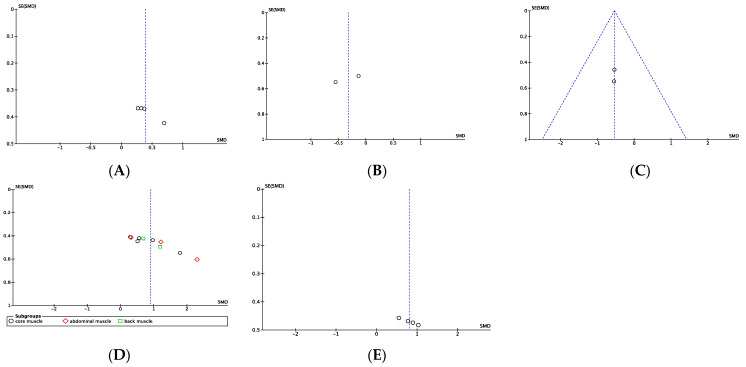
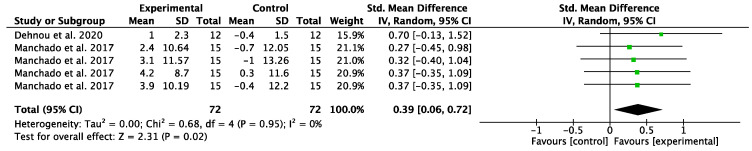
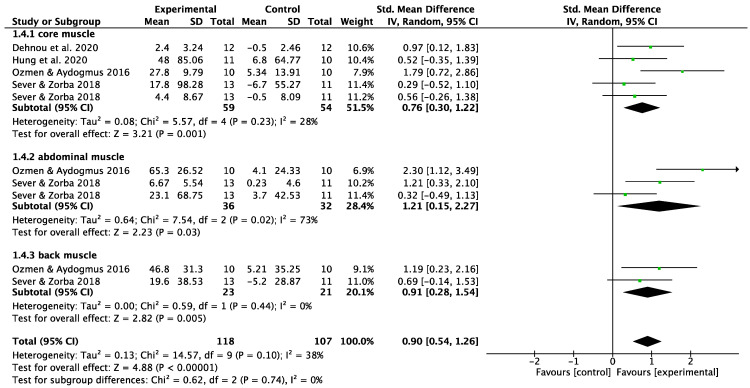
Improving athletes' performance is a major topic of interest in studies on competitive sports. Core training has been used as a training method in daily life and rehabilitation, and recently, in competitive sports, with positive results. Previous experimental studies showed that core training can improve the fitness level of athletes (e.g., balance, core stability, etc.), but offer no consistent conclusions on whether it can improve sport-specific performance. The purpose of this study was to investigate the effect of core training on the sport-specific performance of athletes through a meta-analysis. Relevant studies on randomized controlled trials were selected, and we calculated the effect size using standardized mean difference values and the random effects model. Results showed that core training had almost no effect on athletes' power and speed, while agility showed a medium effect size but no statistical significance. On the other hand, there was a large effect on general athletic performance, such as core endurance and balance. Consequently, core training had a great effect on the core endurance and balance of athletes, but little effect on sport-specific performance. This result implies that more elaborate core training programs should be designed to improve the sport-specific performance of athletes.
提高运动员的成绩是竞技体育研究中一个主要的关注话题。核心训练已被用作日常生活和康复中的一种训练方法,最近在竞技体育中也有应用,并取得了积极成果。先前的实验研究表明,核心训练可以提高运动员的体能水平(如平衡、核心稳定性等),但对于它是否能提高专项运动成绩尚无一致结论。本研究的目的是通过荟萃分析来探讨核心训练对运动员专项运动成绩的影响。我们选取了相关的随机对照试验研究,并使用标准化均值差值和随机效应模型计算效应量。结果表明,核心训练对运动员的力量和速度几乎没有影响,而敏捷性显示出中等效应量但无统计学意义。另一方面,对一般运动表现,如核心耐力和平衡有较大影响。因此,核心训练对运动员的核心耐力和平衡有很大影响,但对专项运动成绩影响较小。这一结果意味着应设计更精细的核心训练计划来提高运动员的专项运动成绩。