Yu Tongwu, Xu Yuxiong, Zhang Zijian, Sun Yongsheng, Zhong Jinghui, Ding Chuanwei
Anhui Communications Vocational & Technical College, Baohe District, No. 114, Qingnian Road, Baohe District, Hefei, 230001, China.
Capital University of Physical Education And Sports, 11 North Third Ring West Road, Haidian District, Beijing, 100191, China.
BMC Sports Sci Med Rehabil. 2025 May 3;17(1):112. doi: 10.1186/s13102-025-01159-6.
Despite widespread implementation of core training in athletic preparation, evidence regarding its effectiveness across different sports and performance domains remains fragmented. This meta-analysis examined the effects of core training on athletic performance across multiple sports, addressing limitations of previous analyses that focused on single sports or limited performance measures.
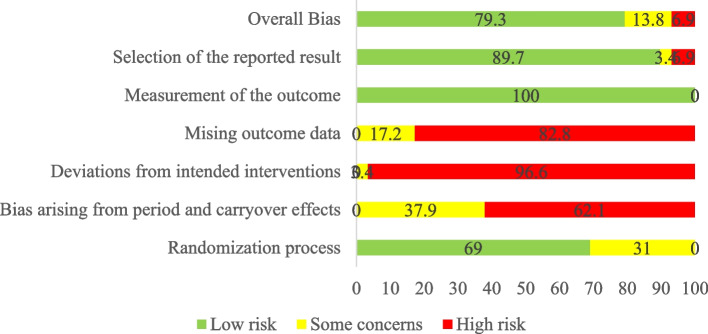
Following PRISMA guidelines, we conducted a systematic review across five databases (PubMed, Web of Science, Scopus, SPORTDiscus, and Google Scholar). We assessed methodological quality using the PEDro scale and risk of bias using the Cochrane tool. Eligibility criteria included randomized controlled trials published between 2014-2024 involving healthy athletes aged 15-25 years, with core training as the primary intervention.
From an initial 1,670 records identified, 29 studies met rigorous inclusion criteria, comprising 956 athletes aged 15-23 years. Core training demonstrated significant improvements in general athletic performance (SMD = 1.38, 95% CI [0.85, 1.82], p < 0.001), with notably strong effects on core endurance (SMD = 1.32, 95% CI [0.57, 2.08], p < 0.004) and balance (SMD = 0.99, 95% CI [0.29, 1.69], p = 0.01). Core training revealed a moderate but insignificant effects on sport-specific performance (SMD = 0.62, 95% CI [-0.08, 1.31], p = 0.084). The analysis revealed non-significant effects sport-specific outcomes: speed (SMD = -0.28 [-0.86, 0.31], p = 0.28); maximal strength (SMD = 7.57 [-7.75, 22.89], p = 0.27); flexibility (SMD = 0.48 [-0.76, 1.73], p = 0.3); change of direction (SMD = 0.10 [-0.56, 0.76], p = 0.69); technical skill performance (SMD = 0.71 [-4.38, 5.81], p = 0.75); throwing velocity/distance (SMD = 1.52 [-0.43, 3.48], p = 0.1) and vertical jump height (SMD = 0.90 [-0.23, 2.03], p = 0.1). The high heterogeneity across outcomes (I = 37-100%) indicates that training responses vary substantially depending on competitive level, intervention duration, and sport-specific contexts, suggesting the need for carefully tailored core training approaches.
This analysis demonstrates that core training effectively improves foundational athletic qualities but shows variable effects on sport-specific performance measures. The findings suggest core training should be integrated with sport-specific training for optimal performance enhancement. Future research should address the high heterogeneity observed by implementing standardized protocols and examining long-term training effects.
尽管核心训练在运动准备中已广泛应用,但关于其在不同运动和表现领域有效性的证据仍然零散。本荟萃分析考察了核心训练对多种运动项目运动表现的影响,解决了以往专注于单一运动或有限表现指标分析的局限性。
遵循PRISMA指南,我们对五个数据库(PubMed、Web of Science、Scopus、SPORTDiscus和谷歌学术)进行了系统综述。我们使用PEDro量表评估方法学质量,使用Cochrane工具评估偏倚风险。纳入标准包括2014 - 2024年间发表的随机对照试验,涉及15 - 25岁的健康运动员,以核心训练作为主要干预措施。
从最初识别的1670条记录中,29项研究符合严格的纳入标准,包括956名15 - 23岁的运动员。核心训练在一般运动表现方面有显著改善(标准化均数差[SMD]=1.38,95%置信区间[CI][0.85, 1.82],p<0.001),对核心耐力(SMD = 1.32,95% CI [0.57, 2.08],p<0.004)和平衡(SMD = 0.99,95% CI [0.29, 1.69],p = 0.01)有特别显著的影响。核心训练对特定运动表现有中等但不显著的影响(SMD = 0.62,95% CI [-0.08, 1.31],p = 0.084)。分析显示对特定运动结果无显著影响:速度(SMD = -0.28 [-0.86, 0.31],p = 0.28);最大力量(SMD = 7.57 [-7.75, 22.89],p = 0.27);柔韧性(SMD = 0.48 [-0.76, 1.73],p = 0.3);变向能力(SMD = 0.10 [-0.56, 0.76],p = 0.69);技术技能表现(SMD = 0.71 [-4.38, 5.81],p = 0.75);投掷速度/距离(SMD = 1.52 [-0.43, 3.48],p = 0.1)和垂直跳高度(SMD = 0.90 [-0.23, 2.03],p = 0.1)。各结果间的高异质性(I = 37 - 100%)表明,训练反应因竞技水平、干预持续时间和特定运动背景而异,这表明需要精心定制核心训练方法。
本分析表明,核心训练能有效提高基础运动素质,但对特定运动表现指标的影响各异。研究结果表明,核心训练应与特定运动训练相结合,以实现最佳的表现提升。未来的研究应通过实施标准化方案并考察长期训练效果来解决观察到的高异质性问题。