Yankouskaya Ala, Williamson Ruth, Stacey Cameron, Totman John James, Massey Heather
Department of Psychology, Faculty of Science and Technology, Bournemouth University, Poole BH12 5BB, UK.
University Hospital Dorset, NHS Foundation Trust, Bournemouth BH15 2JB, UK.
Biology (Basel). 2023 Jan 29;12(2):211. doi: 10.3390/biology12020211.
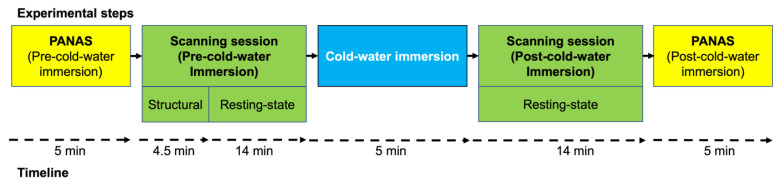
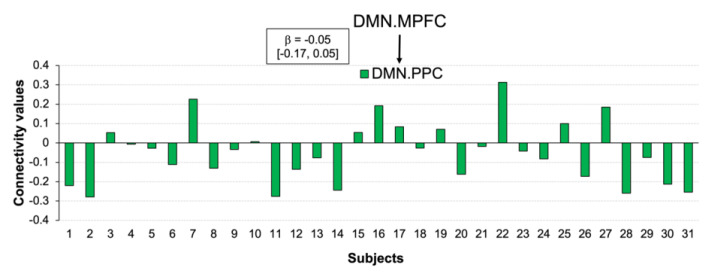
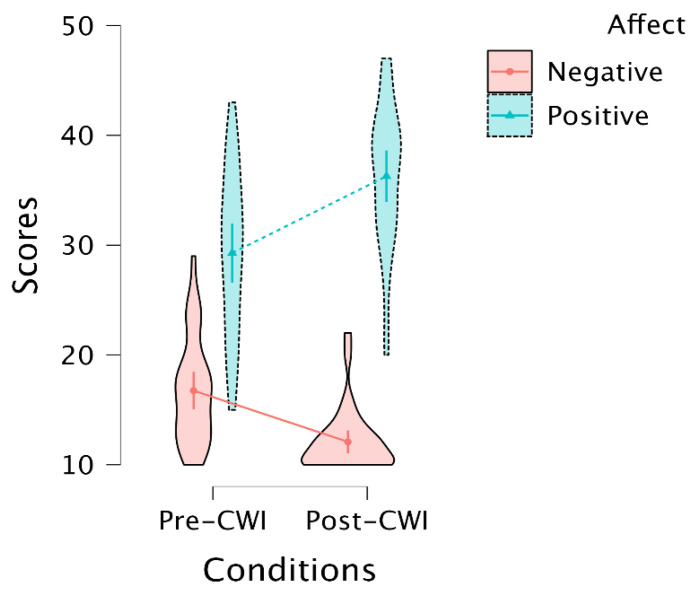
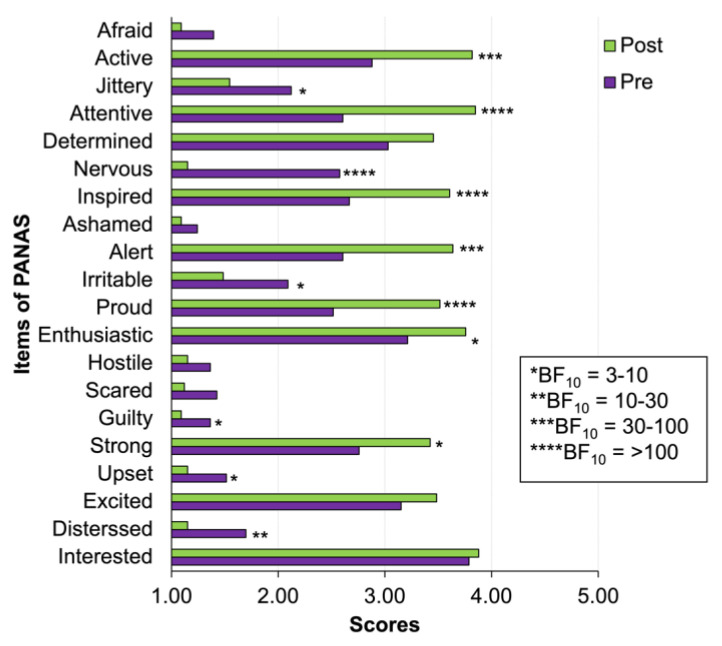
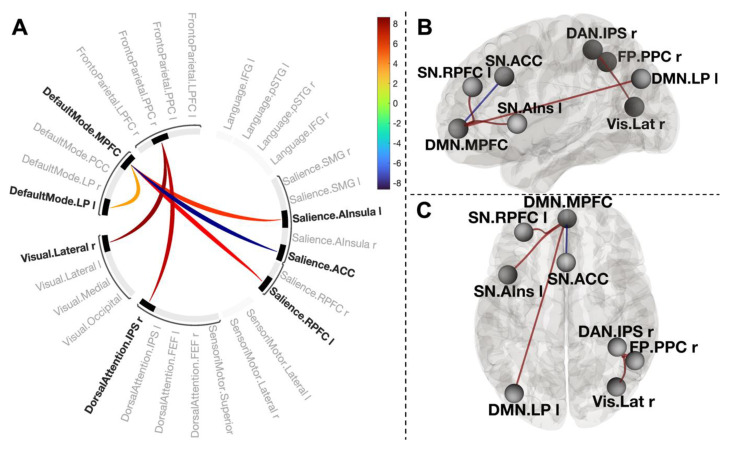
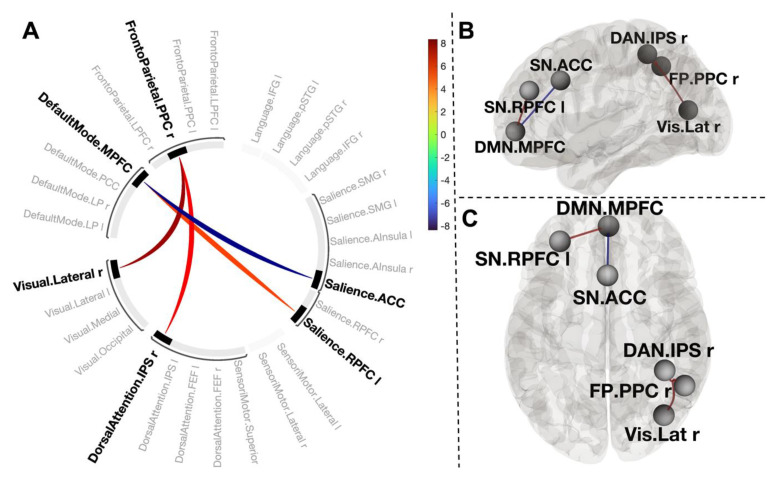
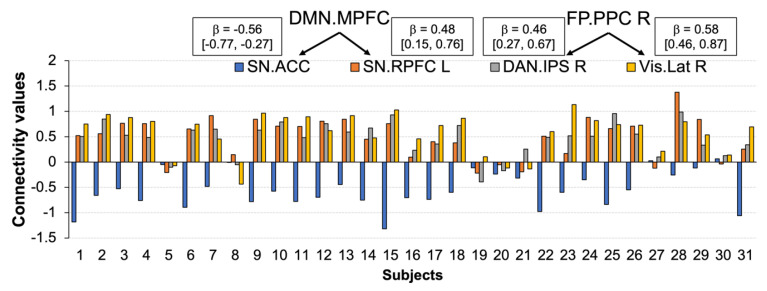
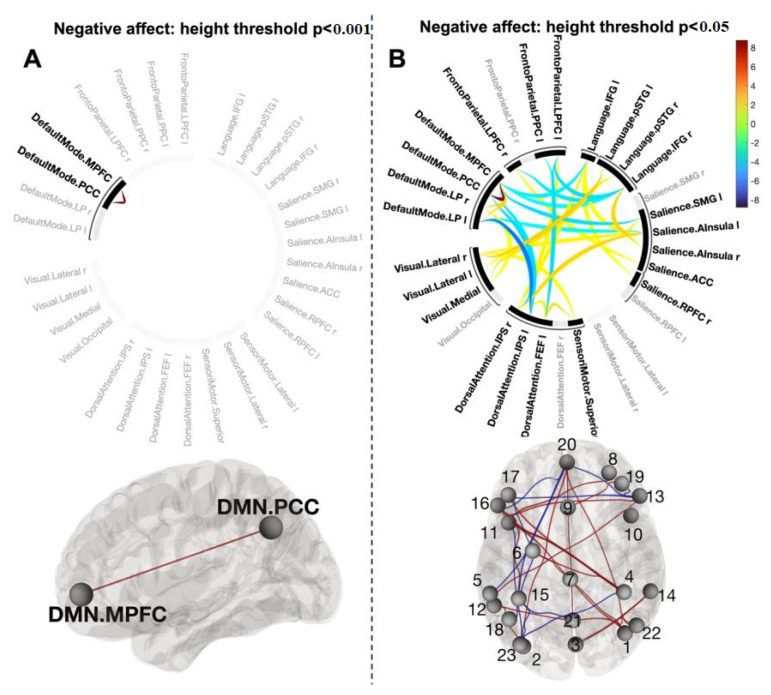
An emerging body of evidence indicates that short-term immersion in cold water facilitates positive affect and reduces negative affect. However, the neural mechanisms underlying these effects remain largely unknown. For the first time, we employed functional magnetic resonance imaging (fMRI) to identify topological clusters of networks coupled with behavioural changes in positive and negative affect after a 5 min cold-water immersion. Perceived changes in positive affect were associated with feeling more active, alert, attentive, proud, and inspired, whilst changes in negative affect reflected reductions in distress and nervousness. The increase in positive affect was supported by a unique component of interacting networks, including the medial prefrontal node of the default mode network, a posterior parietal node of the frontoparietal network, and anterior cingulate and rostral prefrontal parts of the salience network and visual lateral network. This component emerged as a result of a focal effect confined to few connections. Changes in negative affect were associated with a distributed component of interacting networks at a reduced threshold. Affective changes after cold-water immersion occurred independently, supporting the bivalence model of affective processing. Interactions between large-scale networks linked to positive affect indicated the integrative effects of cold-water immersion on brain functioning.
越来越多的证据表明,短期浸泡在冷水中有助于产生积极情绪并减少消极情绪。然而,这些影响背后的神经机制在很大程度上仍然未知。我们首次采用功能磁共振成像(fMRI)来识别在5分钟冷水浸泡后与积极和消极情绪行为变化相关的网络拓扑集群。积极情绪的感知变化与感觉更活跃、警觉、专注、自豪和受鼓舞有关,而消极情绪的变化则反映出痛苦和紧张感的减轻。积极情绪的增加得到了相互作用网络的一个独特组成部分的支持,包括默认模式网络的内侧前额叶节点、额顶网络的后顶叶节点以及突显网络和视觉外侧网络的前扣带回和喙前额叶部分。这个组成部分是由局限于少数连接的局部效应产生的。消极情绪的变化与相互作用网络在较低阈值下的分布式组成部分有关。冷水浸泡后的情绪变化是独立发生的,这支持了情感加工的二元模型。与积极情绪相关的大规模网络之间的相互作用表明了冷水浸泡对大脑功能的综合影响。