Sande Maria G, Ferreira Débora, Rodrigues Joana L, Melo Luís D R, Saragliadis Athanasios, Linke Dirk, Moreira Felismina T C, Sales Maria Goreti F, Rodrigues Ligia R
CEB-Centre of Biological Engineering, Universidade do Minho, Campus de Gualtar, 4710-057 Braga, Portugal.
LABBELS-Associate Laboratory, 4710-057 Braga, Portugal.
Bioengineering (Basel). 2023 Jan 31;10(2):178. doi: 10.3390/bioengineering10020178.
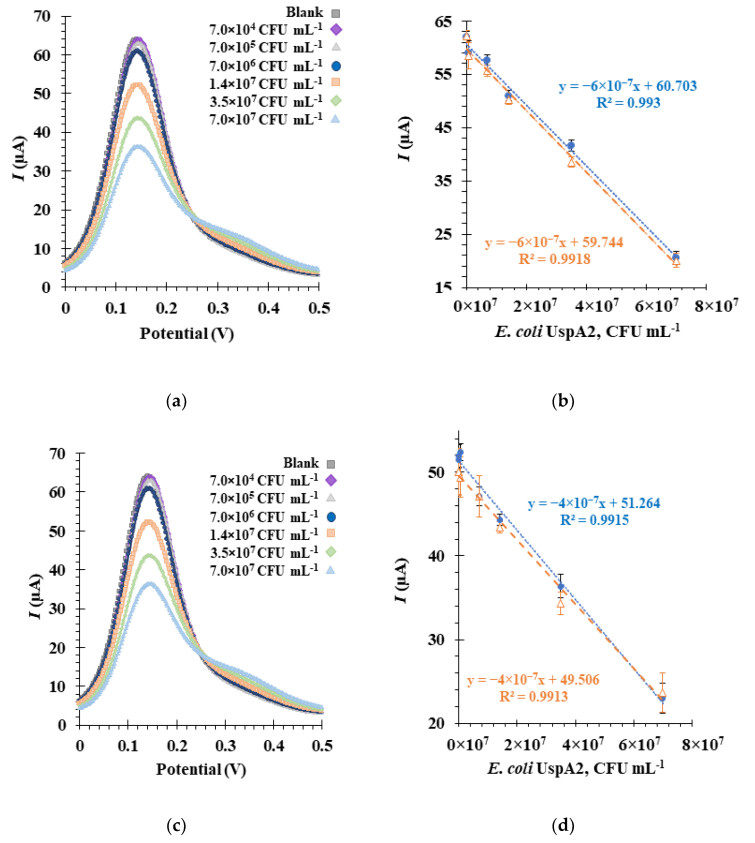
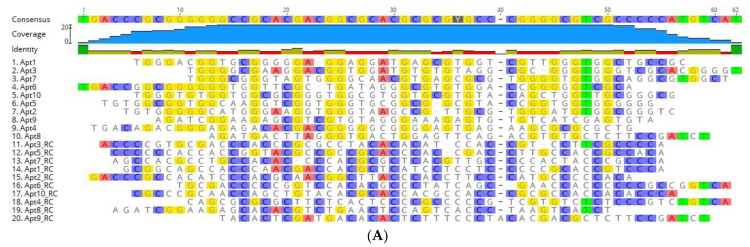
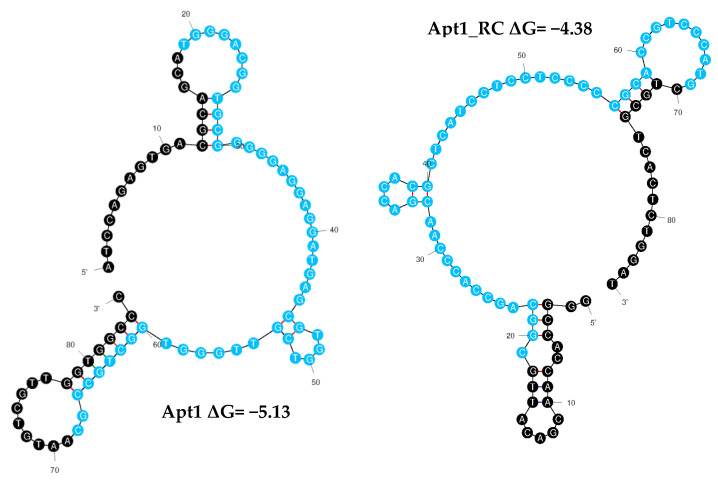
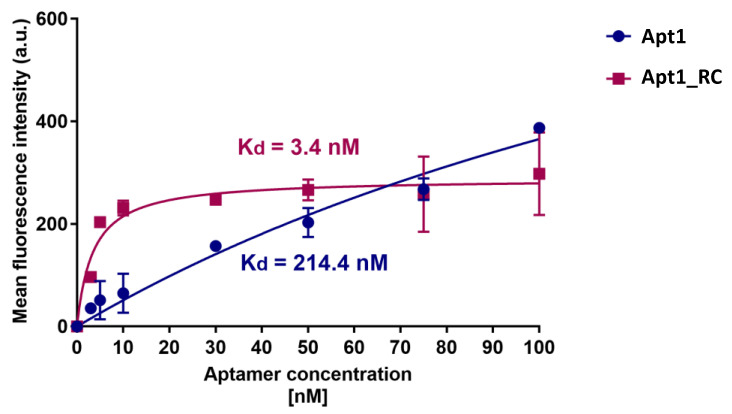
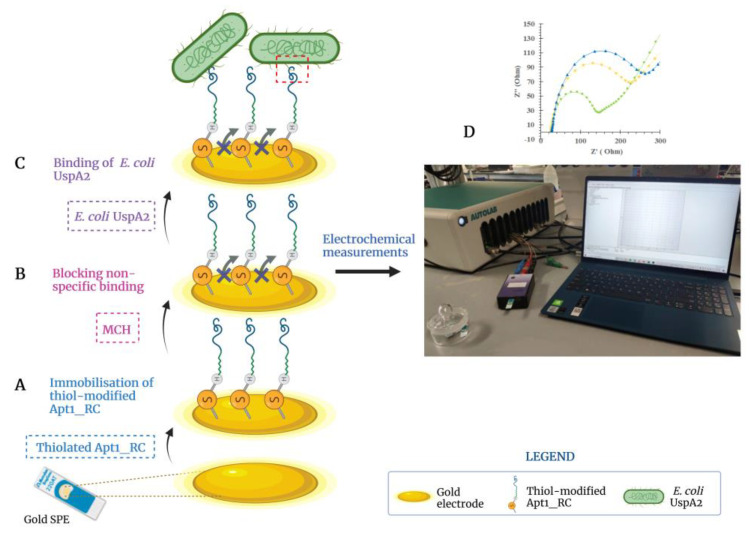
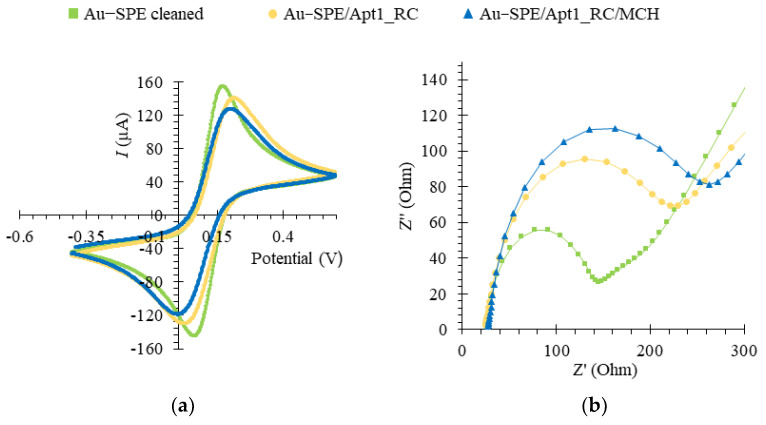
Innovative point-of-care (PoC) diagnostic platforms are desirable to surpass the deficiencies of conventional laboratory diagnostic methods for bacterial infections and to tackle the growing antimicrobial resistance crisis. In this study, a workflow was implemented, comprising the identification of new aptamers with high affinity for the ubiquitous surface protein A2 (UspA2) of the bacterial pathogen and the development of an electrochemical biosensor functionalized with the best-performing aptamer as a bioreceptor to detect UspA2. After cell-systematic evolution of ligands by exponential enrichment (cell-SELEX) was performed, next-generation sequencing was used to sequence the final aptamer pool. The most frequent aptamer sequences were further evaluated using bioinformatic tools. The two most promising aptamer candidates, Apt1 and Apt1_RC (Apt1 reverse complement), had values of 214.4 and 3.4 nM, respectively. Finally, a simple and label-free electrochemical biosensor was functionalized with Apt1_RC. The aptasensor surface modifications were confirmed by impedance spectroscopy and cyclic voltammetry. The ability to detect UspA2 was evaluated by square wave voltammetry, exhibiting a linear detection range of 4.0 × 10-7.0 × 10 CFU mL, a square correlation coefficient superior to 0.99 and a limit of detection of 4.0 × 10 CFU mL at pH 5.0. The workflow described has the potential to be part of a sensitive PoC diagnostic platform to detect and quantify from biological samples.
创新的即时检测(PoC)诊断平台有望克服传统实验室诊断方法在细菌感染检测方面的不足,并应对日益严重的抗菌药物耐药性危机。在本研究中,实施了一个工作流程,包括鉴定对细菌病原体普遍存在的表面蛋白A2(UspA2)具有高亲和力的新适体,以及开发一种以表现最佳的适体作为生物受体功能化的电化学生物传感器来检测UspA2。在通过指数富集进行细胞配体系统进化(cell-SELEX)后,使用下一代测序对最终的适体库进行测序。使用生物信息学工具进一步评估最常见的适体序列。两个最有前景的适体候选物Apt1和Apt1_RC(Apt1反向互补序列)的解离常数分别为214.4和3.4 nM。最后,用Apt1_RC对一种简单的无标记电化学生物传感器进行功能化。通过阻抗谱和循环伏安法确认了适体传感器的表面修饰。通过方波伏安法评估检测UspA2的能力,在pH 5.0时,线性检测范围为4.0×10 - 7.0×10 CFU/mL,平方相关系数优于0.99,检测限为4.0×10 CFU/mL。所描述的工作流程有可能成为一个灵敏的PoC诊断平台的一部分,用于从生物样品中检测和定量(此处原文似乎不完整)。