Division of Orthopaedic Surgery, Department of Surgery, University of Alberta, Edmonton, AB T6G 2B7, Canada.
Faculty of Medicine and Dentistry, University of Alberta, Edmonton, AB T6G 2R7, Canada.
Biomolecules. 2023 Feb 20;13(2):398. doi: 10.3390/biom13020398.
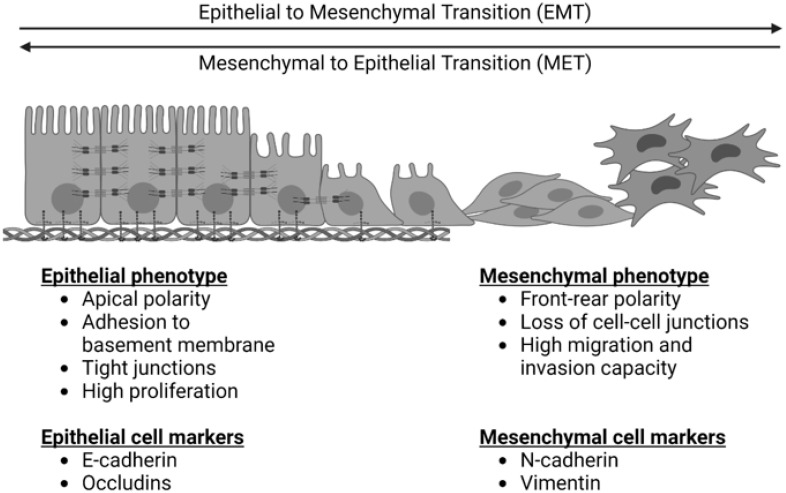
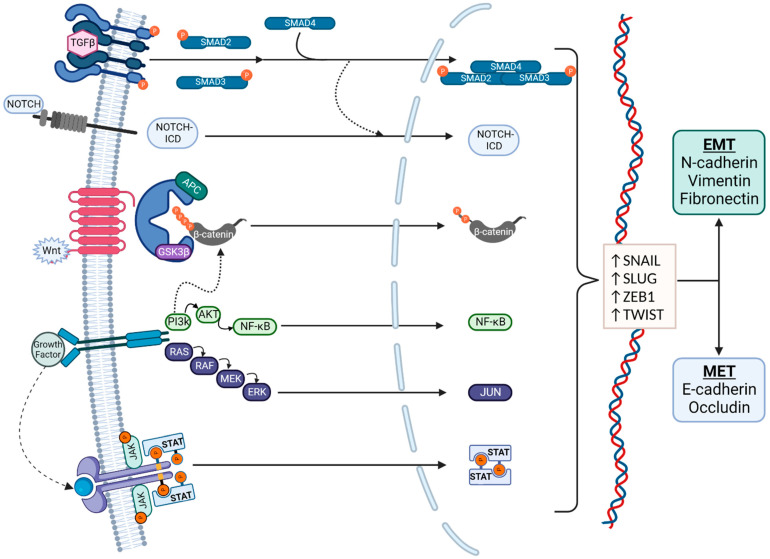
The epithelial to mesenchymal transition (EMT) is a cellular process that has been linked to the promotion of aggressive cellular features in many cancer types. It is characterized by the loss of the epithelial cell phenotype and a shift to a more mesenchymal phenotype and is accompanied by an associated change in cell markers. EMT is highly complex and regulated via multiple signaling pathways. While the importance of EMT is classically described for carcinomas-cancers of epithelial origin-it has also been clearly demonstrated in non-epithelial cancers, including osteosarcoma (OS), a primary bone cancer predominantly affecting children and young adults. Recent studies examining EMT in OS have highlighted regulatory roles for multiple proteins, non-coding nucleic acids, and components of the tumor micro-environment. This review serves to summarize these experimental findings, identify key families of regulatory molecules, and identify potential therapeutic targets specific to the EMT process in OS.
上皮-间充质转化(EMT)是一个细胞过程,与许多癌症类型中促进侵袭性细胞特征有关。它的特征是上皮细胞表型的丧失和向更间质表型的转变,并伴有细胞标志物的相关变化。EMT 非常复杂,受多种信号通路调节。虽然 EMT 的重要性在经典上被描述为上皮来源的癌——癌,但它也在非上皮性癌症中得到了明确的证明,包括骨肉瘤(OS),这是一种主要影响儿童和青少年的原发性骨癌。最近研究 EMT 在骨肉瘤中的作用的研究强调了多种蛋白质、非编码核酸和肿瘤微环境成分的调节作用。这篇综述旨在总结这些实验发现,确定关键的调节分子家族,并确定骨肉瘤 EMT 过程中特定的潜在治疗靶点。