Frantzi Maria, Culig Zoran, Heidegger Isabel, Mokou Marika, Latosinska Agnieszka, Roesch Marie C, Merseburger Axel S, Makridakis Manousos, Vlahou Antonia, Blanca-Pedregosa Ana, Carrasco-Valiente Julia, Mischak Harald, Gomez-Gomez Enrique
Department of Biomarker Research, Mosaiques Diagnostics GmbH, 30659 Hannover, Germany.
Experimental Urology Department of Urology, Medical University of Innsbruck, 6020 Innsbruck, Austria.
Cancers (Basel). 2023 Feb 11;15(4):1166. doi: 10.3390/cancers15041166.
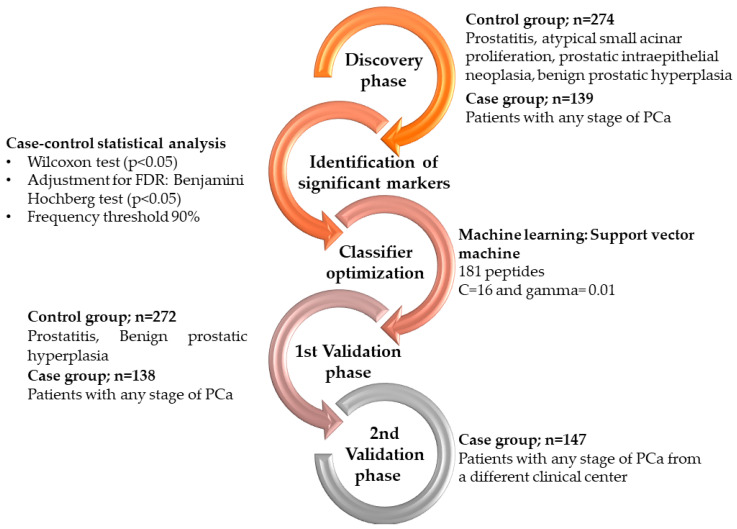
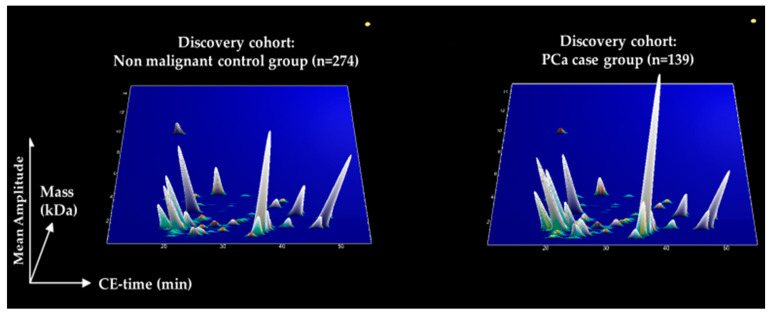
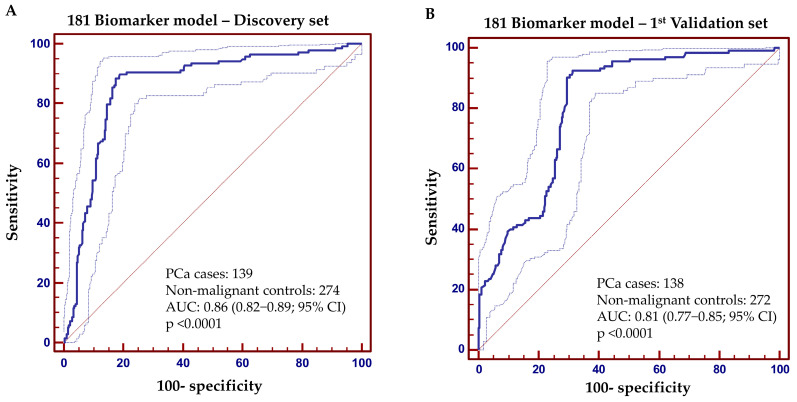
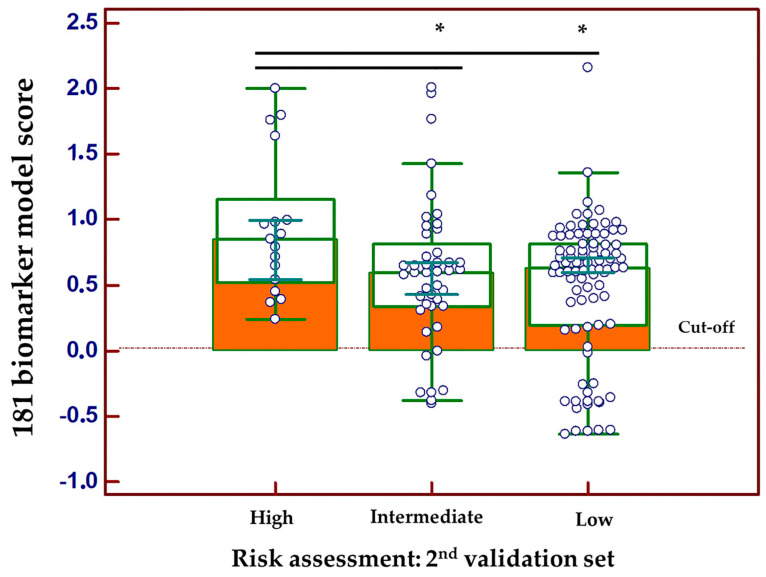
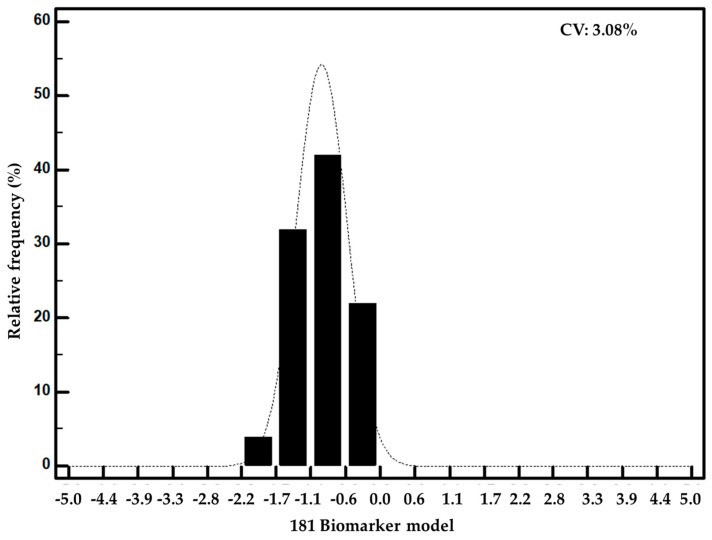
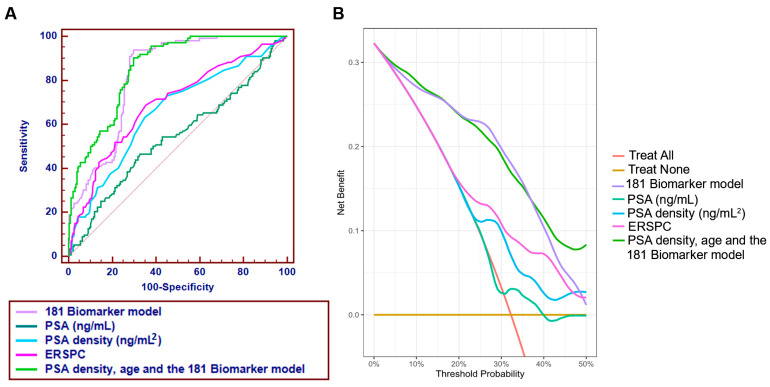
(1) Background: Prostate cancer (PCa) is the most frequently diagnosed cancer in men. Wide application of prostate specific antigen test has historically led to over-treatment, starting from excessive biopsies. Risk calculators based on molecular and clinical variables can be of value to determine the risk of PCa and as such, reduce unnecessary and invasive biopsies. Urinary molecular studies have been mostly focusing on sampling after initial intervention (digital rectal examination and/or prostate massage). (2) Methods: Building on previous proteomics studies, in this manuscript, we aimed at developing a biomarker model for PCa detection based on urine sampling without prior intervention. Capillary electrophoresis coupled to mass spectrometry was applied to acquire proteomics profiles from 970 patients from two different clinical centers. (3) Results: A case-control comparison was performed in a training set of 413 patients and 181 significant peptides were subsequently combined by a support vector machine algorithm. Independent validation was initially performed in 272 negative for PCa and 138 biopsy-confirmed PCa, resulting in an AUC of 0.81, outperforming current standards, while a second validation phase included 147 PCa patients. (4) Conclusions: This multi-dimensional biomarker model holds promise to improve the current diagnosis of PCa, by guiding invasive biopsies.
(1) 背景:前列腺癌(PCa)是男性中最常被诊断出的癌症。前列腺特异性抗原检测的广泛应用历来导致过度治疗,最初是过度活检。基于分子和临床变量的风险计算器对于确定前列腺癌风险有价值,因此可减少不必要的侵入性活检。尿液分子研究大多集中在初始干预(直肠指检和/或前列腺按摩)后的采样。(2) 方法:基于先前的蛋白质组学研究,在本手稿中,我们旨在开发一种基于未经事先干预的尿液采样的前列腺癌检测生物标志物模型。应用毛细管电泳耦合质谱法从两个不同临床中心的970名患者中获取蛋白质组学图谱。(3) 结果:在413名患者的训练集中进行了病例对照比较,随后通过支持向量机算法组合了181种显著肽段。最初在272名前列腺癌阴性患者和138名活检确诊的前列腺癌患者中进行独立验证,AUC为0.81,优于当前标准,而第二阶段验证纳入了147名前列腺癌患者。(4) 结论:这种多维生物标志物模型有望通过指导侵入性活检来改善当前前列腺癌的诊断。