Department of Biological Chemistry, Medical School, National and Kapodistrian University of Athens, 11527 Athens, Greece.
First Department of Internal Medicine, 417 Army Equity Fund Hospital, 11521 Athens, Greece.
Genes (Basel). 2023 Feb 13;14(2):474. doi: 10.3390/genes14020474.
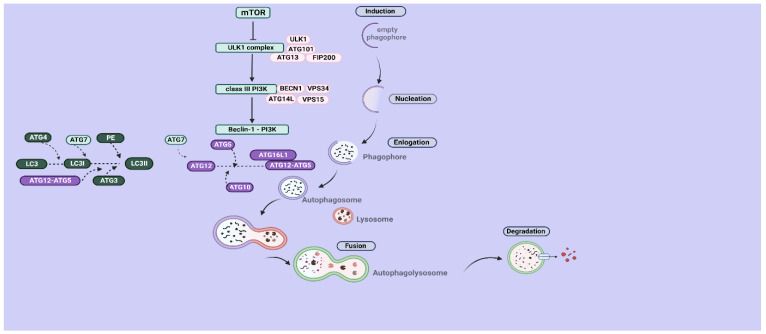
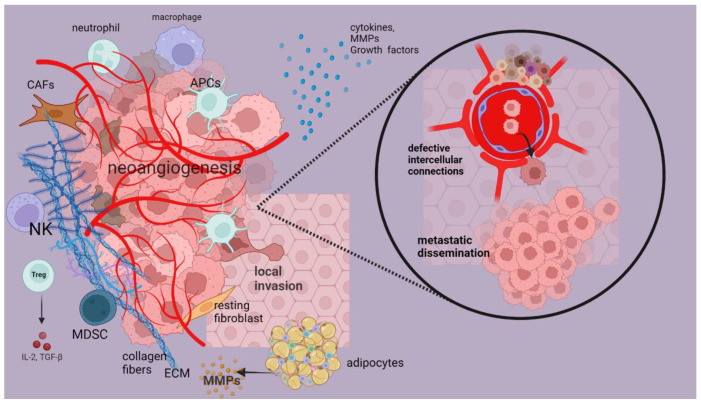
Autophagy constitutes a well-known homeostatic and catabolic process that is responsible for degradation and recycling of cellular components. It is a key regulatory mechanism for several cellular functions, whereas its dysregulation is associated with tumorigenesis, tumor-stroma interactions and resistance to cancer therapy. A growing body of evidence has proven that autophagy affects the tumor microenvironment, while it is also considered a key factor for function of several immune cells, such as APCs, T-cells, and macrophages. Moreover, it is implicated in presentation of neo-antigens of tumor cells in both MHC-I and MHC-II in dendritic cells (DCs) in functional activity of immune cells by creating T-cell memory, as well as in cross-presentation of neo-antigens for MHC-I presentation and the internalization process. Currently, autophagy has a crucial role in immunotherapy. Emergence of cancer immunotherapy has already shown some remarkable results, having changed therapeutic strategy in clinical practice for several cancer types. Despite these promising long-term responses, several patients seem to lack the ability to respond to immune checkpoint inhibitors. Thus, autophagy through neo-antigen presentation is a potential target in order to strengthen or attenuate the effects of immunotherapy against different types of cancer. This review will shed light on the recent advances and future directions of autophagy-dependent neo-antigen presentation and consequently its role in immunotherapy for malignant tumors.
自噬是一种众所周知的体内平衡和分解代谢过程,负责细胞成分的降解和回收。它是几种细胞功能的关键调节机制,而其失调与肿瘤发生、肿瘤-基质相互作用和对癌症治疗的耐药性有关。越来越多的证据证明自噬会影响肿瘤微环境,同时它也被认为是几种免疫细胞(如 APC、T 细胞和巨噬细胞)功能的关键因素。此外,自噬还涉及树突状细胞 (DC) 中 MHC-I 和 MHC-II 呈递肿瘤细胞新抗原,以及通过创造 T 细胞记忆、MHC-I 呈递的交叉呈递和内化过程来影响免疫细胞的功能活性。目前,自噬在免疫治疗中具有重要作用。癌症免疫疗法的出现已经显示出一些显著的结果,改变了几种癌症类型的临床实践中的治疗策略。尽管这些有前途的长期反应,一些患者似乎缺乏对免疫检查点抑制剂的反应能力。因此,通过新抗原呈递的自噬是一个潜在的靶点,以加强或减弱针对不同类型癌症的免疫治疗的效果。这篇综述将重点介绍自噬依赖性新抗原呈递的最新进展和未来方向,以及它在恶性肿瘤免疫治疗中的作用。