Interdisciplinary School of Health Sciences, University of Ottawa, Ottawa, ON K1N 6N5, Canada.
School of Psychology, University of Ottawa, Ottawa, ON K1N 6N5, Canada.
Int J Environ Res Public Health. 2023 Feb 13;20(4):3246. doi: 10.3390/ijerph20043246.
Little is known about how social media shapes the public's perception of autism spectrum disorder (ASD). We used a media content analysis approach to analyze the public's perception of ASD.
We conducted a YouTube search in 2019 using keywords related to ASD. The first 10 videos displayed after each search that met the eligibility criteria were selected for analysis. The final sample size of videos analyzed was 50. The top 10 comments from each respective video were selected for commentary analysis. A total of 500 comments were used for this study. Videos and comments were categorized based on sentiment, evident themes, and subthemes. In 2022, using the same key words, we conducted a subsequent YouTube search using the same criteria, except that the videos had to be 10 min or less, whereby nine videos were selected out of 70 for commentary analysis, and a total of 180 comments were used.
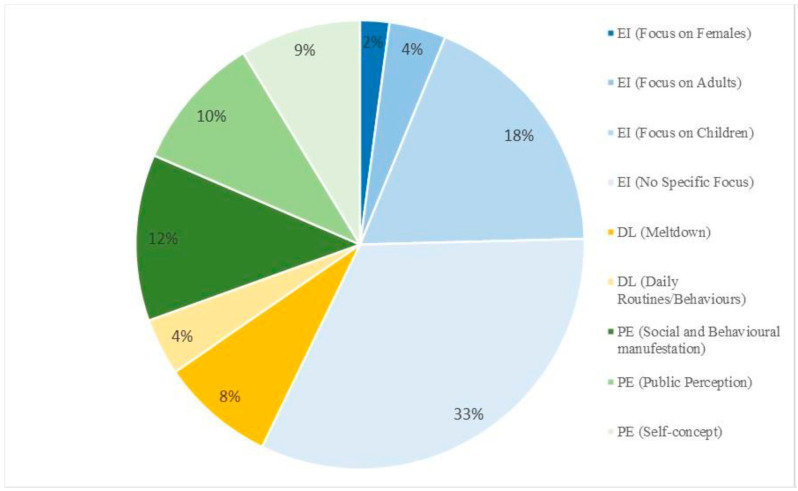
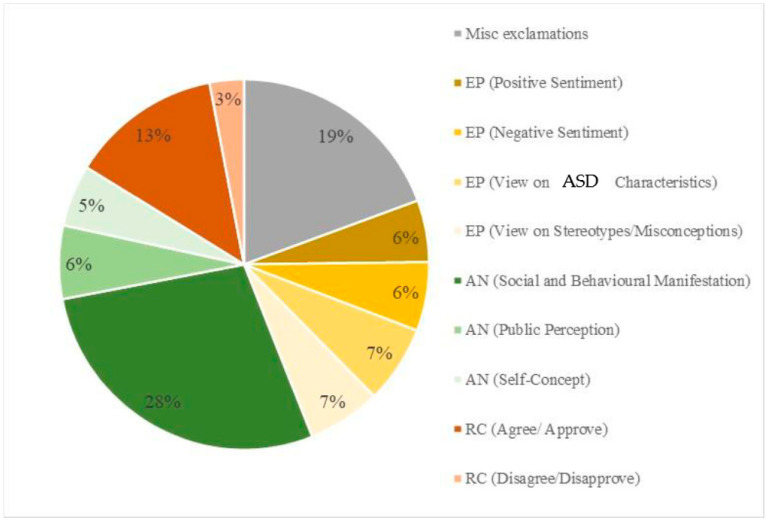
The dominant themes were "providing educational information on ASD characteristics" with the main subtheme being "no specific age or sex focus". The most common category of comments was "anecdote". The overwhelming sentiments of both the videos and comments were "mixed". Individuals with ASD were stigmatized as not being able to understand emotion. Furthermore, ASD was also stigmatized as being a monolithic condition only manifesting itself in the most severe form when autism varies in severity.
YouTube is a powerful tool that allows people and organizations to raise awareness about ASD by providing a more dynamic view on autism and fostering an environment for public empathy and support.
社交媒体如何影响公众对自闭症谱系障碍(ASD)的认知,目前我们知之甚少。本研究采用媒体内容分析法,分析公众对 ASD 的认知。
2019 年,我们使用与 ASD 相关的关键词在 YouTube 上进行搜索。选择符合入选标准的每个搜索结果中前 10 个展示的视频进行分析。最终分析的视频样本量为 50 个。从每个视频中选择排名前 10 的评论进行评论分析。共使用了 500 条评论进行本研究。根据情绪、明显的主题和子主题对视频和评论进行分类。2022 年,我们使用相同的关键词,按照相同的标准再次进行 YouTube 搜索,但视频时长必须在 10 分钟或更短,因此从 70 个视频中选出 9 个进行评论分析,共使用 180 条评论。
主要主题是“提供 ASD 特征的教育信息”,主要子主题是“无特定年龄或性别重点”。最常见的评论类别是“轶事”。视频和评论的压倒性情绪都是“混合”。自闭症患者被污名化为无法理解情感。此外,自闭症也被污名化为一种单一的病症,只有在自闭症的严重程度不同时才会表现出最严重的形式。
YouTube 是一个强大的工具,它通过提供对自闭症的更生动的看法,并为公众的同理心和支持创造环境,使个人和组织能够提高对 ASD 的认识。