Kashyap Abhijeet Shankar, Manzar Nazia, Maurya Avantika, Mishra Deendayal Das, Singh Ravinder Pal, Sharma Pawan Kumar
Molecular Biology Lab, ICAR-National Bureau of Agriculturally Important Microorganisms, Maunath Bhanjan 275103, India.
Plant Pathology Lab, ICAR-National Bureau of Agriculturally Important Microorganisms, Maunath Bhanjan 275103, India.
J Fungi (Basel). 2023 Jan 23;9(2):153. doi: 10.3390/jof9020153.
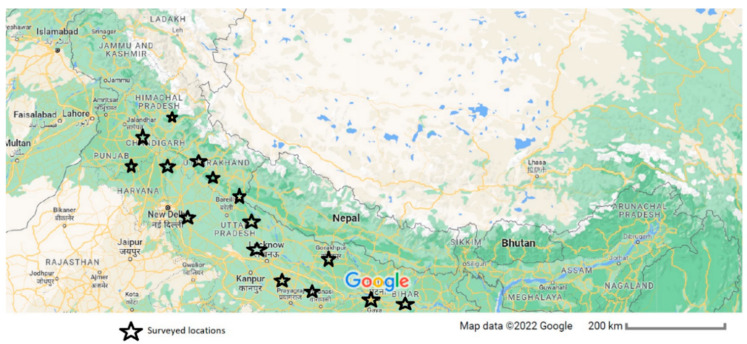
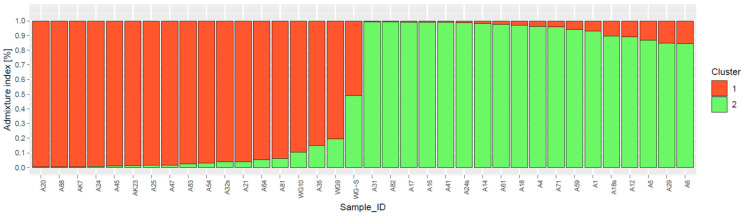
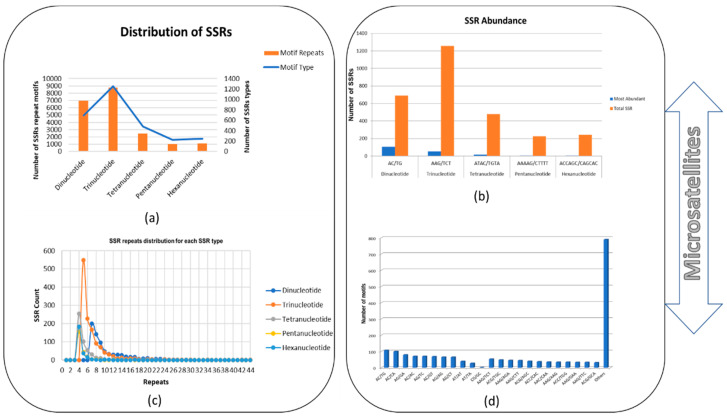
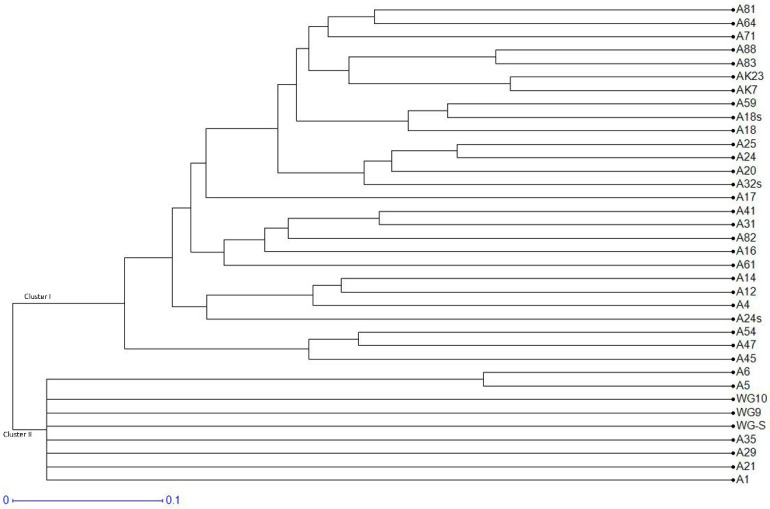
, a key pathogenic fungus in the wheat leaf blight complex, was the subject of research that resulted in the development of fifty-five polymorphic microsatellite markers. These markers were then used to examine genetic diversity and population structure in Indian geographical regions. The simple sequence repeat (SSR) like trinucleotides, dinucleotides, and tetranucleotides accounted for 43.37% (1256), 23.86% (691), and 16.54% (479) of the 2896 microsatellite repeats, respectively. There were 109 alleles produced by these loci overall, averaging 2.36 alleles per microsatellite marker. The average polymorphism information content value was 0.3451, with values ranging from 0.1319 to 0.5932. The loci's Shannon diversity varied from 0.2712 to 1.2415. These 36 isolates were divided into two main groups using population structure analysis and unweighted neighbour joining. The groupings were not based on where the isolates came from geographically. Only 7% of the overall variation was found to be between populations, according to an analysis of molecular variance. The high amount of gene flow estimate (N = 3.261 per generation) among populations demonstrated low genetic differentiation in the entire populations (F = 0.071). The findings indicate that genetic diversity is often minimal. In order to examine the genetic diversity and population structure of the populations, the recently produced microsatellite markers will be helpful. This study's findings may serve as a foundation for developing improved management plans for the leaf blight complex and spot blotch of wheat diseases in India.
是小麦叶枯病复合体中的一种关键致病真菌,是一项研究的对象,该研究产生了55个多态性微卫星标记。然后利用这些标记来研究印度地理区域的遗传多样性和种群结构。简单序列重复(SSR)如三核苷酸、二核苷酸和四核苷酸分别占2896个微卫星重复序列的43.37%(1256个)、23.86%(691个)和16.54%(479个)。这些位点总共产生了109个等位基因,每个微卫星标记平均有2.36个等位基因。平均多态性信息含量值为0.3451,范围从0.1319到0.5932。这些位点的香农多样性从0.2712到1.2415不等。使用种群结构分析和非加权邻接法将这36个分离株分为两个主要组。分组不是基于分离株的地理来源。根据分子方差分析,发现总体变异中只有7%存在于种群之间。种群间估计的高基因流(每代N = 3.261)表明整个种群的遗传分化较低(F = 0.071)。研究结果表明遗传多样性通常很小。为了研究这些种群的遗传多样性和种群结构,最近产生的微卫星标记将有所帮助。本研究的结果可为制定印度小麦叶枯病复合体和叶斑病的改进管理计划奠定基础。