Gorpenchenko Tatiana Y, Veremeichik Galina N, Shkryl Yurii N, Yugay Yulia A, Grigorchuk Valeria P, Bulgakov Dmitry V, Rusapetova Tatiana V, Vereshchagina Yulia V, Mironova Anastasiya A, Subbotin Evgeniyy P, Kulchin Yuriy N, Bulgakov Victor P
Federal Scientific Center of the East Asia Terrestrial Biodiversity, Far Eastern Branch of the Russian Academy of Sciences, 159 Stoletija Str., 690022 Vladivostok, Russia.
Institute of Automation and Control Processes, Far Eastern Branch of the Russian Academy of Sciences, 5 Radio Str., 690041 Vladivostok, Russia.
Life (Basel). 2023 Feb 14;13(2):524. doi: 10.3390/life13020524.
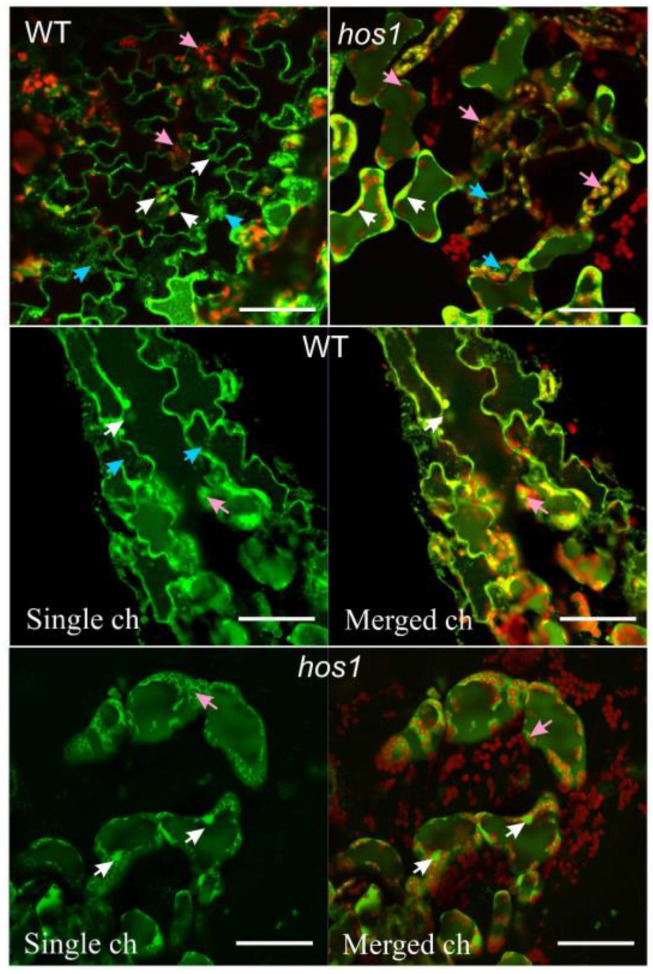
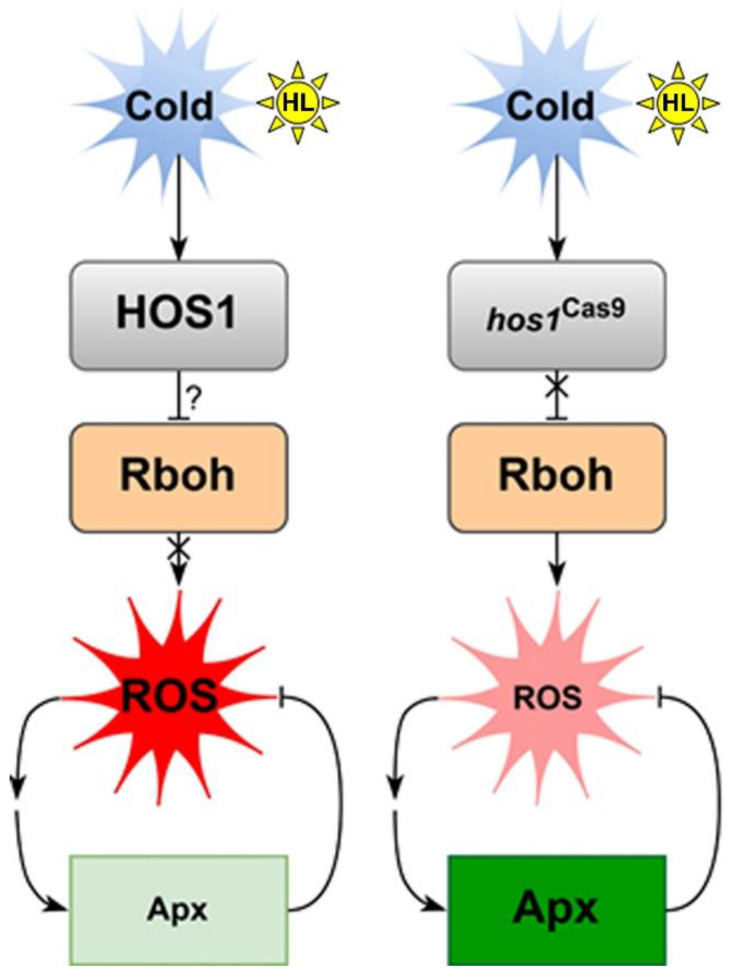
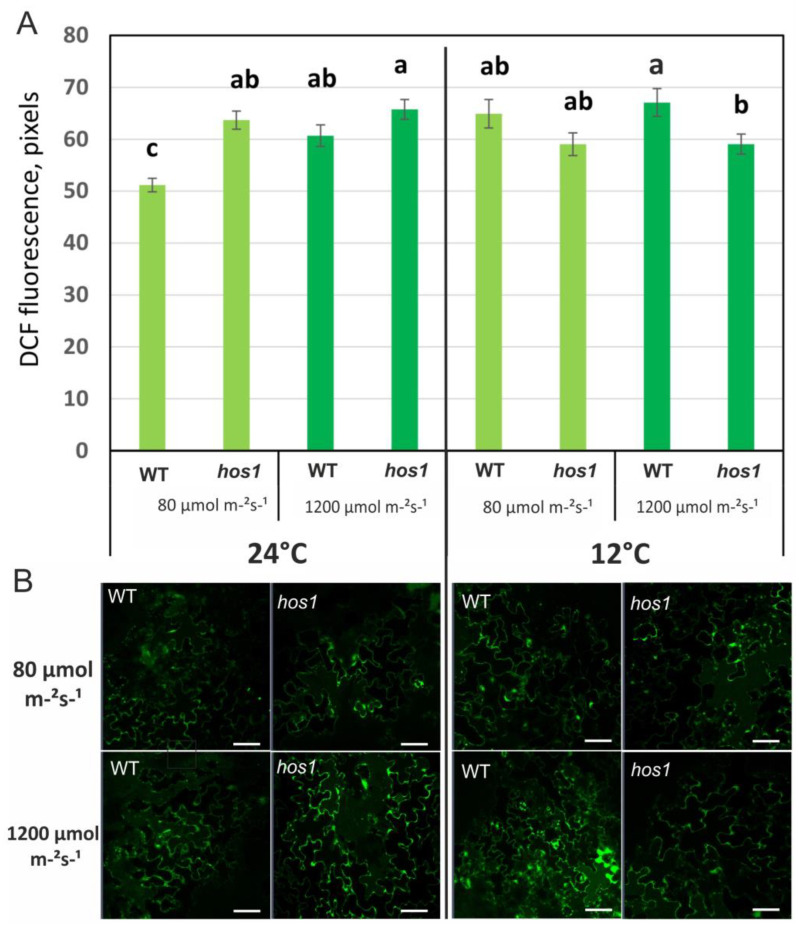
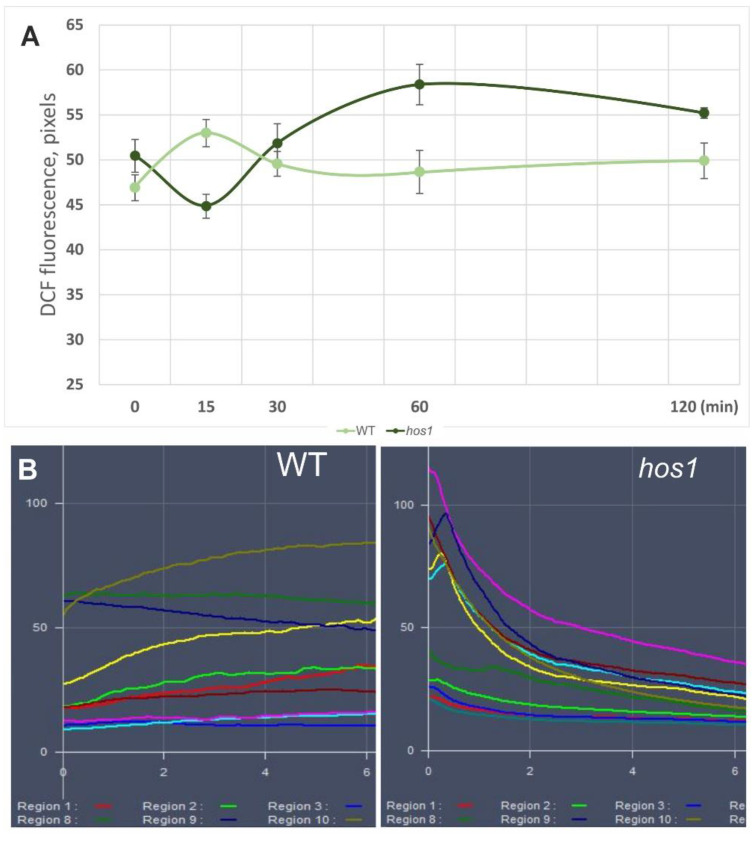
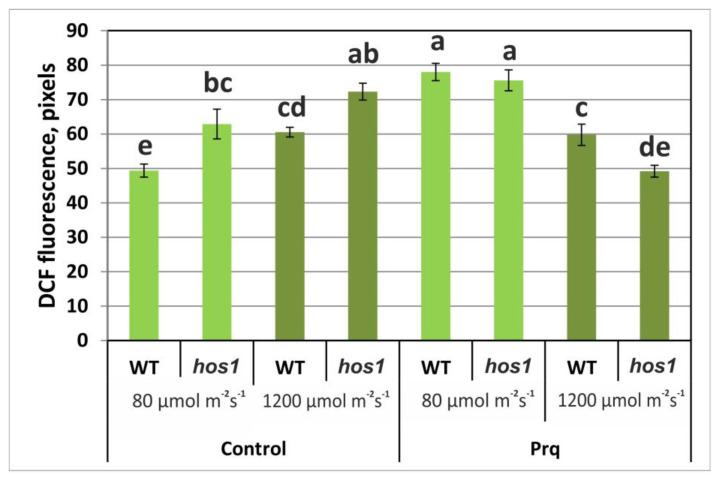
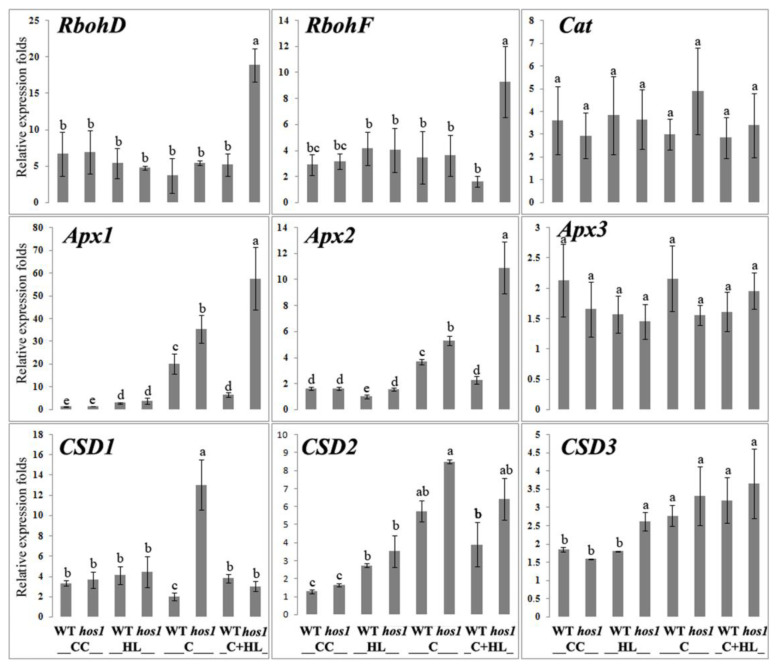
The E3 ubiquitin-protein ligase HOS1 is an important integrator of temperature information and developmental processes. HOS1 is a negative regulator of plant cold tolerance, and silencing leads to increased cold tolerance. In the present work, we studied ROS levels in plants, in which the gene was silenced by disruption of the open reading frame via CRISPR/Cas9 technology. Confocal imaging of intracellular reactive oxygen species (ROS) showed that the mutation moderately increased levels of ROS under both low and high light (HL) conditions, but wild-type (WT) and plants exhibited similar ROS levels in the dark. Visualization of single cells did not reveal differences in the intracellular distribution of ROS between WT and plants. The plants contained a high basal level of ascorbic acid, maintained a normal balance between reduced and oxidized glutathione (GSH and GSSG), and generated a strong antioxidant defense response against paraquat under HL conditions. Under cold exposure, the mutation decreased the ROS level and substantially increased the expression of the ascorbate peroxidase genes and . When plants were pre-exposed to cold and further exposed to HL, the expression of the NADPH oxidase genes and was increased in the plants but not in WT plants. -mediated changes in the level of ROS are cold-dependent and cold-independent, which implies different levels of regulation. Our data indicate that is required to maintain ROS homeostasis not only under cold conditions, but also under conditions of both low and high light intensity. It is likely that prevents the overinduction of defense mechanisms to balance growth.
E3泛素蛋白连接酶HOS1是温度信息和发育过程的重要整合者。HOS1是植物耐寒性的负调节因子,其沉默会导致耐寒性增强。在本研究中,我们通过CRISPR/Cas9技术破坏开放阅读框使HOS1基因沉默,研究了这些植物中的活性氧(ROS)水平。细胞内活性氧的共聚焦成像显示,在低光和高光(HL)条件下,HOS1突变均适度提高了ROS水平,但野生型(WT)和HOS1突变植物在黑暗中的ROS水平相似。单细胞可视化未揭示WT和HOS1突变植物之间ROS在细胞内分布的差异。HOS1突变植物含有高水平的基础抗坏血酸,维持了还原型和氧化型谷胱甘肽(GSH和GSSG)之间的正常平衡,并在高光条件下对百草枯产生了强烈的抗氧化防御反应。在冷暴露下,HOS1突变降低了ROS水平,并显著增加了抗坏血酸过氧化物酶基因APX1和APX2的表达。当植物预先暴露于低温并进一步暴露于高光时,NADPH氧化酶基因RbohD和RbohF的表达在HOS1突变植物中增加,而在WT植物中未增加。HOS1介导的ROS水平变化既依赖于寒冷,也不依赖于寒冷,这意味着不同水平的调节。我们的数据表明,HOS1不仅在寒冷条件下,而且在低光和高光强度条件下都需要维持ROS稳态。HOS1可能会防止防御机制过度诱导以平衡生长。