Möhring Steffen, Cieplik Fabian, Hiller Karl-Anton, Ebensberger Helga, Ferstl Gerlinde, Hermens Joshua, Zaparty Melanie, Witzgall Ralph, Mansfeld Ulrich, Buchalla Wolfgang, Scholz Konstantin Johannes
Department of Conservative Dentistry and Periodontology, University Hospital Regensburg, Franz-Josef-Strauß-Allee 11, 93053 Regensburg, Germany.
Institute for Molecular and Cellular Anatomy, University of Regensburg, Universitätsstraße 31, 93053 Regensburg, Germany.
Materials (Basel). 2023 Feb 11;16(4):1514. doi: 10.3390/ma16041514.
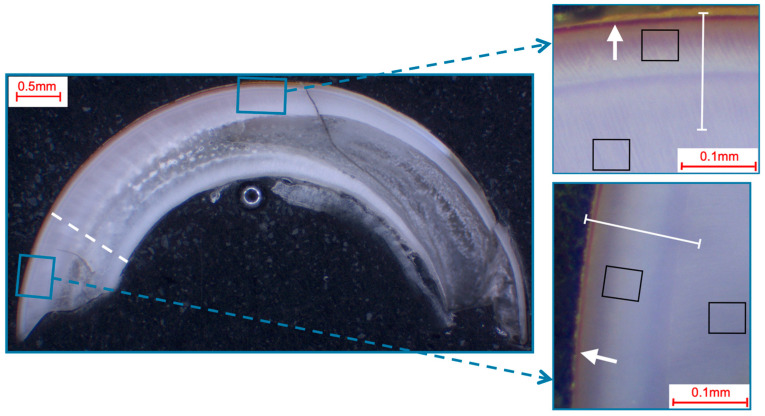
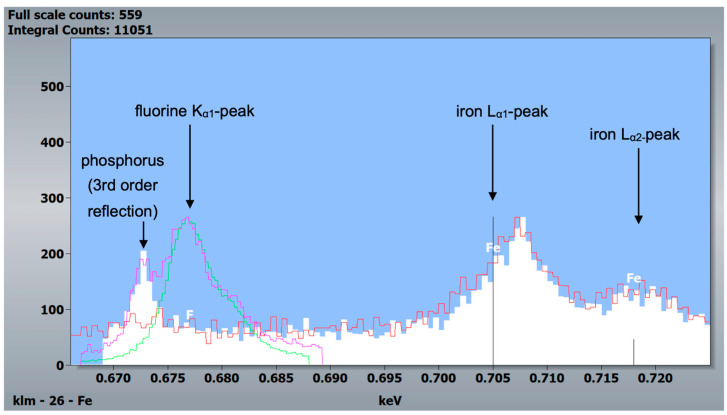
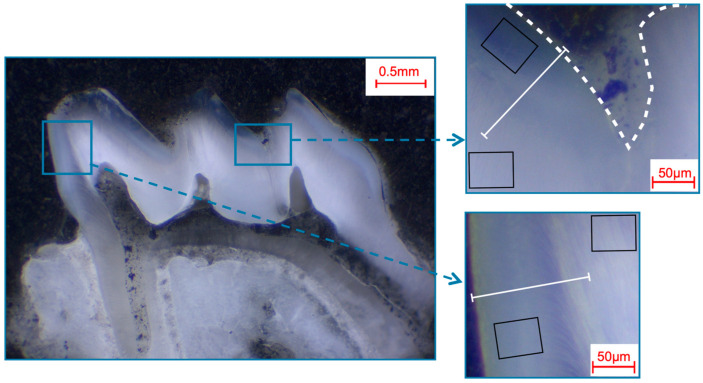
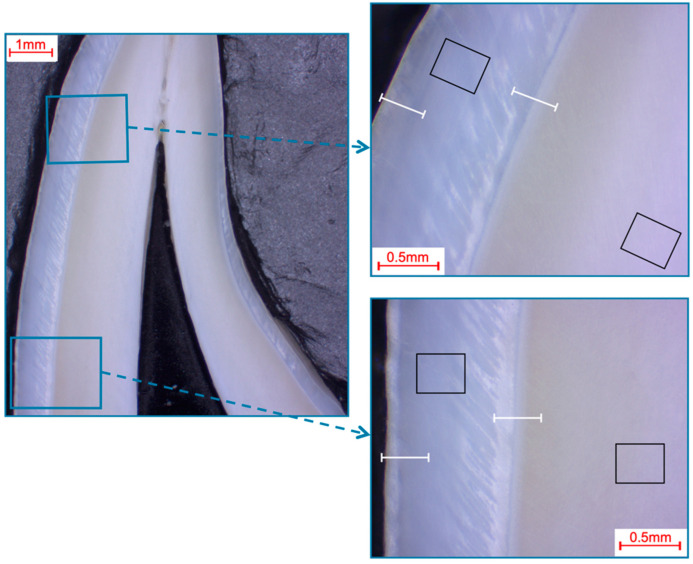
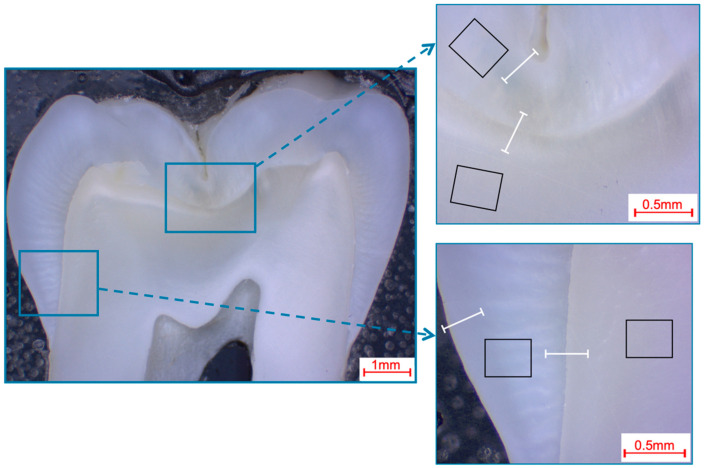
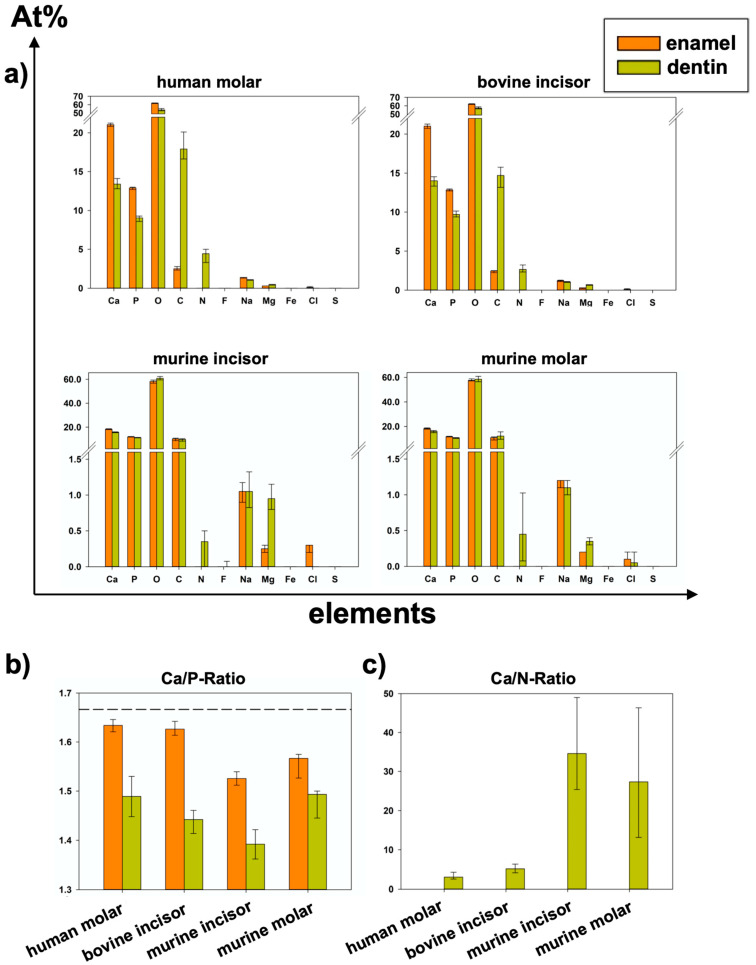
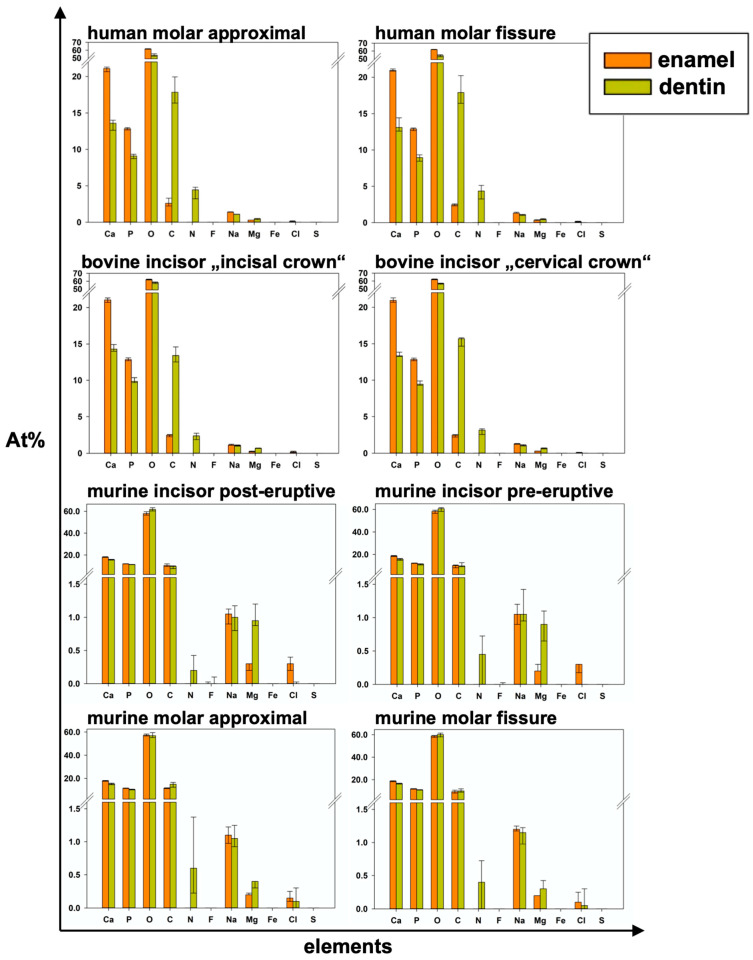
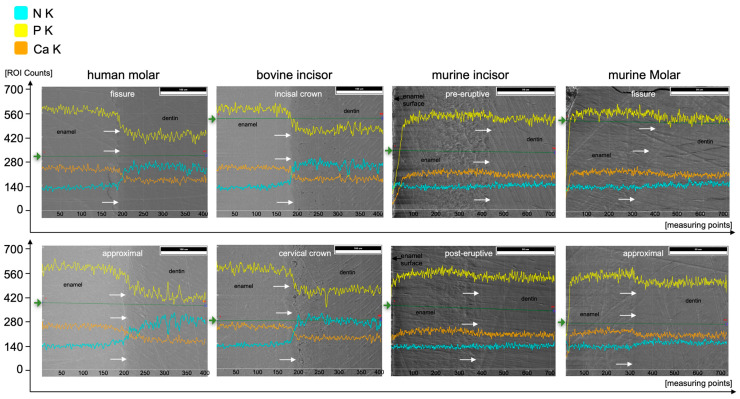
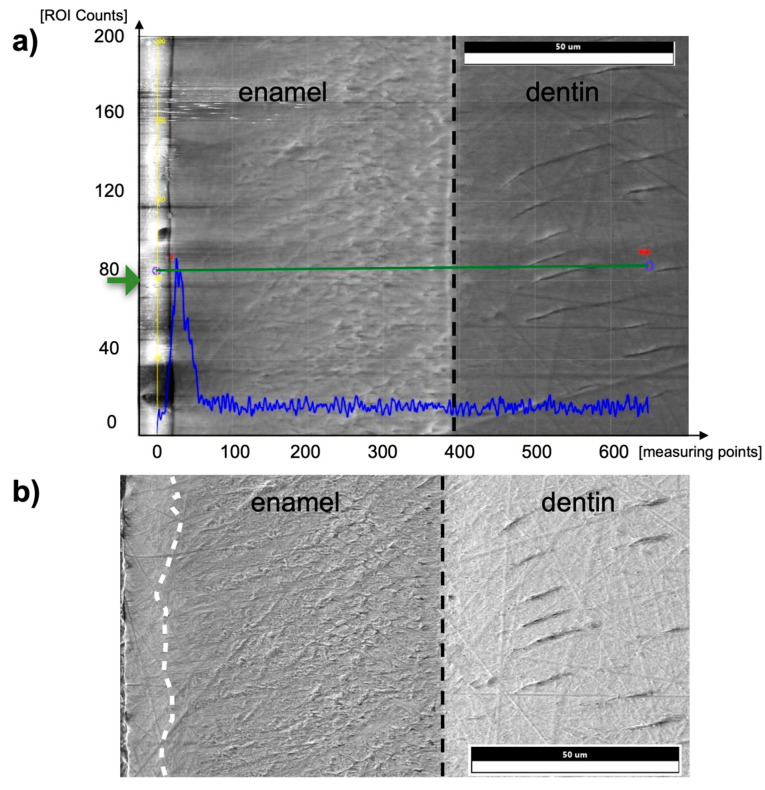
Teeth with different chemical compositions can show vastly different physical properties, so knowledge of elemental composition is required to use animal teeth as substitutes for human teeth in research. In vitro, energy dispersive X-ray spectroscopy (EDX), improved by calibration standards and SiN-window material, enables determining local elemental compositions of inorganic and organic compounds without sample destruction. Six human molars, bovine incisors, murine incisors, and murine molars were analyzed. EDX-field scans and line scans were analyzed for elements Ca, P, O, C, N, F, Na, Mg, Fe, Cl, and S. Furthermore, Ca/P- and Ca/N-Ratios were calculated. The presence of iron in murine incisor enamel was investigated using additional wavelength dispersive X-ray spectroscopy measurements (WDX) near the enamel surface. Bovine and human enamel and dentin revealed close similarities regarding elemental composition. The median (25-75% percentiles) of At%Ca was 21.1 (20.8-21.3) in human enamel, 21.0 (20.7-21.2) in bovine enamel, and in murine enamel, 18.3 (17.85-18.88) for molars and 18.35 (18.00-18.75) for incisors. In dentin, murine teeth revealed a higher At%Ca compared to human and bovine teeth. Significant differences between human and bovine teeth were found for nitrogen in dentin, with a median of 4.5 (3.3-5) At%N for human dentin and 2.7 (2.3-3.2) At%N for bovine dentin. The Ca/P-Ratio was the highest in human and bovine enamel, which did not differ significantly. Enamel from murine molars had a higher Ca/P-Ratio than murine incisors and the highest Ca/P-Ratio in dentin was observed for human teeth and murine molars (1.49). WDX revealed iron in the outer 10 µm of pre- and post-eruptive enamel of murine incisors. Pre- and post-eruptive enamel on murine incisors only differed significantly in At%Ca ( = 0.041) and At%P ( = 0.026) with both At% higher in the pre-eruptive enamel. Murine teeth differ significantly from human and bovine teeth in terms of the elemental composition of enamel and dentin.
具有不同化学成分的牙齿可能表现出截然不同的物理特性,因此在研究中若要使用动物牙齿替代人类牙齿,就需要了解其元素组成。在体外,通过校准标准和氮化硅窗口材料改进后的能量色散X射线光谱法(EDX),能够在不破坏样品的情况下测定无机和有机化合物的局部元素组成。对六颗人类磨牙、牛切牙、鼠切牙和鼠磨牙进行了分析。对EDX场扫描和线扫描分析了钙(Ca)、磷(P)、氧(O)、碳(C)、氮(N)、氟(F)、钠(Na)、镁(Mg)、铁(Fe)、氯(Cl)和硫(S)等元素。此外,还计算了Ca/P和Ca/N比率。使用额外的波长色散X射线光谱法(WDX)在牙釉质表面附近测量,研究了鼠切牙牙釉质中铁的存在情况。牛和人类的牙釉质与牙本质在元素组成方面显示出密切的相似性。人类牙釉质中Ca的原子百分比(At%Ca)中位数(25%-75%百分位数)为21.1(20.8-21.3),牛牙釉质中为21.0(20.7-21.2),鼠磨牙牙釉质中为18.3(17.85-18.88),鼠切牙牙釉质中为18.35(18.00-18.75)。在牙本质中,与人类和牛的牙齿相比,鼠牙显示出更高的At%Ca。在牙本质中的氮含量方面,人类和牛的牙齿存在显著差异,人类牙本质中At%N的中位数为4.5(3.3-5),牛牙本质中为2.7(2.3-3.2)。Ca/P比率在人类和牛的牙釉质中最高,且两者无显著差异。鼠磨牙的牙釉质Ca/P比率高于鼠切牙,而在牙本质中,人类牙齿和鼠磨牙的Ca/P比率最高(1.49)。WDX显示鼠切牙萌出前和萌出后牙釉质外层10 µm内存在铁。鼠切牙萌出前和萌出后的牙釉质仅在At%Ca(P = 0.041)和At%P(P = 0.026)上存在显著差异,且两者在萌出前牙釉质中的At%均更高。鼠牙在牙釉质和牙本质的元素组成方面与人类和牛的牙齿存在显著差异。