Rahman Tanzim Ur, Roy Hridoy, Islam Md Reazul, Tahmid Mohammed, Fariha Athkia, Mazumder Antara, Tasnim Nishat, Pervez Md Nahid, Cai Yingjie, Naddeo Vincenzo, Islam Md Shahinoor
Department of Chemical Engineering, Bangladesh University of Engineering and Technology, Dhaka 1000, Bangladesh.
Department of Civil Engineering, Louisiana Tech University, Ruston, LA 71270, USA.
Membranes (Basel). 2023 Feb 2;13(2):181. doi: 10.3390/membranes13020181.
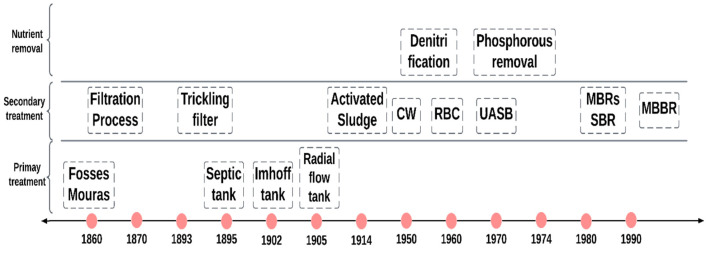
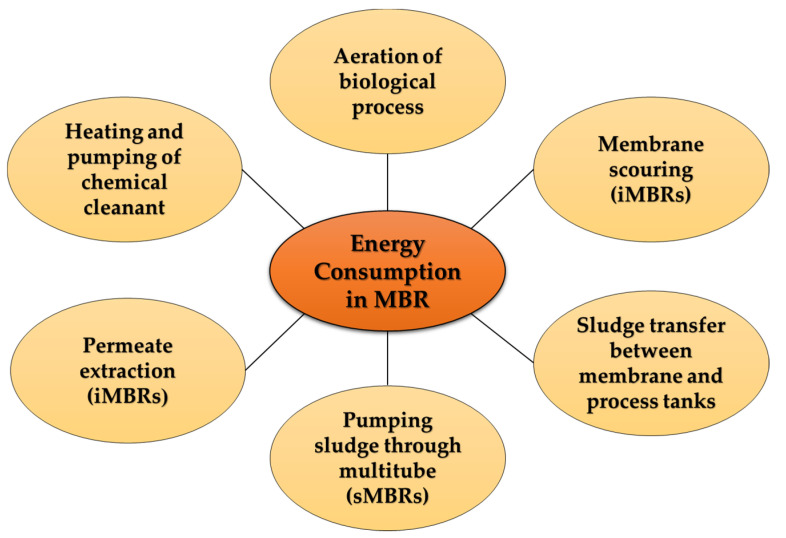
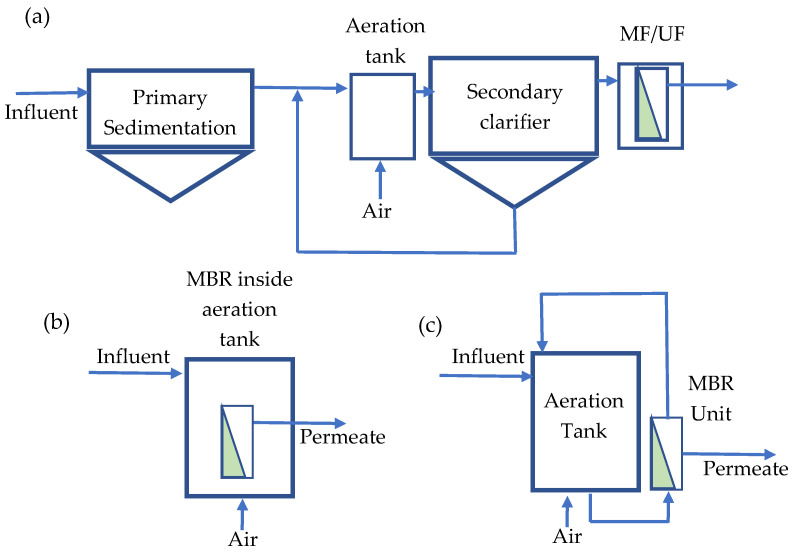
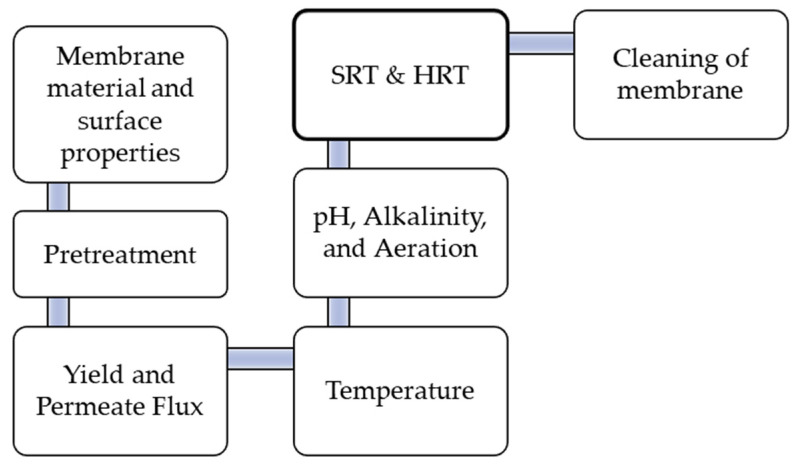
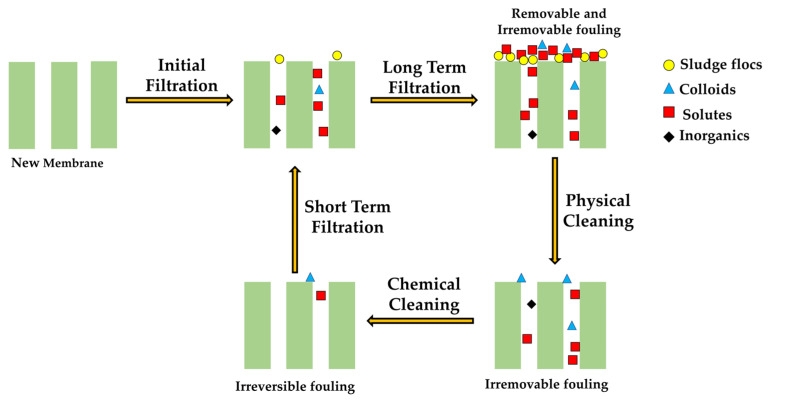
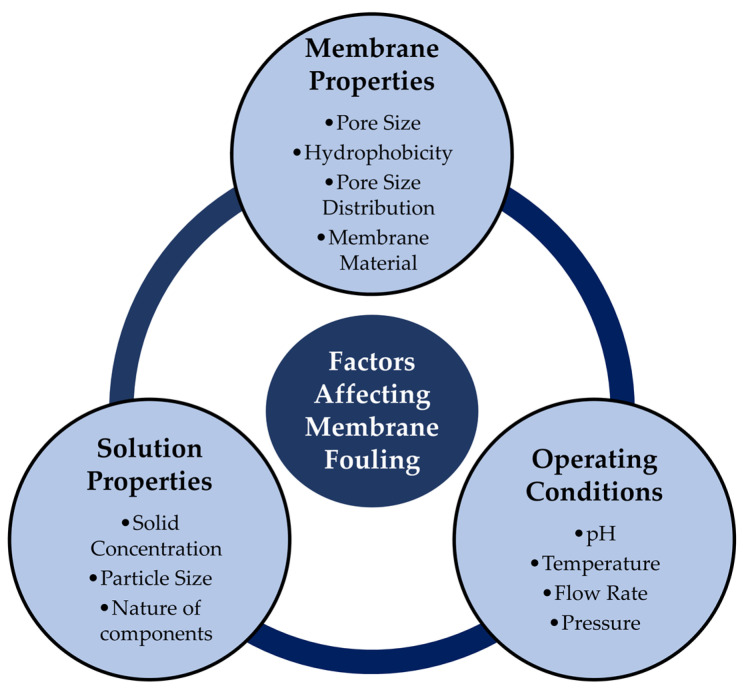
The advancement in water treatment technology has revolutionized the progress of membrane bioreactor (MBR) technology in the modern era. The large space requirement, low efficiency, and high cost of the traditional activated sludge process have given the necessary space for the MBR system to come into action. The conventional activated sludge (CAS) process and tertiary filtration can be replaced by immersed and side-stream MBR. This article outlines the historical advancement of the MBR process in the treatment of industrial and municipal wastewaters. The structural features and design parameters of MBR, e.g., membrane surface properties, permeate flux, retention time, pH, alkalinity, temperature, cleaning frequency, etc., highly influence the efficiency of the MBR process. The submerged MBR can handle lower permeate flux (requires less power), whereas the side-stream MBR can handle higher permeate flux (requires more power). However, MBR has some operational issues with conventional water treatment technologies. The quality of sludge, equipment requirements, and fouling are major drawbacks of the MBR process. This review paper also deals with the approach to address these constraints. However, given the energy limitations, climatic changes, and resource depletion, conventional wastewater treatment systems face significant obstacles. When compared with CAS, MBR has better permeate quality, simpler operational management, and a reduced footprint requirement. Thus, for sustainable water treatment, MBR can be an efficient tool.
水处理技术的进步在现代彻底改变了膜生物反应器(MBR)技术的发展进程。传统活性污泥法空间需求大、效率低且成本高,这为MBR系统发挥作用提供了必要空间。传统活性污泥(CAS)法和三级过滤可被浸没式和侧流式MBR取代。本文概述了MBR工艺在处理工业和城市废水方面的历史发展。MBR的结构特征和设计参数,如膜表面性质、渗透通量、停留时间、pH值、碱度、温度、清洗频率等,对MBR工艺的效率有很大影响。浸没式MBR能处理较低的渗透通量(所需功率较小),而侧流式MBR能处理较高的渗透通量(所需功率较大)。然而,MBR与传统水处理技术相比存在一些运行问题。污泥质量、设备要求和膜污染是MBR工艺的主要缺点。本综述论文还探讨了解决这些限制的方法。然而,鉴于能源限制、气候变化和资源枯竭,传统废水处理系统面临重大障碍。与CAS相比,MBR具有更好的渗透液质量、更简单的运行管理和更小的占地面积要求。因此,对于可持续水处理而言,MBR可以是一种高效工具。