Zhang Xindan, Tan Xiao, Wang Ping, Qin Jieling
Tongji University Cancer Center, Shanghai Tenth People's Hospital, School of Medicine, Tongji University, Shanghai 200092, China.
Nanomaterials (Basel). 2023 Feb 9;13(4):674. doi: 10.3390/nano13040674.
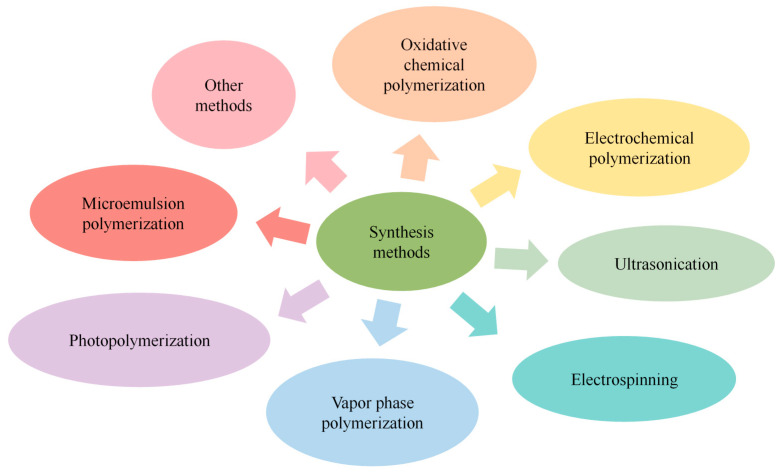
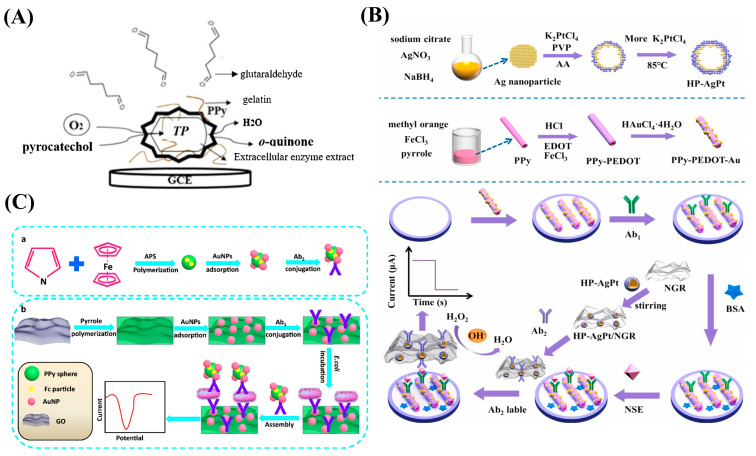
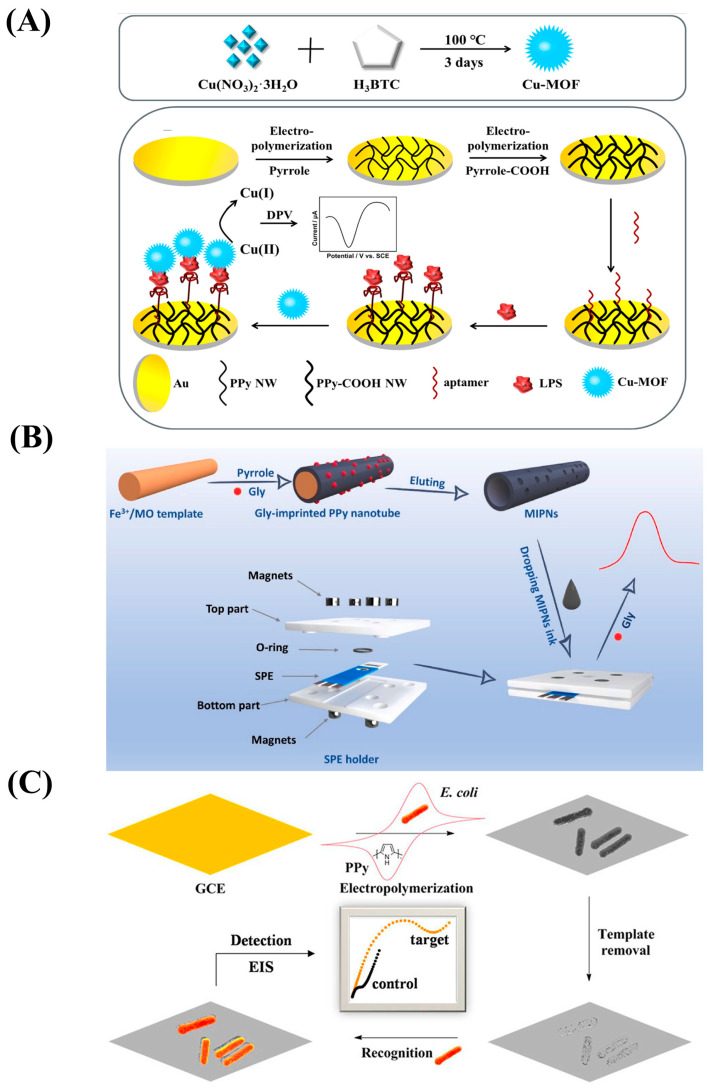
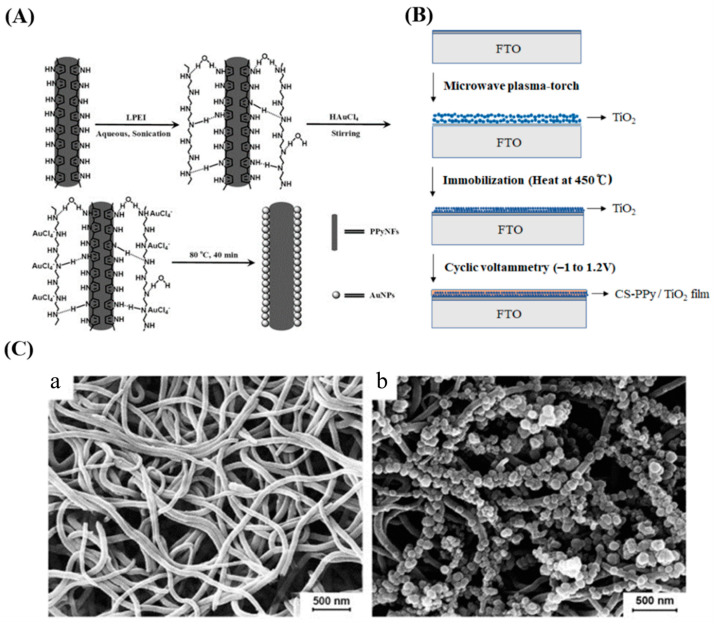
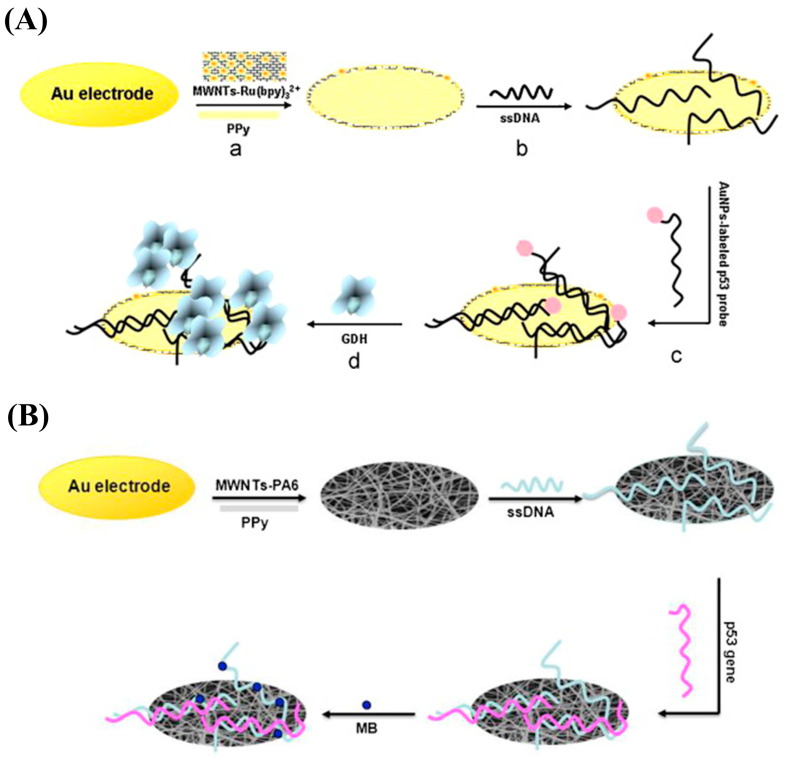
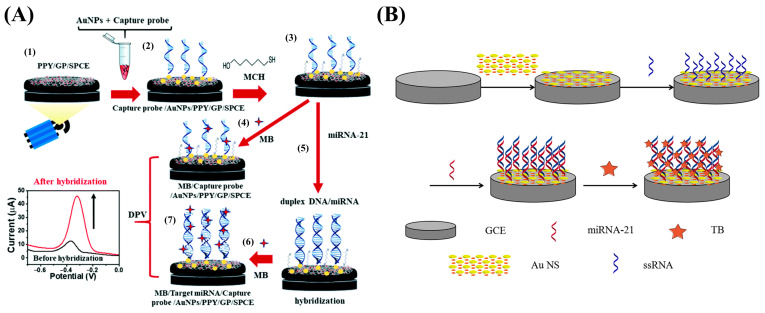
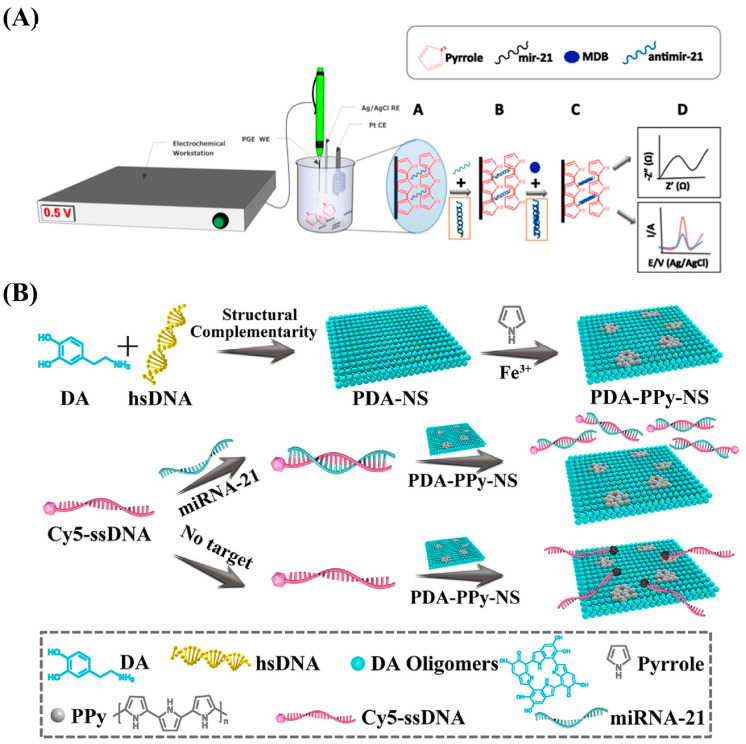
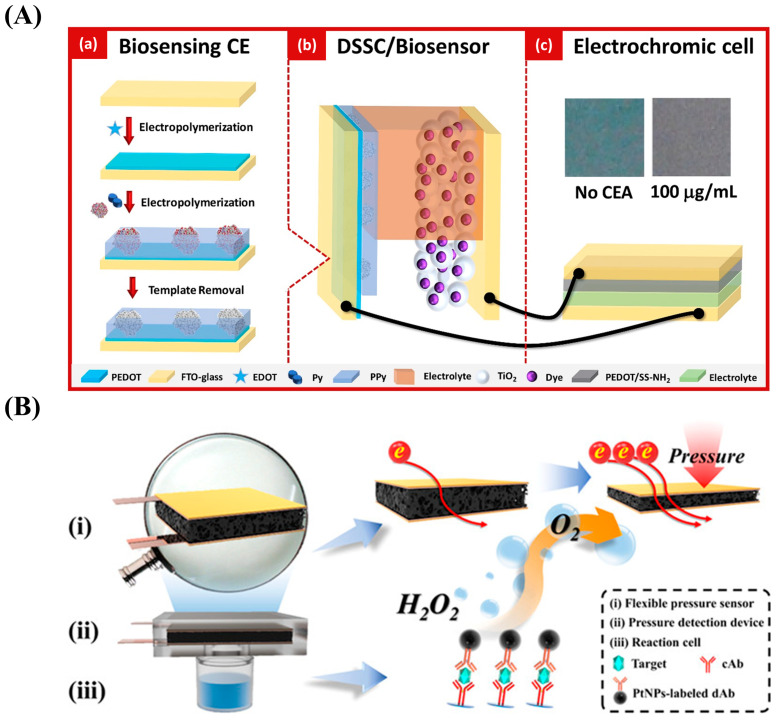
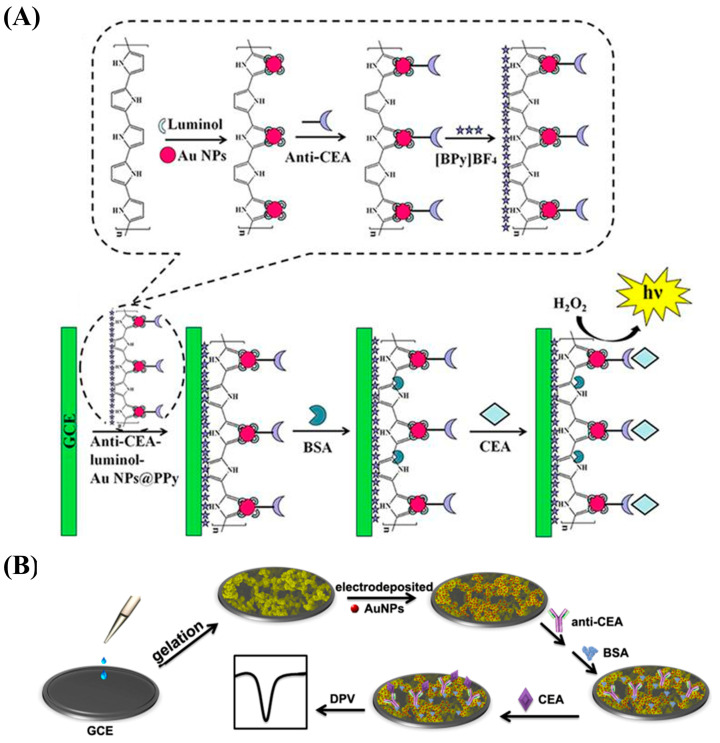
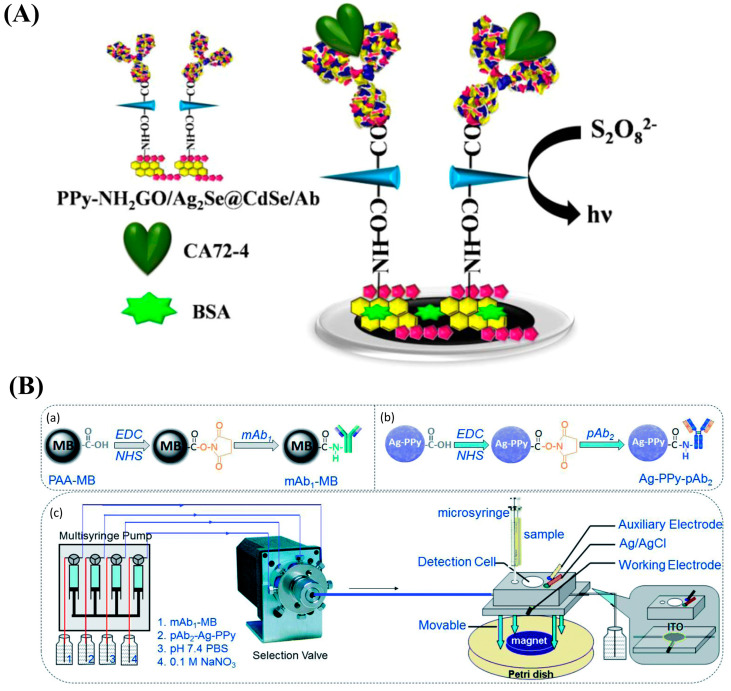
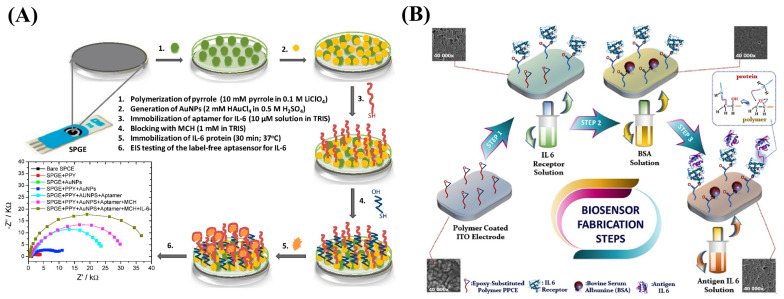
Although colorectal cancer (CRC) is easy to treat surgically and can be combined with postoperative chemotherapy, its five-year survival rate is still not optimistic. Therefore, developing sensitive, efficient, and compliant detection technology is essential to diagnose CRC at an early stage, providing more opportunities for effective treatment and intervention. Currently, the widely used clinical CRC detection methods include endoscopy, stool examination, imaging modalities, and tumor biomarker detection; among them, blood biomarkers, a noninvasive strategy for CRC screening, have shown significant potential for early diagnosis, prediction, prognosis, and staging of cancer. As shown by recent studies, electrochemical biosensors have attracted extensive attention for the detection of blood biomarkers because of their advantages of being cost-effective and having sound sensitivity, good versatility, high selectivity, and a fast response. Among these, nano-conductive polymer materials, especially the conductive polymer polypyrrole (PPy), have been broadly applied to improve sensing performance due to their excellent electrical properties and the flexibility of their surface properties, as well as their easy preparation and functionalization and good biocompatibility. This review mainly discusses the characteristics of PPy-based biosensors, their synthetic methods, and their application for the detection of CRC biomarkers. Finally, the opportunities and challenges related to the use of PPy-based sensors for diagnosing CRC are also discussed.
尽管结直肠癌(CRC)手术易于治疗且可结合术后化疗,但其五年生存率仍不容乐观。因此,开发灵敏、高效且合规的检测技术对于早期诊断CRC至关重要,可为有效治疗和干预提供更多机会。目前,临床广泛使用的CRC检测方法包括内镜检查、粪便检查、成像方式和肿瘤生物标志物检测;其中,血液生物标志物作为一种非侵入性的CRC筛查策略,在癌症的早期诊断、预测、预后和分期方面显示出巨大潜力。近期研究表明,电化学生物传感器因其具有成本效益、灵敏度高、通用性好、选择性高和响应快等优点,在血液生物标志物检测方面受到广泛关注。其中,纳米导电聚合物材料,尤其是导电聚合物聚吡咯(PPy),由于其优异的电学性能、表面性质的灵活性、易于制备和功能化以及良好的生物相容性,已被广泛应用于提高传感性能。本文综述主要讨论了基于PPy的生物传感器的特性、合成方法及其在CRC生物标志物检测中的应用。最后,还讨论了使用基于PPy的传感器诊断CRC所面临的机遇和挑战。