Brunetti Luigi, Chapy Helene, Nahass Ronald G, Moore Rebecca, Wassef Andrew, Adler Derek, Yurkow Edward, Kagan Leonid
Department of Pharmacy Practice, Ernest Mario School of Pharmacy, Rutgers, The State University of New Jersey, Piscataway, NJ 08854, USA.
Department of Pharmaceutics, Ernest Mario School of Pharmacy, Rutgers, The State University of New Jersey, Piscataway, NJ 08854, USA.
Pharmaceutics. 2023 Feb 3;15(2):510. doi: 10.3390/pharmaceutics15020510.
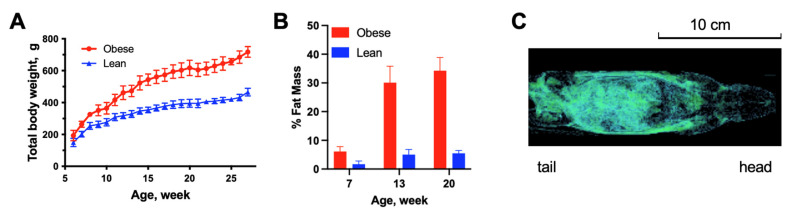
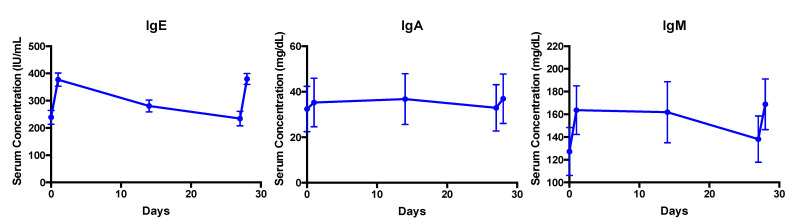
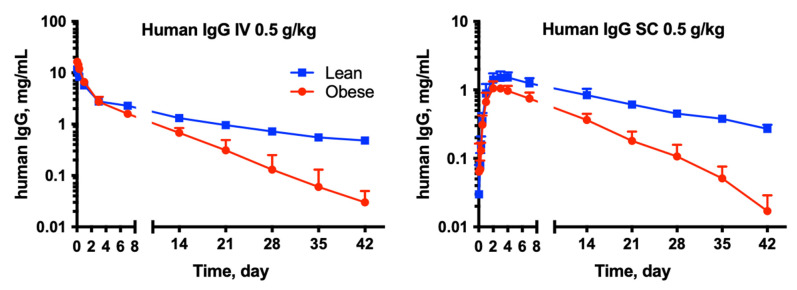
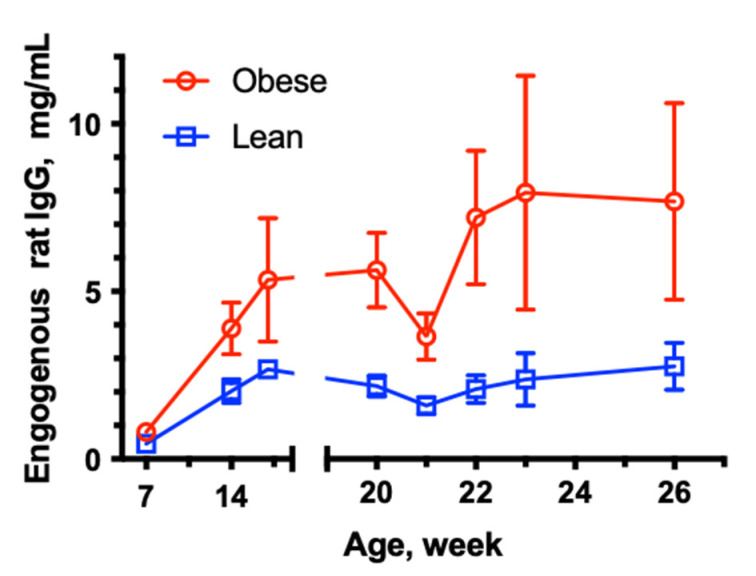
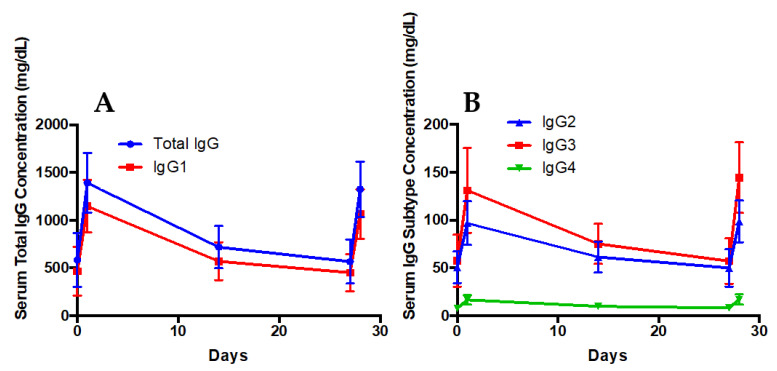
The purpose of this study was to investigate the effect of obesity on immunoglobulin G (IgG) pharmacokinetics in a rat model of obesity, and to collect clinical evidence for an association between the body composition and intravenous immune globulin (IVIG) pharmacokinetic parameters in humans. In a preclinical study, pharmacokinetics of human IgG was evaluated after intravenous (IV) and subcutaneous (SC) delivery to obese and lean rats (n = 6 in each group). Serial serum samples were analyzed using an ELISA. The animal body composition was assessed using computer tomography. Patients with primary immunodeficiency currently managed with IVIG, and at a steady state, were enrolled in the clinical study (n = 8). Serum immune globulin (Ig) concentrations were measured at baseline and immediately after the administration of two consecutive treatments, with an additional measurement at two weeks after the first administration. In addition to the patient demographic and clinical characteristics, body composition was measured using bioelectrical impedance analysis. The pharmacokinetics of human IgG was significantly different between the obese and lean rats after both the IV and SC administration of 0.5 g/kg. Furthermore, a significant difference in endogenous rat IgG was observed between the two strains. In the human study, total serum IgG and subtype (IgG1, IgG2, IgG3, IgG4) half-life negatively correlated with the body mass index and fat mass. The mean change in the total serum IgG concentration was significantly correlated to body mass index and fat mass. The results of the studies corroborated one another. In the animal study, most pharmacokinetic parameters of human IgG following IV and SC administration were significantly affected by obesity and changes in the body composition. In the clinical study, the mean serum IgG change after the IVIG administration strongly correlated to the BMI and body fat mass. Future studies are needed to establish the outcomes achieved with more frequent dosing in obese individuals with primary immunodeficiency.
本研究的目的是在肥胖大鼠模型中研究肥胖对免疫球蛋白G(IgG)药代动力学的影响,并收集人体成分与静脉注射免疫球蛋白(IVIG)药代动力学参数之间关联的临床证据。在一项临床前研究中,评估了向肥胖和瘦大鼠静脉注射(IV)和皮下注射(SC)人IgG后的药代动力学(每组n = 6)。使用酶联免疫吸附测定法(ELISA)分析系列血清样本。使用计算机断层扫描评估动物的身体成分。目前接受IVIG治疗且处于稳定状态的原发性免疫缺陷患者被纳入临床研究(n = 8)。在基线以及连续两次治疗给药后立即测量血清免疫球蛋白(Ig)浓度,并在首次给药后两周进行额外测量。除了患者的人口统计学和临床特征外,还使用生物电阻抗分析测量身体成分。在静脉注射和皮下注射0.5 g/kg后,肥胖大鼠和瘦大鼠之间人IgG的药代动力学存在显著差异。此外,观察到两种品系大鼠的内源性IgG存在显著差异。在人体研究中,总血清IgG及其亚型(IgG1、IgG2、IgG3、IgG4)的半衰期与体重指数和脂肪量呈负相关。总血清IgG浓度的平均变化与体重指数和脂肪量显著相关。两项研究的结果相互印证。在动物研究中,静脉注射和皮下注射后人IgG的大多数药代动力学参数受到肥胖和身体成分变化的显著影响。在临床研究中,IVIG给药后血清IgG的平均变化与BMI和体脂肪量密切相关。未来需要开展研究以确定原发性免疫缺陷肥胖个体更频繁给药的效果。