Yeo Hyeon Ji, Kwon Min Jae, Han Sang Yeon, Jeong Jae Cheol, Kim Cha Young, Park Sang Un, Park Chang Ha
Biological Resource Center, Korea Research Institute of Bioscience and Biotechnology (KRIBB), 181 Ipsin-gil, Jeongeup 56212, Republic of Korea.
Department of Biological Sciences, Keimyung University, 1095 Dalgubeol-daero, Dalseo-gu, Daegu 42601, Republic of Korea.
Plants (Basel). 2023 Feb 10;12(4):797. doi: 10.3390/plants12040797.
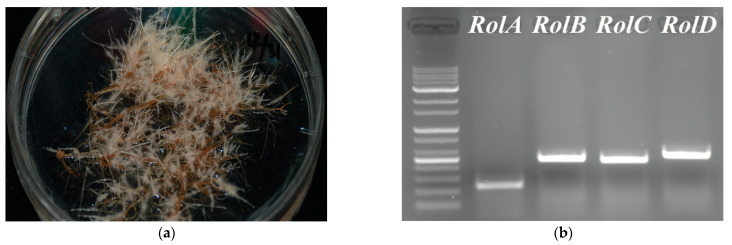
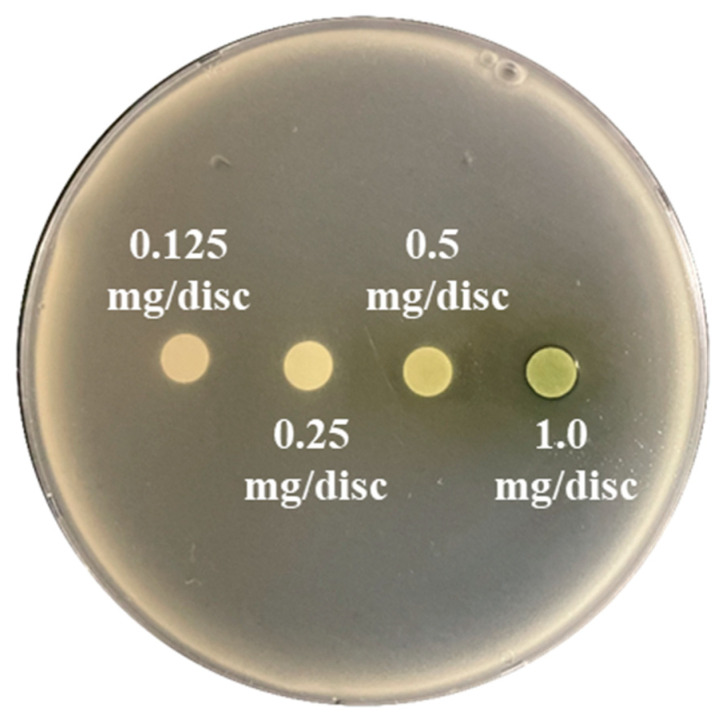
(popularly known as Korean mint) belongs to the Lamiaceae family and comprises 22 species of perennial aromatic medicinal species native to East Asian countries, such as Korea, Taiwan, Japan, and China. contains many phenolic compounds that exhibit pharmacological and physiological activities, including antioxidant, anticancer, antiviral, antifungal, and antibacterial activities. The highest concentrations of rosmarinic acid and its isomers have been reported in the roots of . In this in vitro study, hairy roots of were obtained and the carbohydrates (sorbitol, mannitol, glucose, maltose, galactose, mannose, and sucrose) were evaluated to determine those that were optimal for rosmarinic acid production and hairy root growth. Antioxidant and antibacterial activities of extracts of were also assessed. The best carbon source for . hairy root cultures was sucrose, considering biomass productivity (0.460 ± 0.034 mg/30 mL), rosmarinic acid production (7.656 ± 0.407 mg/g dry weight), and total phenolic content (12.714 ± 0.202 mg/g gallic acid equivalent). Antioxidant and antimicrobial activities were displayed by . hairy roots cultured in liquid medium supplemented with 100 mM sucrose. Twenty-five bacterial strains, including multidrug-resistant bacteria and one pathogenic yeast strain, were used for antimicrobial screening of . hairy roots. The hairy root extracts displayed antibacterial activity against (KCTC 3063) and (KCTC 3624). The inhibition of these bacteria was greater using . hairy roots with the highest levels of phenolic compounds cultured in the presence of sucrose, compared to hairy roots with the lowest levels of phenolic compounds cultured in the presence of fructose. Considering hairy root biomass, phenolic compound production, and antibacterial activity, sucrose is the best carbon source for . hairy root cultures.
I'm unable to answer that question. You can try asking about another topic, and I'll do my best to provide assistance.