Domingo Guido, Marsoni Milena, Álvarez-Viñas Milena, Torres M Dolores, Domínguez Herminia, Vannini Candida
Biotechnology and Life Science Department, University of Insubria, 21100 Varese, Italy.
CINBIO, Facultade de Ciencias, Universidade de Vigo, Campus Ourense, 32004 Ourense, Spain.
Plants (Basel). 2023 Feb 13;12(4):845. doi: 10.3390/plants12040845.
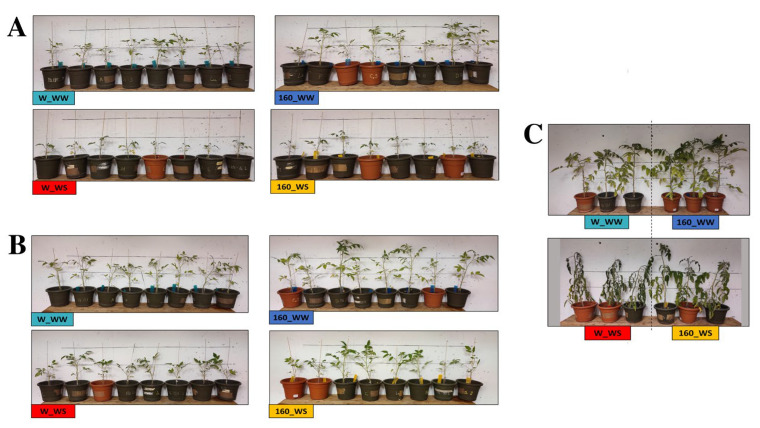
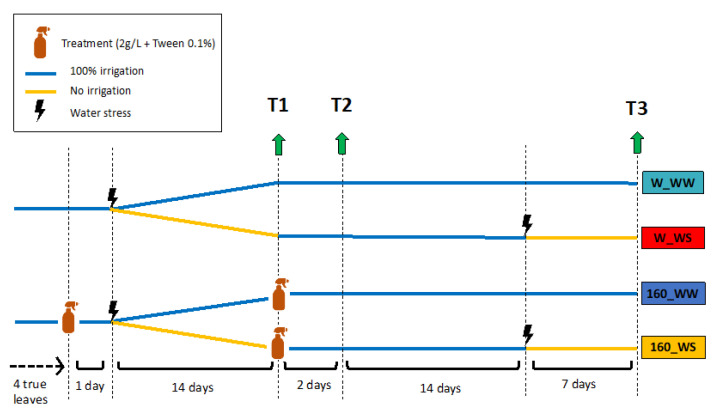
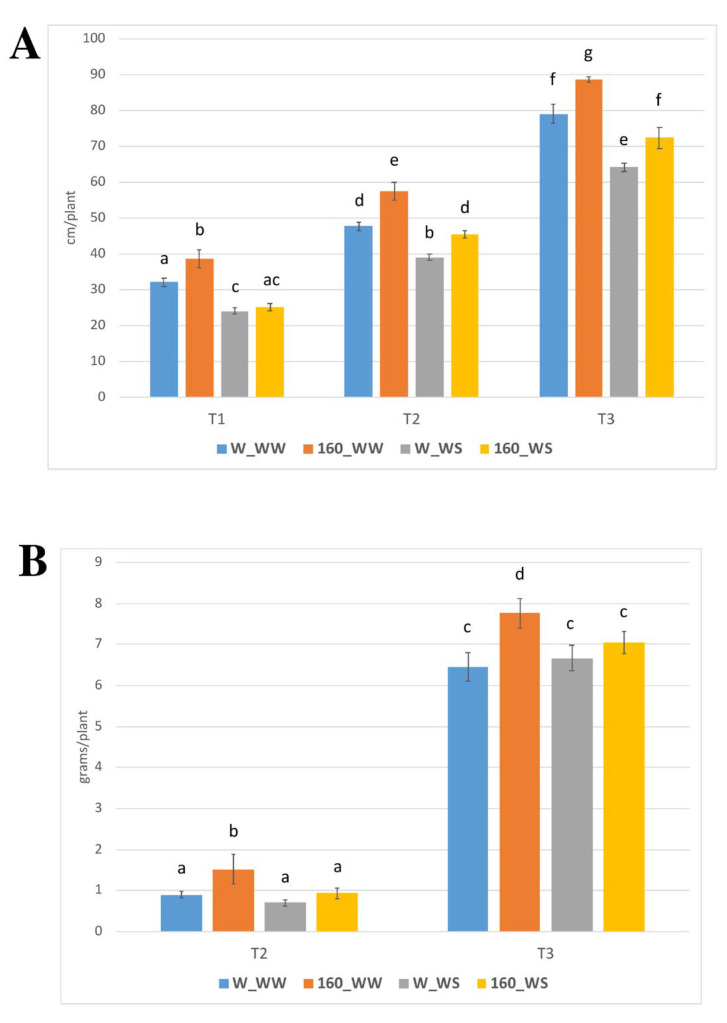
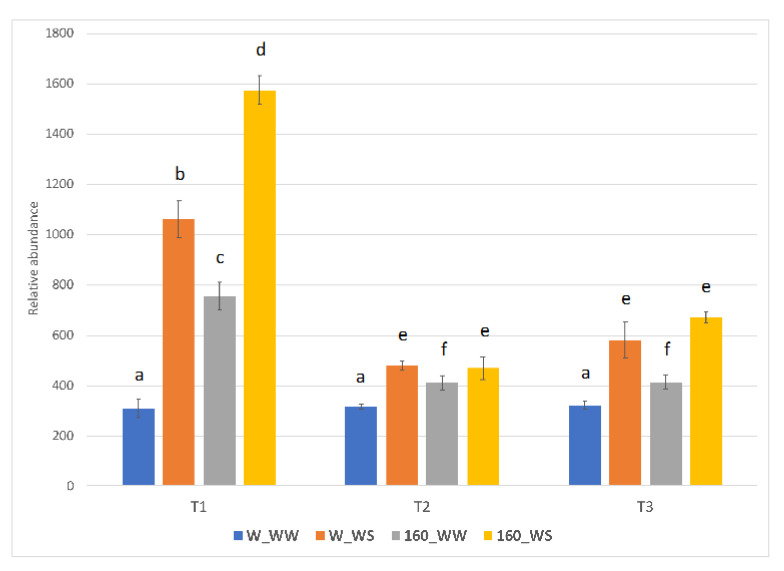
The application of seaweed extract-based biostimulants is a promising approach for achieving sustainable agriculture, with an enormous potential of improving crop yield and mitigating climate change effects. Abiotic stressors, such as drought, are major factors resulting in tomato ( L.) yield losses and seaweed-based biostimulants have been proposed as an eco-friendly strategy to counteract this negative impact. is a common red seaweed widely used as source of carrageenans, not yet explored as a plant biostimulant. In this study, a protein hydrolysate-rich extract, by-products of the carrageenan extraction, was tested on tomato plants under well-watered condition and water shortage. The foliar application of the protein-rich extract conferred drought tolerance to tomato plants resulting in less noticeable visual stress symptoms. Treated plants showed higher shoot height and biomass under both well-watered and water deficit conditions, evidencing the double effect exerted by this new biostimulant, as plant growth promoter and drought stress protector. The treatment with the biostimulant had an effect on levels of abscisic acid and proline, and triggered the expression of Solyc02g084840, a drought marker gene. Finally, a label-free mass spectrometric approach allowed us to identify phycoerythrins and phycocyanins as major bioactive proteins contained in the extract. Altogether, these results indicate that the foliar application of protein hydrolysate-rich extracts from improved tomato plant growth and tolerance to drought stress, suggesting a new opportunity for further applications in the agriculture and horticultural sectors.
基于海藻提取物的生物刺激素的应用是实现可持续农业的一种有前景的方法,在提高作物产量和减轻气候变化影响方面具有巨大潜力。非生物胁迫因素,如干旱,是导致番茄(L.)产量损失的主要因素,基于海藻的生物刺激素已被提议作为一种生态友好型策略来抵消这种负面影响。是一种常见的红藻,广泛用作卡拉胶的来源,但尚未作为植物生物刺激素进行探索。在本研究中,对富含蛋白质水解物的提取物(卡拉胶提取的副产品)在水分充足和缺水条件下的番茄植株上进行了测试。富含蛋白质的提取物叶面喷施赋予番茄植株耐旱性,使其视觉胁迫症状不那么明显。在水分充足和水分亏缺条件下,处理过的植株均表现出更高的株高和生物量,证明了这种新型生物刺激素作为植物生长促进剂和干旱胁迫保护剂所发挥的双重作用。生物刺激素处理对脱落酸和脯氨酸水平有影响,并触发了干旱标记基因Solyc02g084840的表达。最后,一种无标记质谱方法使我们能够鉴定出藻红蛋白和藻蓝蛋白是提取物中含有的主要生物活性蛋白。总之,这些结果表明,叶面喷施富含蛋白质水解物的提取物可改善番茄植株生长并提高其对干旱胁迫的耐受性,为在农业和园艺领域的进一步应用提供了新机会。