Tinte Morena M, Masike Keabetswe, Steenkamp Paul A, Huyser Johan, van der Hooft Justin J J, Tugizimana Fidele
Department of Biochemistry, University of Johannesburg, Auckland Park, Johannesburg 2006, South Africa.
Omnia Group, International Research and Development Division, Ltd., Bryanston, Johannesburg 2021, South Africa.
Metabolites. 2022 May 27;12(6):487. doi: 10.3390/metabo12060487.
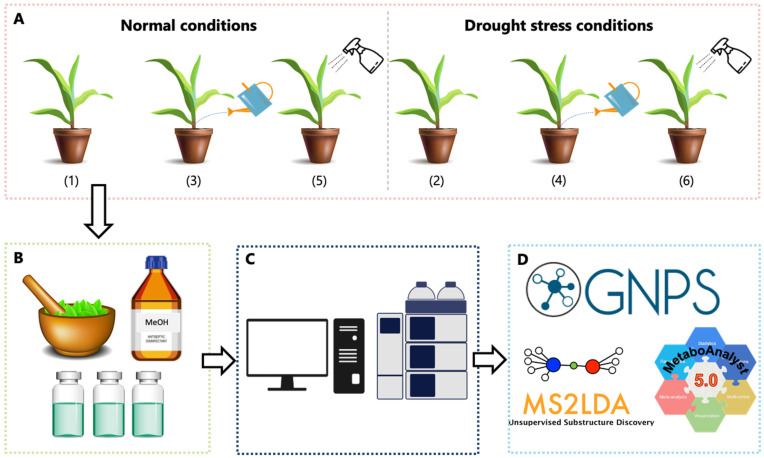
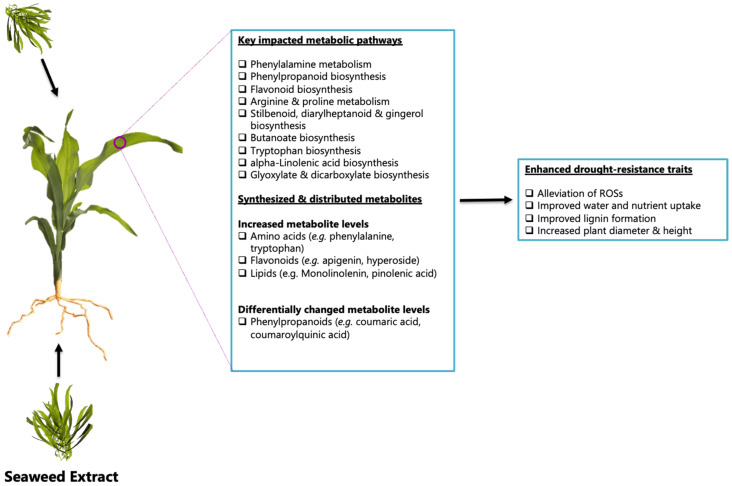
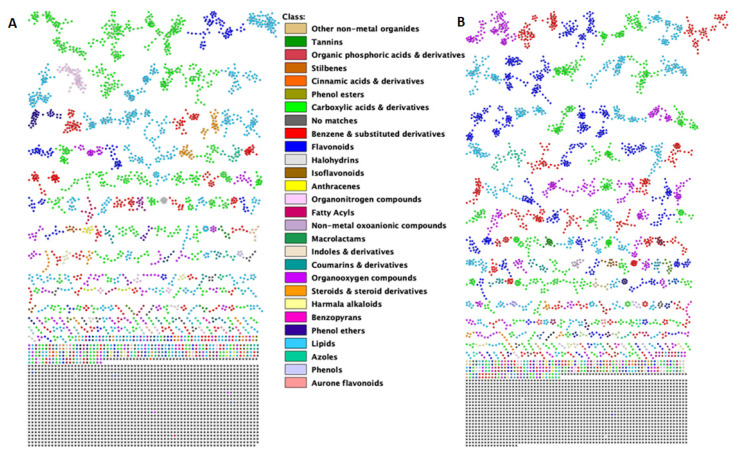
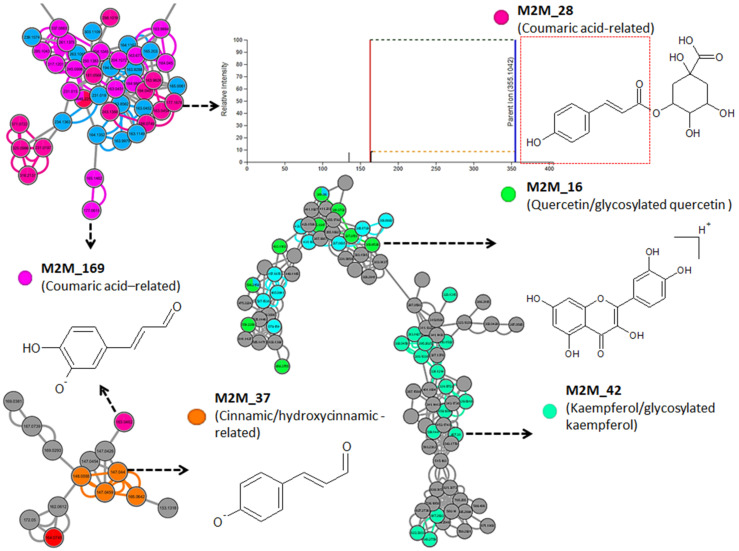
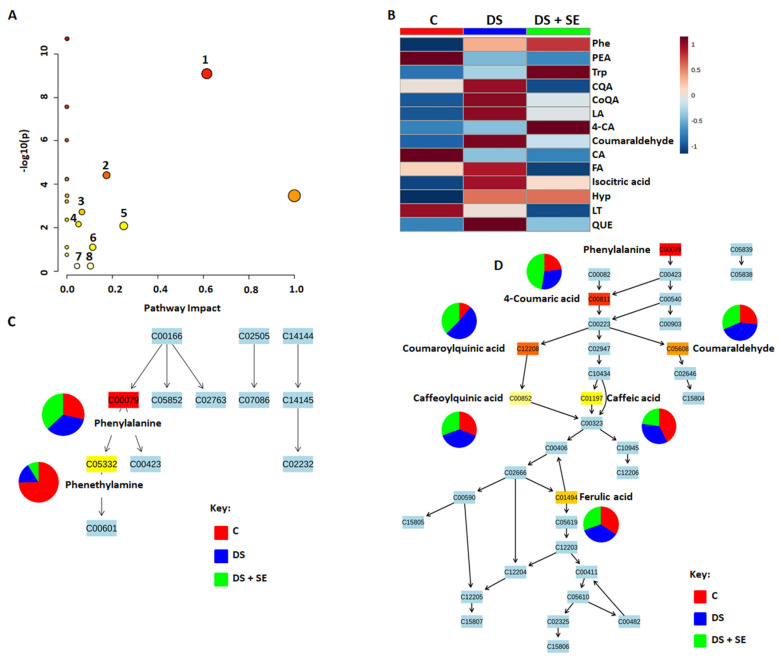
Drought is one of the major abiotic stresses causing severe damage and losses in economically important crops worldwide. Drought decreases the plant water status, leading to a disruptive metabolic reprogramming that negatively affects plant growth and yield. Seaweed extract-based biostimulants show potential as a sustainable strategy for improved crop health and stress resilience. However, cellular, biochemical, and molecular mechanisms governing the agronomically observed benefits of the seaweed extracts on plants are still poorly understood. In this study, a liquid chromatography-mass spectrometry-based untargeted metabolomics approach combined with computational metabolomics strategies was applied to unravel the molecular 'stamps' that define the effects of seaweed extracts on greenhouse-grown maize () under drought conditions. We applied mass spectral networking, substructure discovery, chemometrics, and metabolic pathway analyses to mine and interpret the generated mass spectral data. The results showed that the application of seaweed extracts induced alterations in the different pathways of primary and secondary metabolism, such as phenylpropanoid, flavonoid biosynthesis, fatty acid metabolism, and amino acids pathways. These metabolic changes involved increasing levels of phenylalanine, tryptophan, coumaroylquinic acid, and linolenic acid metabolites. These metabolic alterations are known to define some of the various biochemical and physiological events that lead to enhanced drought resistance traits. The latter include root growth, alleviation of oxidative stress, improved water, and nutrient uptake. Moreover, this study demonstrates the use of molecular networking in annotating maize metabolome. Furthermore, the results reveal that seaweed extract-based biostimulants induced a remodeling of maize metabolism, subsequently readjusting the plant towards stress alleviation, for example, by increasing the plant height and diameter through foliar application. Such insights add to ongoing efforts in elucidating the modes of action of biostimulants, such as seaweed extracts. Altogether, our study contributes to the fundamental scientific knowledge that is necessary for the development of a biostimulants industry aiming for a sustainable food security.
干旱是导致全球重要经济作物遭受严重损害和损失的主要非生物胁迫之一。干旱会降低植物的水分状况,导致代谢重编程紊乱,对植物生长和产量产生负面影响。基于海藻提取物的生物刺激剂显示出作为改善作物健康和抗逆性的可持续策略的潜力。然而,海藻提取物对植物在农学上观察到的益处所涉及的细胞、生化和分子机制仍知之甚少。在本研究中,基于液相色谱-质谱的非靶向代谢组学方法与计算代谢组学策略相结合,用于揭示定义海藻提取物在干旱条件下对温室种植玉米()影响的分子“印记”。我们应用质谱网络、子结构发现、化学计量学和代谢途径分析来挖掘和解释生成的质谱数据。结果表明,海藻提取物的应用诱导了初级和次级代谢不同途径的变化,如苯丙烷类、黄酮类生物合成、脂肪酸代谢和氨基酸途径。这些代谢变化涉及苯丙氨酸、色氨酸、香豆酰奎尼酸和亚麻酸代谢物水平的增加。已知这些代谢改变定义了一些导致抗旱性状增强的各种生化和生理事件。后者包括根系生长、氧化应激的缓解、水分和养分吸收的改善。此外,本研究证明了分子网络在注释玉米代谢组中的应用。此外,结果表明基于海藻提取物的生物刺激剂诱导了玉米代谢的重塑,随后使植物朝着缓解胁迫的方向重新调整,例如,通过叶面喷施增加株高和茎粗。这些见解为阐明生物刺激剂(如海藻提取物)的作用模式的持续努力增添了内容。总之,我们的研究为旨在实现可持续粮食安全的生物刺激剂产业发展所需的基础科学知识做出了贡献。