Research Students Committee, Alborz University of Medical Sciences, Karaj, Iran.
Non-Communicable Diseases Research Center, Alborz University of Medical Sciences, Karaj, Iran.
Biol Trace Elem Res. 2023 Nov;201(11):5098-5114. doi: 10.1007/s12011-023-03588-1. Epub 2023 Feb 25.
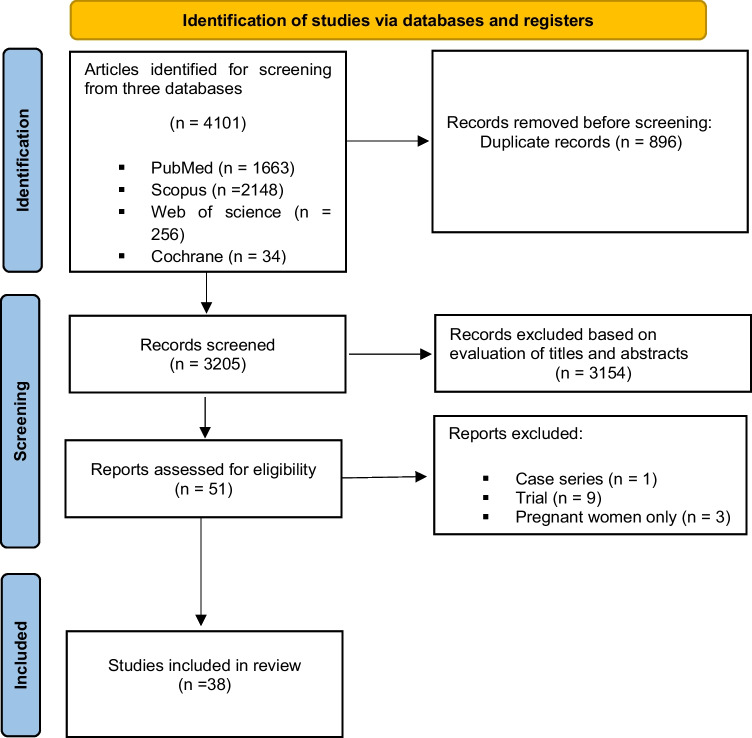
It is proven that the blood concentration of antioxidants can impress the severity of viral infections, including COVID-19. However, the lack of a comprehensive study accumulating existing data regarding COVID-19 can be perceived. Therefore, this systematic review is aimed to report the association between the blood concentration of several antioxidants and the overall health condition of COVID-19 patients. We summarized the available data surrounding the serum antioxidant level in COVID-19 patients and COVID-19 outcomes. A systematic search was performed in PubMed, Scopus, Web of Science, and Cochrane, and studies that evaluated the association between antioxidants and COVID-19 outcomes were included. Of 4101 articles that were viewed in the database search, 38 articles were included after the title, abstract, and full-text review. Twenty-nine studies indicated that lower serum antioxidants are associated with worse outcomes, and one study reported no association between serum zinc (Zn) level and COVID-19 outcomes. In most cases, antioxidant deficiency was associated with high inflammatory factors, high mortality, acute kidney injury, thrombosis, intensive care unit (ICU) admission, acute respiratory distress syndrome, cardiac injury, and the need for mechanical ventilation (MV), and there was no significant association between serum antioxidants level and ICU or hospital length of stay (LOS). It seems that higher levels of antioxidants in COVID-19 patients may be beneficial to prevent disease progression. However, clinical trials are needed to confirm this conclusion.
已证实,抗氧化剂的血液浓度可以影响病毒感染的严重程度,包括 COVID-19。然而,人们认为目前缺乏一项综合现有 COVID-19 数据的研究。因此,本系统评价旨在报告几种抗氧化剂的血液浓度与 COVID-19 患者整体健康状况之间的关系。我们总结了 COVID-19 患者血清抗氧化剂水平及 COVID-19 结局的现有数据。在 PubMed、Scopus、Web of Science 和 Cochrane 中进行了系统检索,并纳入了评估抗氧化剂与 COVID-19 结局之间关系的研究。在数据库检索中查看了 4101 篇文章,经过标题、摘要和全文审查后,有 38 篇文章被纳入。29 项研究表明,较低的血清抗氧化剂与较差的结局相关,1 项研究报告血清锌(Zn)水平与 COVID-19 结局之间无关联。在大多数情况下,抗氧化剂缺乏与高炎症因子、高死亡率、急性肾损伤、血栓形成、入住重症监护病房(ICU)、急性呼吸窘迫综合征、心脏损伤和需要机械通气(MV)相关,血清抗氧化剂水平与 ICU 或住院时间长短(LOS)之间无显著关联。似乎 COVID-19 患者体内更高水平的抗氧化剂可能有助于预防疾病进展。然而,需要临床试验来证实这一结论。