Trauma Center/Department of Emergency and Traumatic Surgery, Tongji Hospital of Tongji Medical College, Huazhong University of Science and Technology, Wuhan, China.
Department of Radiation Oncology, Hubei Cancer Hospital, Tongji Medical College, Huazhong University of Science and Technology, Wuhan, China.
Front Immunol. 2023 Feb 9;14:1126874. doi: 10.3389/fimmu.2023.1126874. eCollection 2023.
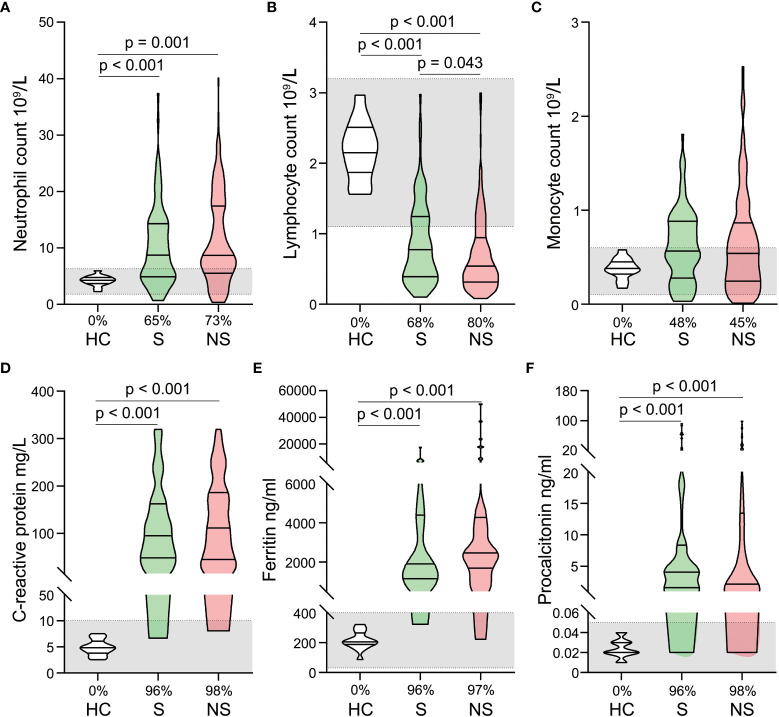
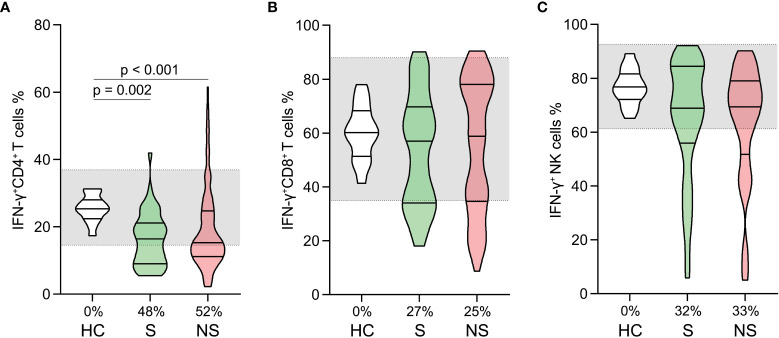
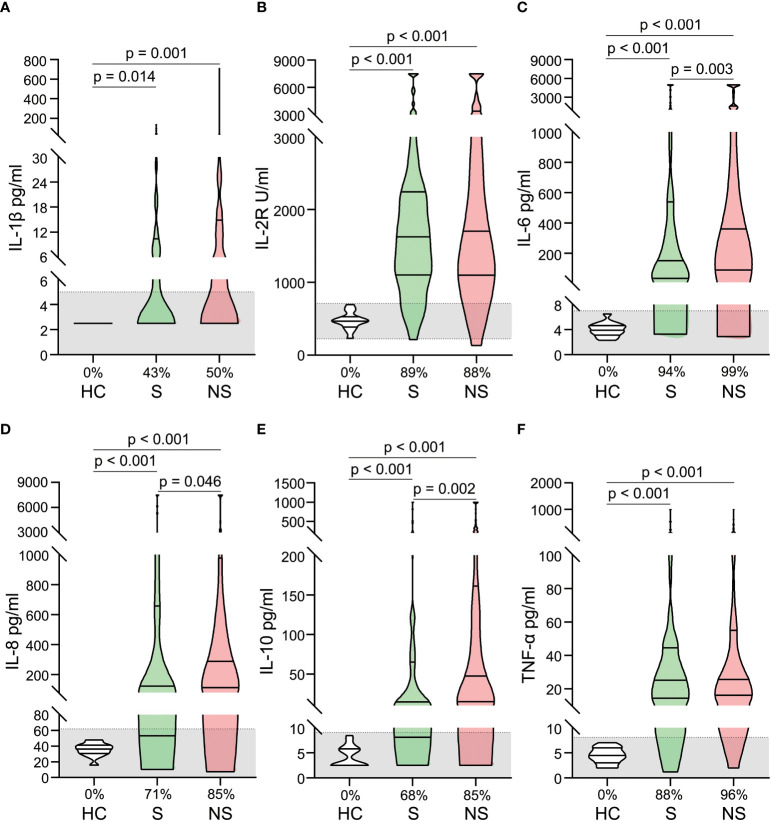
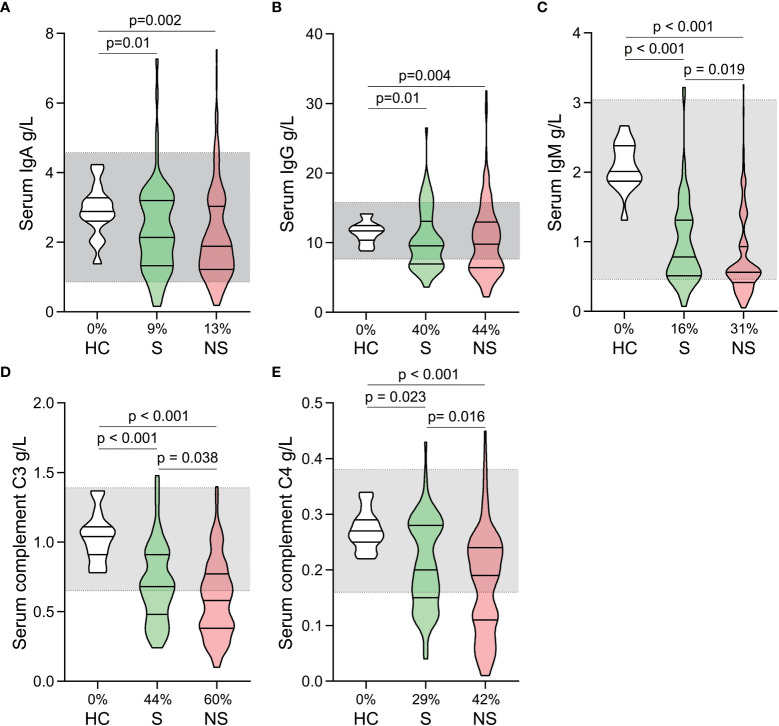
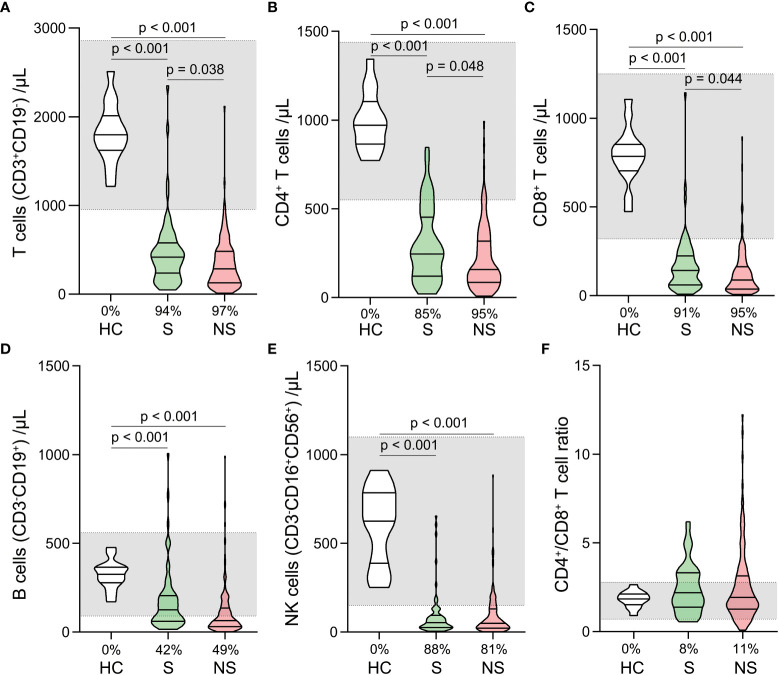
This study aims to investigate the early changes in the immune systems of patients with septic shock. A total of 243 patients with septic shock were included in this study. The patients were classified as survivors (n = 101) or nonsurvivors (n = 142). Clinical laboratories perform tests of the immune system's function. Each indicator was studied alongside healthy controls (n = 20) of the same age and gender as the patients. A comparative analysis of every two groups was conducted. Univariate and multivariate logistic regression analyses were performed to identify mortality risk factors that are independent of one another. In septic shock patients, neutrophil counts, infection biomarkers (C-reactive protein, ferritin, and procalcitonin levels), and cytokines (IL-1β, IL-2R, IL-6, IL-8, IL-10, and TNF-α) increased significantly. Lymphocyte and their subset counts (T, CD4+ T, CD8+ T, B, and natural killer cell counts), lymphocyte subset functions (the proportions of PMA/ionomycin-stimulated IFN-γ positive cells in CD4+ T cells), immunoglobulin levels (IgA, IgG, and IgM), and complement protein levels (C3 and C4) decreased significantly. Compared to survivors, nonsurvivors had higher levels of cytokines (IL-6, IL-8, and IL-10) but lower levels of IgM, complement C3 and C4, and lymphocyte, CD4+, and CD8+ T cell counts. Low IgM or C3 concentrations and low lymphocyte or CD4+ T cell counts were independent risk factors for mortality. These alterations should be considered in the future development of immunotherapies aimed at treating septic shock.
本研究旨在探讨脓毒症休克患者免疫系统的早期变化。共纳入 243 例脓毒症休克患者。患者分为幸存者(n = 101)和非幸存者(n = 142)。临床实验室对免疫系统功能进行检测。每个指标均与同年龄、同性别、健康的患者对照(n = 20)进行研究。对每两组进行对比分析。采用单变量和多变量逻辑回归分析,确定相互独立的死亡率危险因素。在脓毒症休克患者中,中性粒细胞计数、感染标志物(C 反应蛋白、铁蛋白和降钙素原水平)和细胞因子(IL-1β、IL-2R、IL-6、IL-8、IL-10 和 TNF-α)显著增加。淋巴细胞及其亚群计数(T、CD4+T、CD8+T、B 和自然杀伤细胞计数)、淋巴细胞亚群功能(PMA/离子霉素刺激的 IFN-γ阳性细胞在 CD4+T 细胞中的比例)、免疫球蛋白水平(IgA、IgG 和 IgM)和补体蛋白水平(C3 和 C4)显著降低。与幸存者相比,非幸存者的细胞因子(IL-6、IL-8 和 IL-10)水平更高,但 IgM、补体 C3 和 C4 以及淋巴细胞、CD4+和 CD8+T 细胞计数较低。低 IgM 或 C3 浓度以及低淋巴细胞或 CD4+T 细胞计数是死亡的独立危险因素。这些改变应在未来针对脓毒症休克的免疫治疗的发展中加以考虑。