Institute of Human Genetics, Julius Maximilians University, Würzburg, Germany.
Department of Bioinformatics, Julius Maximilians University, Würzburg, Germany.
Aging (Albany NY). 2023 Feb 27;15(5):1257-1278. doi: 10.18632/aging.204546.
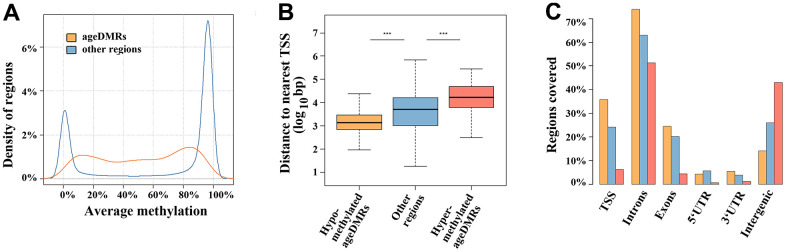
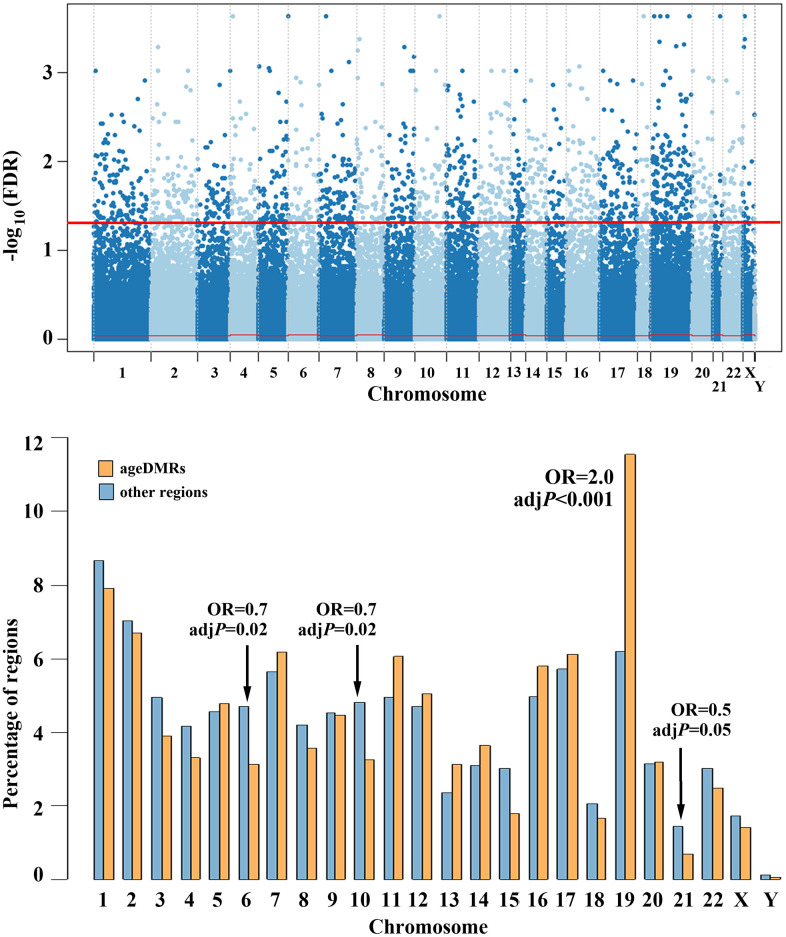
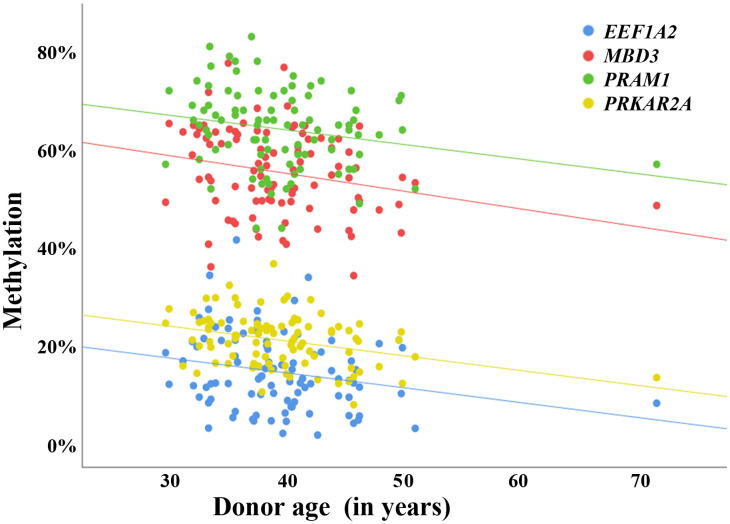
Advanced paternal age is associated with increased risks for reproductive and offspring medical problems. Accumulating evidence suggests age-related changes in the sperm epigenome as one underlying mechanism. Using reduced representation bisulfite sequencing on 73 sperm samples of males attending a fertility center, we identified 1,162 (74%) regions which were significantly (FDR-adjusted) hypomethylated and 403 regions (26%) being hypermethylated with age. There were no significant correlations with paternal BMI, semen quality, or ART outcome. The majority (1,152 of 1,565; 74%) of age-related differentially methylated regions (ageDMRs) were located within genic regions, including 1,002 genes with symbols. Hypomethylated ageDMRs were closer to transcription start sites than hypermethylated DMRs, half of which reside in gene-distal regions. In this and conceptually related genome-wide studies, so far 2,355 genes have been reported with significant sperm ageDMRs, however most (90%) of them in only one study. The 241 genes which have been replicated at least once showed significant functional enrichments in 41 biological processes associated with development and the nervous system and in 10 cellular components associated with synapses and neurons. This supports the hypothesis that paternal age effects on the sperm methylome affect offspring behaviour and neurodevelopment. It is interesting to note that sperm ageDMRs were not randomly distributed throughout the human genome; chromosome 19 showed a highly significant twofold enrichment with sperm ageDMRs. Although the high gene density and CpG content have been conserved, the orthologous marmoset chromosome 22 did not appear to exhibit an increased regulatory potential by age-related DNA methylation changes.
高龄父亲与生殖和后代医疗问题的风险增加有关。越来越多的证据表明,精子表观基因组的年龄相关性变化是一个潜在的机制。我们使用还原代表性亚硫酸氢盐测序对 73 名前往生育中心的男性的精子样本进行了研究,发现 1162 个(74%)区域与年龄显著相关(经 FDR 调整后)呈低甲基化状态,403 个区域(26%)呈高甲基化状态。与父亲的 BMI、精液质量或 ART 结果没有显著相关性。大多数(1565 个中的 1152 个;74%)与年龄相关的差异甲基化区域(ageDMRs)位于基因区域内,包括 1002 个具有符号的基因。低甲基化 ageDMRs 比高甲基化 DMRs 更接近转录起始位点,其中一半位于基因远端区域。在这项和概念上相关的全基因组研究中,迄今为止已有 2355 个基因被报道与精子 ageDMRs 显著相关,但其中大多数(90%)仅在一项研究中报道。至少被复制一次的 241 个基因在与发育和神经系统相关的 41 个生物学过程和与突触和神经元相关的 10 个细胞成分中显示出显著的功能富集。这支持了这样一种假设,即父亲年龄对精子甲基组的影响会影响后代的行为和神经发育。有趣的是,精子 ageDMRs 并不是随机分布在人类基因组中的;19 号染色体显示出与精子 ageDMRs 高度显著的两倍富集。尽管基因密度和 CpG 含量保持不变,但同源的狨猴染色体 22 似乎没有表现出由于年龄相关的 DNA 甲基化变化而导致的调节潜力增加。