Fujian Key Laboratory of Precision Diagnosis and Treatment in Breast Cancer, Xiang'an Hospital of Xiamen University, School of Medicine, Xiamen University, 361100, Xiamen, China.
Xiamen Key Laboratory of Endocrine-Related Cancer Precision Medicine, Xiang'an Hospital of Xiamen University, School of Medicine, Xiamen University, 361100, Xiamen, China.
Signal Transduct Target Ther. 2023 Feb 27;8(1):89. doi: 10.1038/s41392-023-01366-y.
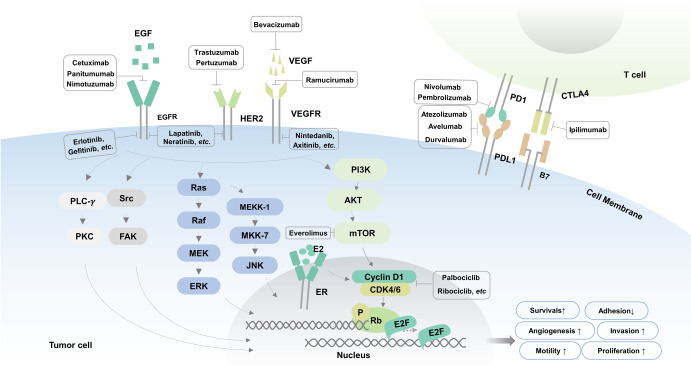
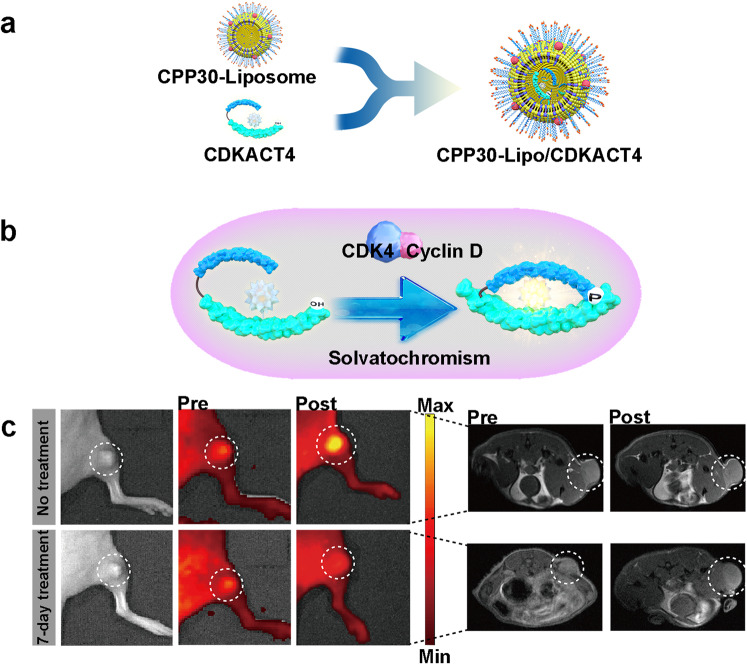
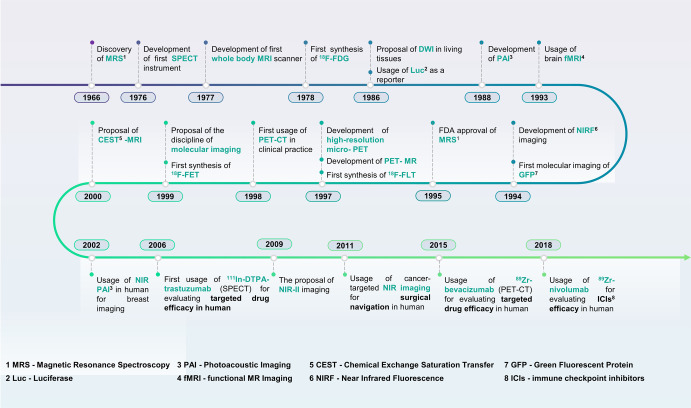
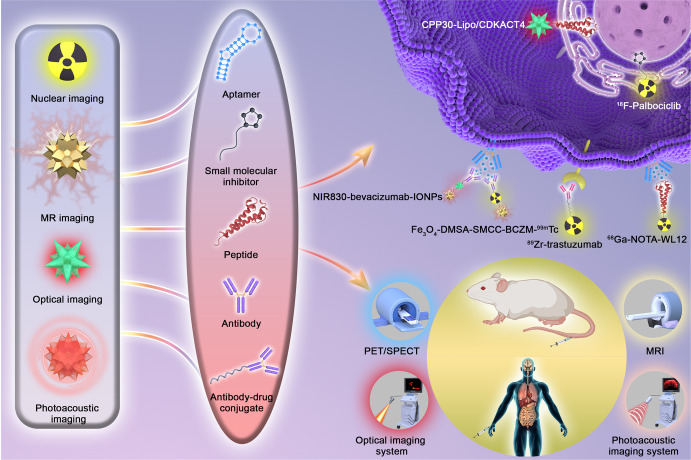
Targeted anticancer drugs block cancer cell growth by interfering with specific signaling pathways vital to carcinogenesis and tumor growth rather than harming all rapidly dividing cells as in cytotoxic chemotherapy. The Response Evaluation Criteria in Solid Tumor (RECIST) system has been used to assess tumor response to therapy via changes in the size of target lesions as measured by calipers, conventional anatomically based imaging modalities such as computed tomography (CT), and magnetic resonance imaging (MRI), and other imaging methods. However, RECIST is sometimes inaccurate in assessing the efficacy of targeted therapy drugs because of the poor correlation between tumor size and treatment-induced tumor necrosis or shrinkage. This approach might also result in delayed identification of response when the therapy does confer a reduction in tumor size. Innovative molecular imaging techniques have rapidly gained importance in the dawning era of targeted therapy as they can visualize, characterize, and quantify biological processes at the cellular, subcellular, or even molecular level rather than at the anatomical level. This review summarizes different targeted cell signaling pathways, various molecular imaging techniques, and developed probes. Moreover, the application of molecular imaging for evaluating treatment response and related clinical outcome is also systematically outlined. In the future, more attention should be paid to promoting the clinical translation of molecular imaging in evaluating the sensitivity to targeted therapy with biocompatible probes. In particular, multimodal imaging technologies incorporating advanced artificial intelligence should be developed to comprehensively and accurately assess cancer-targeted therapy, in addition to RECIST-based methods.
靶向抗癌药物通过干扰致癌和肿瘤生长至关重要的特定信号通路来阻止癌细胞生长,而不像细胞毒性化疗那样损害所有快速分裂的细胞。实体瘤反应评估标准 (RECIST) 系统已被用于通过卡尺测量的靶病变大小变化、计算机断层扫描 (CT) 等传统解剖为基础的成像方式以及其他成像方法来评估肿瘤对治疗的反应。然而,由于肿瘤大小与治疗引起的肿瘤坏死或收缩之间的相关性较差,RECIST 在评估靶向治疗药物的疗效时有时并不准确。这种方法在治疗确实会导致肿瘤缩小的情况下,也可能导致对反应的识别延迟。创新的分子成像技术在靶向治疗的崭新时代迅速获得了重要性,因为它们可以可视化、表征和量化细胞、亚细胞甚至分子水平的生物学过程,而不是在解剖学水平上。这篇综述总结了不同的靶向细胞信号通路、各种分子成像技术和开发的探针。此外,还系统地概述了分子成像在评估治疗反应和相关临床结果方面的应用。在未来,应更加关注促进分子成像在评估生物相容性探针靶向治疗敏感性方面的临床转化。特别是,应开发结合先进人工智能的多模态成像技术,除了基于 RECIST 的方法外,还应全面、准确地评估癌症靶向治疗。