Laboratório de Pesquisas em Virologia, Departamento de Doenças Dermatológicas, Infecciosas e Parasitárias, Faculdade de Medicina de São José do Rio Preto, São José do Rio Preto 15090-000, SP, Brazil.
Brazilian Biosciences National Laboratory, Centro Nacional de Pesquisa em Energia e Materiais (CNPEM), Campinas 13083-100, SP, Brazil.
Viruses. 2023 Feb 10;15(2):494. doi: 10.3390/v15020494.
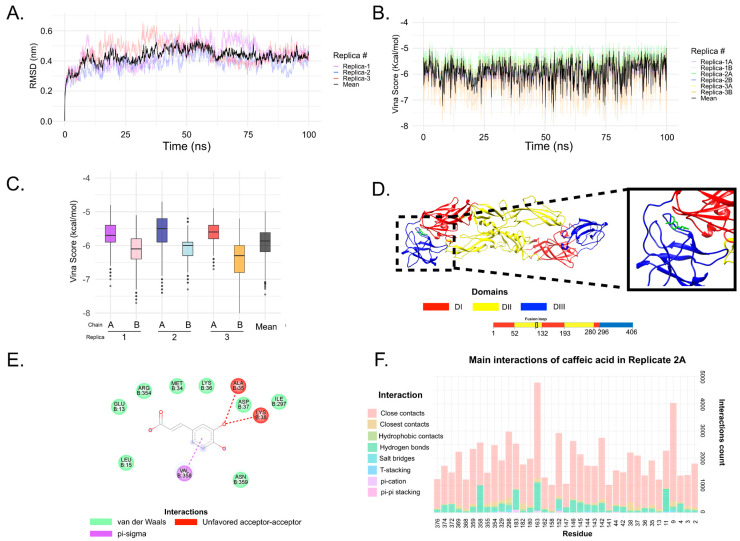
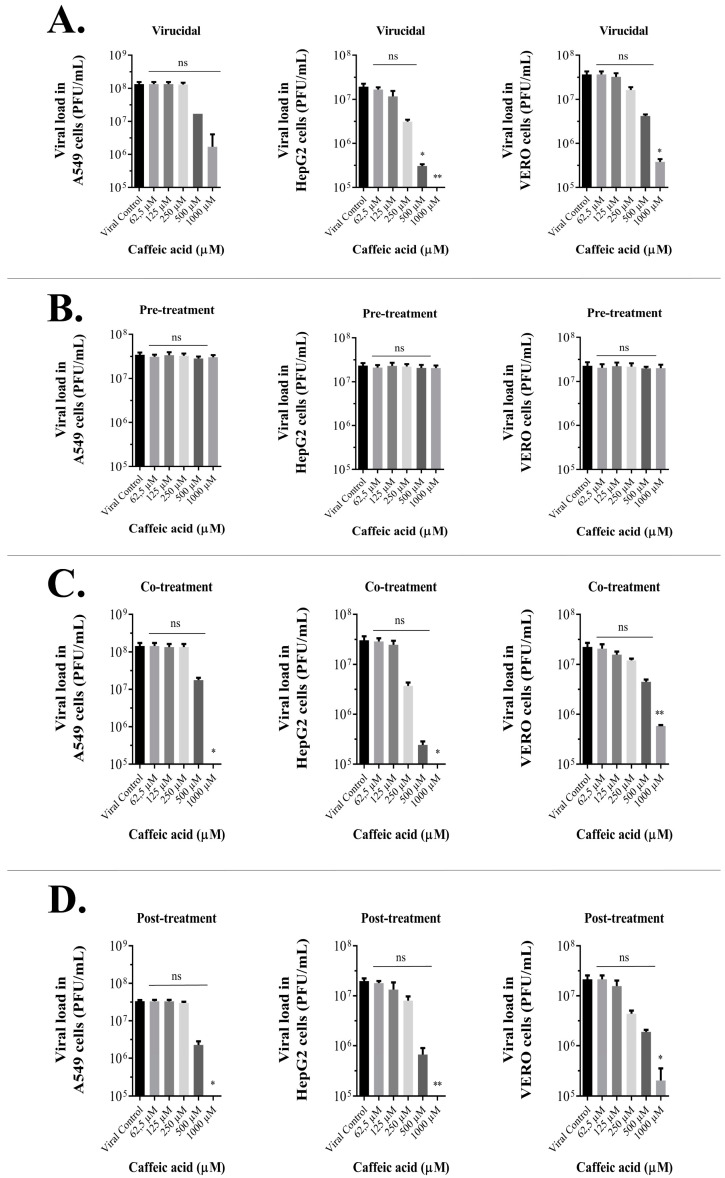
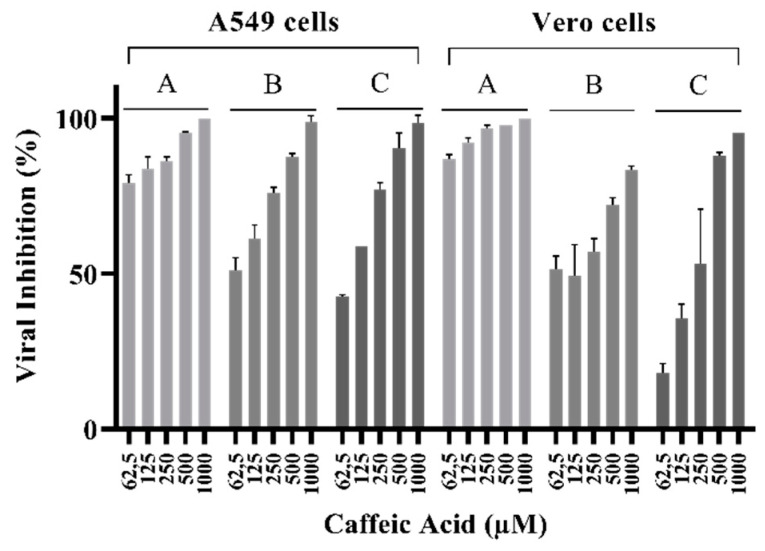
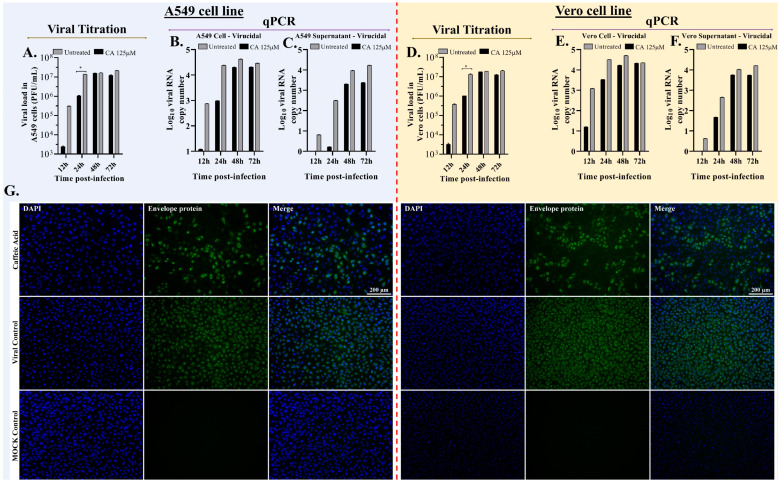
Ilhéus virus (ILHV) is a neglected mosquito-borne flavivirus. ILHV infection may lead to Ilhéus fever, an emerging febrile disease like dengue fever with the potential to evolve into a severe neurological disease characterized by meningoencephalitis; no specific treatments are available for this disease. This study assessed the antiviral properties of caffeic acid, an abundant component of plant-based food products that is also compatible with the socioeconomic limitations associated with this neglected infectious disease. The in vitro activity of caffeic acid on ILHV replication was investigated in Vero and A549 cell lines using plaque assays, quantitative RT-PCR, and immunofluorescence assays. We observed that 500 µM caffeic acid was virucidal against ILHV. Molecular docking indicated that caffeic acid might interact with an allosteric binding site on the envelope protein.
伊蚊病毒(ILHV)是一种被忽视的蚊媒黄病毒。ILHV 感染可能导致伊蚊热,这是一种新兴的发热疾病,类似于登革热,有发展为以脑膜脑炎为特征的严重神经疾病的潜力;目前尚无针对这种疾病的特效治疗方法。本研究评估了咖啡酸的抗病毒特性,咖啡酸是植物性食品中的一种丰富成分,也与这种被忽视的传染病相关的社会经济限制兼容。使用噬斑试验、定量 RT-PCR 和免疫荧光试验,在 Vero 和 A549 细胞系中研究了咖啡酸对 ILHV 复制的体外活性。我们观察到 500µM 咖啡酸对 ILHV 具有杀病毒活性。分子对接表明,咖啡酸可能与包膜蛋白的变构结合位点相互作用。