Children's Health and Exercise Research Centre, Public Health and Sports Sciences, University of Exeter Medical School, Faculty of Health and Life Sciences, University of Exeter, Exeter, UK.
Department of Physical Education, Federal University of Rio Grande do Norte, Natal, Brazil.
Exp Physiol. 2023 Apr;108(4):595-606. doi: 10.1113/EP090340. Epub 2023 Feb 28.
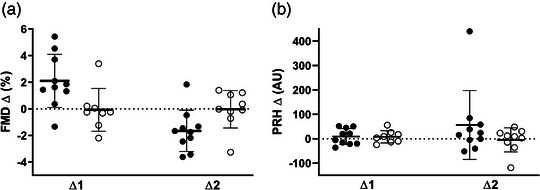
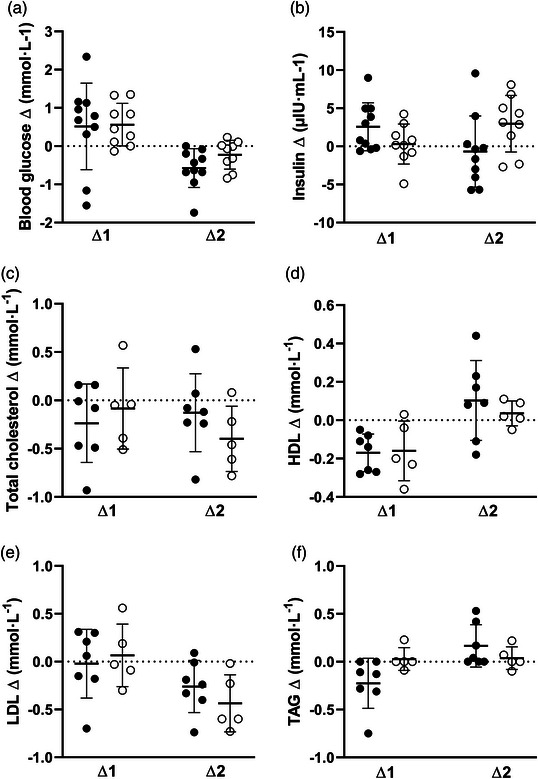
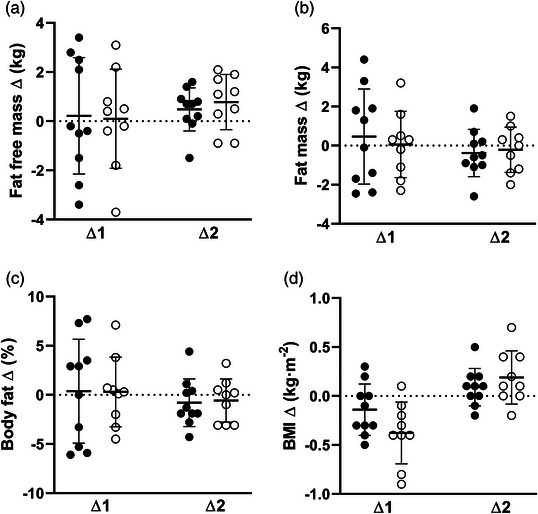
What is the central question of this study? What is the effect of 4 weeks of high-intensity interval training (HIIT) and 2 weeks of detraining on vascular function and traditional cardiovascular disease (CVD) risk factors in male adolescents? What is the main finding and its importance? Four weeks of HIIT improved macrovascular function in adolescents. However, this training period did not measurably change microvascular function, body composition or blood biomarkers. Following 2 weeks of detraining, the improvement in flow-mediated dilatation (FMD) was lost. This highlights the importance of the continuation of regular exercise for the primary prevention of CVD.
High-intensity interval training (HIIT) represents an effective method to improve cardiometabolic health in adolescents. This study aimed to investigate the effect of 4 weeks of HIIT followed by 2 weeks of detraining on vascular function and traditional cardiovascular disease (CVD) risk factors in adolescent boys. Nineteen male adolescents (13.3 ± 0.5 years) were randomly allocated to either a training (TRAIN, n = 10) or control (CON, n = 9) group. Participants in TRAIN completed 4 weeks of HIIT running with three sessions per week. Macro- (flow-mediated dilatation, FMD) and microvascular (peak reactive hyperaemia, PRH) function, body composition (fat mass, fat free mass, body fat percentage) and blood biomarkers (glucose, insulin, total cholesterol, high- and low-density lipoprotein, triacylglycerol) were assessed pre-, 48 h post- and 2 weeks post-training for TRAIN and at equivalent time points for CON. Following training, FMD was significantly greater in TRAIN compared to CON (9.88 ± 2.40% and 8.64 ± 2.70%, respectively; P = 0.036) but this difference was lost 2 weeks after training cessation (8.22 ± 2.47% and 8.61 ± 1.99%, respectively; P = 0.062). No differences were detected between groups for PRH (P = 0.821), body composition (all P > 0.14) or blood biomarkers (all P > 0.18). In conclusion, 4 weeks of HIIT improved macrovascular function; however, this training period did not measurably change microvascular function, body composition or blood biomarkers. The reversal of the FMD improvement 2 weeks post-training highlights the importance of the continuation of regular exercise for the primary prevention of CVD.
本研究的核心问题是什么?四周高强度间歇训练(HIIT)和两周停训对男性青少年的血管功能和传统心血管疾病(CVD)风险因素有何影响?主要发现及其重要性是什么?四周 HIIT 可改善青少年的大血管功能。然而,此训练期并未显著改变微血管功能、身体成分或血液生物标志物。停训两周后,血流介导的扩张(FMD)的改善消失。这凸显了定期运动对 CVD 一级预防的重要性。
高强度间歇训练(HIIT)是改善青少年心脏代谢健康的有效方法。本研究旨在探讨四周 HIIT 加两周停训对男青少年血管功能和传统心血管疾病(CVD)风险因素的影响。19 名男性青少年(13.3±0.5 岁)被随机分配到训练(TRAIN,n=10)或对照组(CON,n=9)。TRAIN 组进行四周 HIIT 跑步,每周三次。在训练和 CON 组的等效时间点,评估宏观(血流介导的扩张,FMD)和微观血管(峰值反应性充血,PRH)功能、身体成分(脂肪量、去脂体重、体脂百分比)和血液生物标志物(血糖、胰岛素、总胆固醇、高低密度脂蛋白、三酰甘油)。与 CON 相比,TRAIN 组训练后 FMD 显著更高(9.88±2.40%和 8.64±2.70%;P=0.036),但停止训练两周后,这种差异消失(8.22±2.47%和 8.61±1.99%;P=0.062)。两组间 PRH 无差异(P=0.821),身体成分(所有 P>0.14)或血液生物标志物(所有 P>0.18)无差异。总之,四周 HIIT 可改善大血管功能;然而,此训练期并未显著改变微血管功能、身体成分或血液生物标志物。停训两周后 FMD 改善的逆转凸显了定期运动对 CVD 一级预防的重要性。