Department of Neurosurgery, Nagoya City University Graduate School of Medical Science.
Interfaculty Initiative in Information Studies/Institute of Industrial Science, The University of Tokyo.
Neurol Med Chir (Tokyo). 2023 Apr 15;63(4):141-151. doi: 10.2176/jns-nmc.2022-0331. Epub 2023 Mar 1.
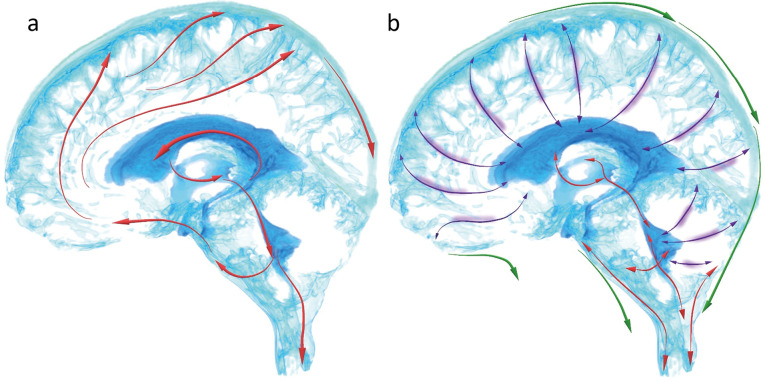
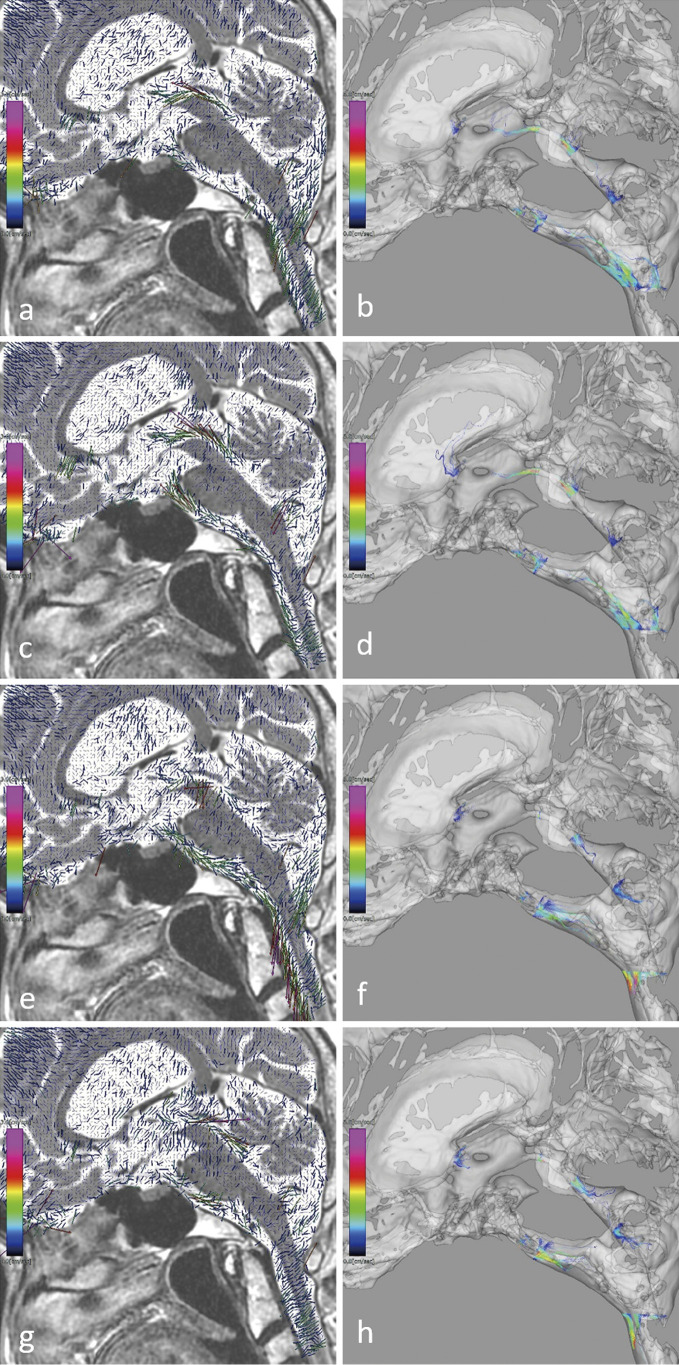
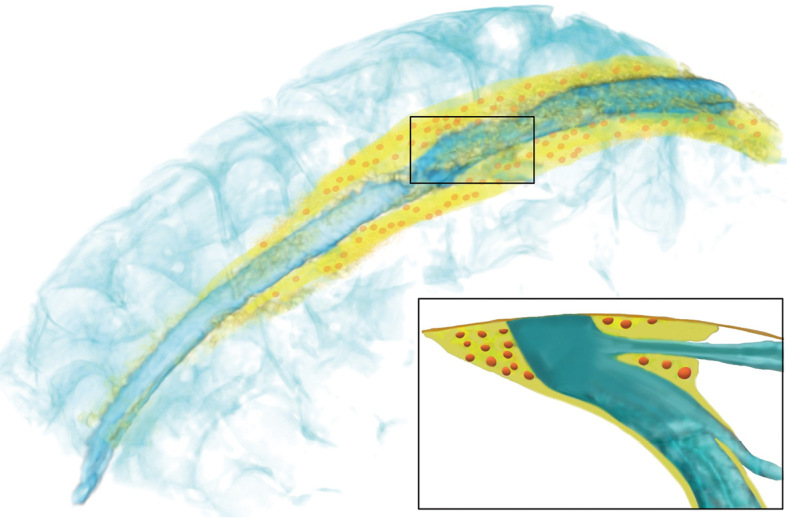
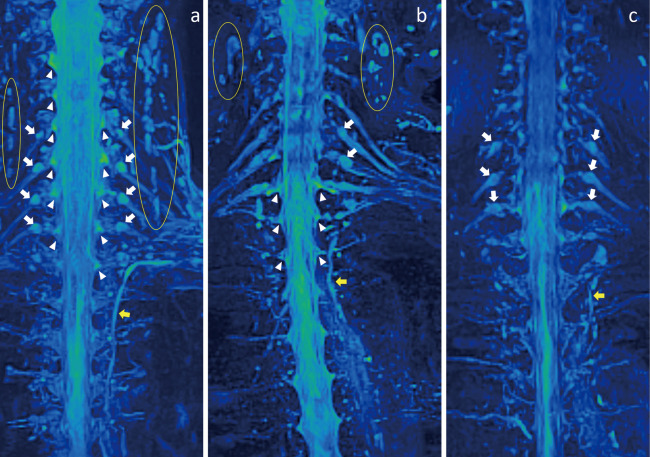
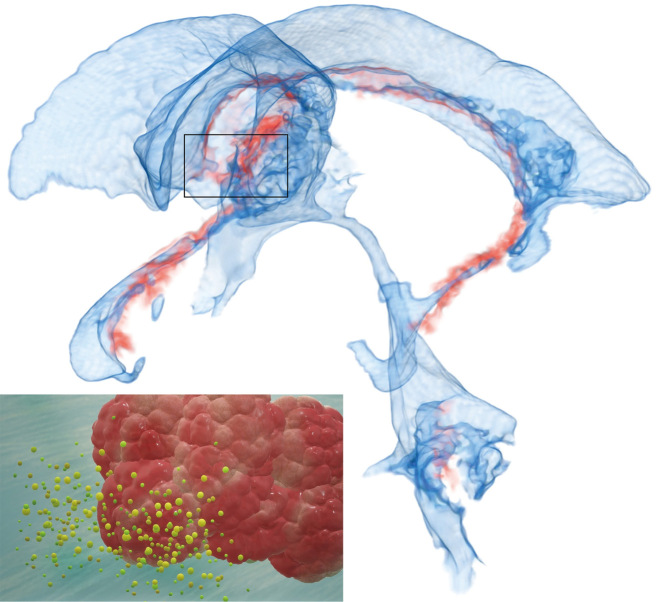
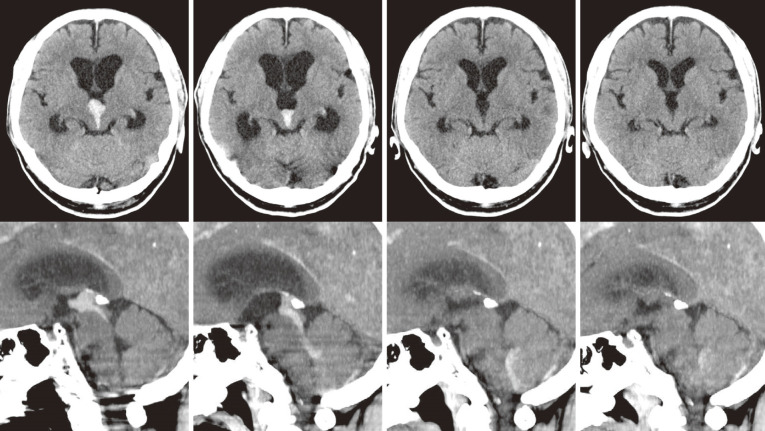
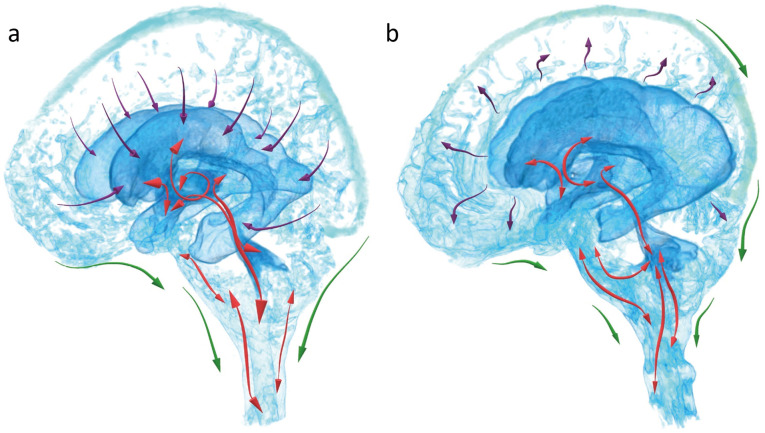
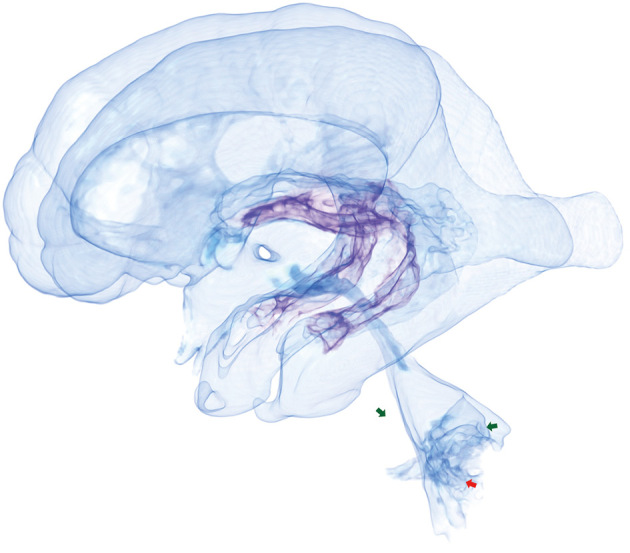
Cerebrospinal fluid (CSF) production and absorption concept significantly changed in the early 2010s from "third circulation theory" and "classical bulk flow theory" to a whole new one as follows: First, CSF is mainly produced from interstitial fluid excreted from the brain parenchyma, and CSF produced from the choroid plexus plays an important role in maintaining brain homeostasis. Second, CSF is not absorbed in the venous sinus via the arachnoid granules, but mainly in the dural lymphatic vessels. Finally, the ventricles and subarachnoid spaces have several compensatory direct CSF pathways at the borders attached to the choroid plexus, e.g., the inferior choroidal point of the choroidal fissure, other than the foramina of Luschka and Magendie. In idiopathic normal pressure hydrocephalus (iNPH), the lateral ventricles and basal cistern are enlarged simultaneously due to the compensatory direct CSF pathways. The average total intracranial CSF volume increased from about 150 mL at 20 years to about 350 mL at 70 years due to the decrease in brain volume with aging and further increased above 400 mL in patients with iNPH. CSF movements are composed of a steady microflow produced by the rhythmic wavy movement of motile cilia on the ventricular surface and dynamic pulsatile flow produced by the brain and cerebral artery pulsation, respiration, and head movement. Pulsatile CSF movements might totally decrease with aging, but it in the ventricles might increase at the foramina of Magendie and Luschka dilation. Aging CSF dynamics are strongly associated with ventricular dilatation in iNPH.
脑脊液(CSF)的产生和吸收概念在 21 世纪初发生了重大变化,从“第三循环理论”和“经典整体流动理论”转变为全新的理论,具体如下:首先,CSF 主要由脑实质排出的间质液产生,脉络丛产生的 CSF 在维持脑内环境稳定方面发挥着重要作用。其次,CSF 不是通过蛛网膜颗粒在静脉窦中被吸收,而是主要通过硬脑膜淋巴管被吸收。最后,脑室和蛛网膜下腔在附着于脉络丛的边界处有几个补偿性的直接 CSF 途径,例如脉络裂的下脉络点,而不是卢什卡孔和马根迪孔。在特发性正常压力脑积水(iNPH)中,由于补偿性的直接 CSF 途径,侧脑室和基底池同时扩大。由于脑体积随年龄的增长而减小,70 岁时的平均总颅内 CSF 体积从 20 岁时的约 150 毫升增加到约 350 毫升,而 iNPH 患者的 CSF 体积则进一步增加到 400 毫升以上。CSF 运动由心室表面运动纤毛有节奏的波动产生的稳定微流和由大脑和脑动脉搏动、呼吸和头部运动产生的动态脉动流组成。随着年龄的增长,脉动 CSF 运动可能会完全减少,但在马根迪孔和卢什卡孔扩张时,脑室中的 CSF 运动可能会增加。衰老 CSF 动力学与 iNPH 中的脑室扩张密切相关。