Graduate School of Medical Science and Engineering, Korea Advanced Institute of Science and Technology (KAIST), Daejeon 34141, Korea.
Mol Cells. 2023 Feb 28;46(2):120-129. doi: 10.14348/molcells.2023.0002. Epub 2023 Feb 22.
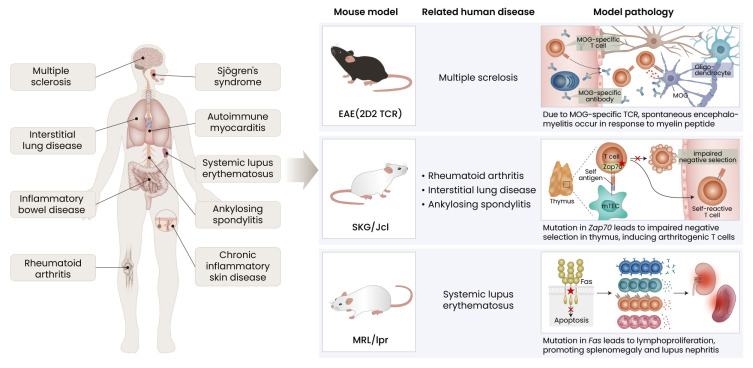
Recent technical advances have enabled unbiased transcriptomic and epigenetic analysis of each cell, known as "single-cell analysis". Single-cell analysis has a variety of technical approaches to investigate the state of each cell, including mRNA levels (transcriptome), the immune repertoire (immune repertoire analysis), cell surface proteins (surface proteome analysis), chromatin accessibility (epigenome), and accordance with genome variants (eQTLs; expression quantitative trait loci). As an effective tool for investigating robust immune responses in coronavirus disease 2019 (COVID-19), many researchers performed single-cell analysis to capture the diverse, unbiased immune cell activation and differentiation. Despite challenges elucidating the complicated immune microenvironments of chronic inflammatory diseases using existing experimental methods, it is now possible to capture the simultaneous immune features of different cell types across inflamed tissues using various single-cell tools. In this review, we introduce patient-based and experimental mouse model research utilizing single-cell analyses in the field of chronic inflammatory diseases, as well as multi-organ atlas targeting immune cells.
最近的技术进步使得对每个细胞进行无偏倚的转录组学和表观遗传分析成为可能,这种分析被称为“单细胞分析”。单细胞分析有多种技术方法可以研究每个细胞的状态,包括 mRNA 水平(转录组)、免疫受体库(免疫受体分析)、细胞表面蛋白(表面蛋白质组分析)、染色质可及性(表观基因组)和与基因组变异的一致性(eQTLs;表达数量性状位点)。作为研究 2019 年冠状病毒病(COVID-19)中稳健免疫反应的有效工具,许多研究人员进行了单细胞分析,以捕捉多样化的、无偏倚的免疫细胞激活和分化。尽管使用现有的实验方法阐明慢性炎症性疾病复杂的免疫微环境存在挑战,但现在使用各种单细胞工具可以同时捕捉炎症组织中不同细胞类型的免疫特征。在这篇综述中,我们介绍了基于患者和实验小鼠模型的研究,以及针对免疫细胞的多器官图谱,这些研究都利用了单细胞分析。