Department of Pharmaceutical Chemistry, University of California San Francisco, San Francisco, California, USA.
Helen Diller Family Comprehensive Cancer Center, University of California San Francisco, San Francisco, California, USA.
MAbs. 2023 Jan-Dec;15(1):2184197. doi: 10.1080/19420862.2023.2184197.
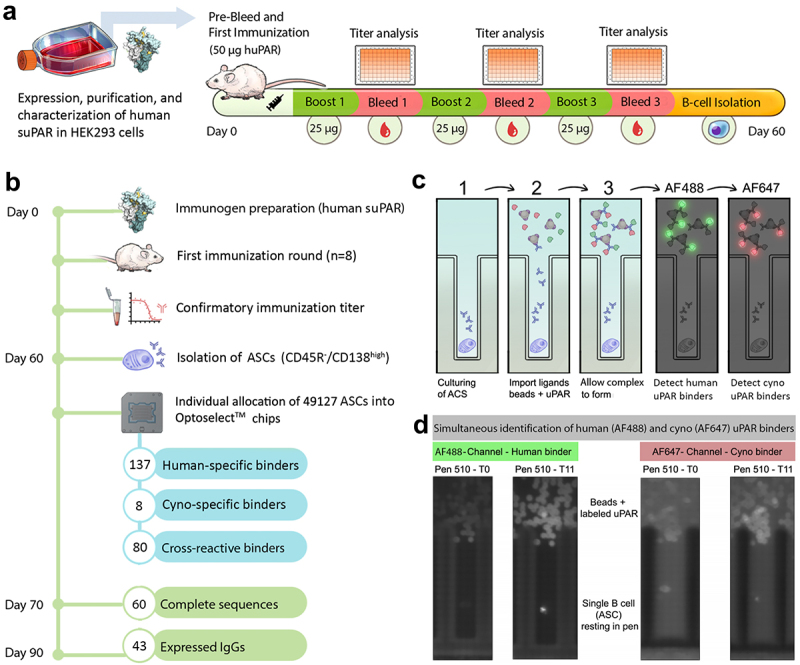
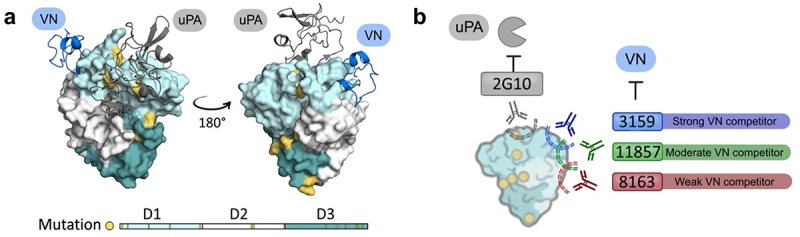
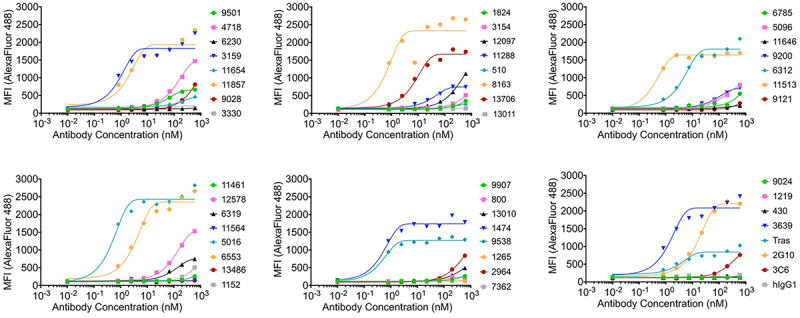
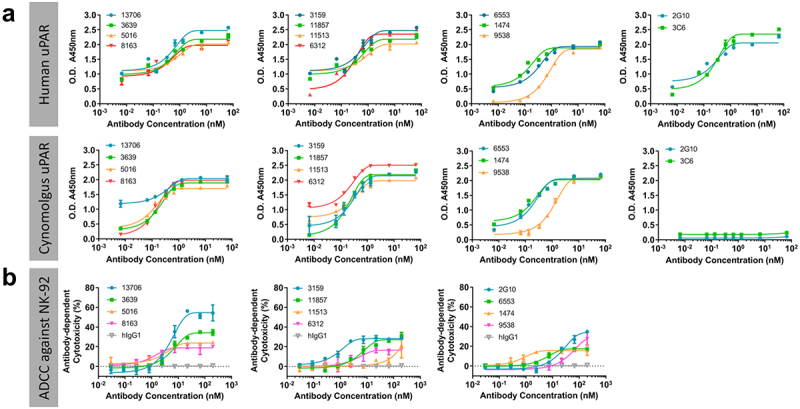
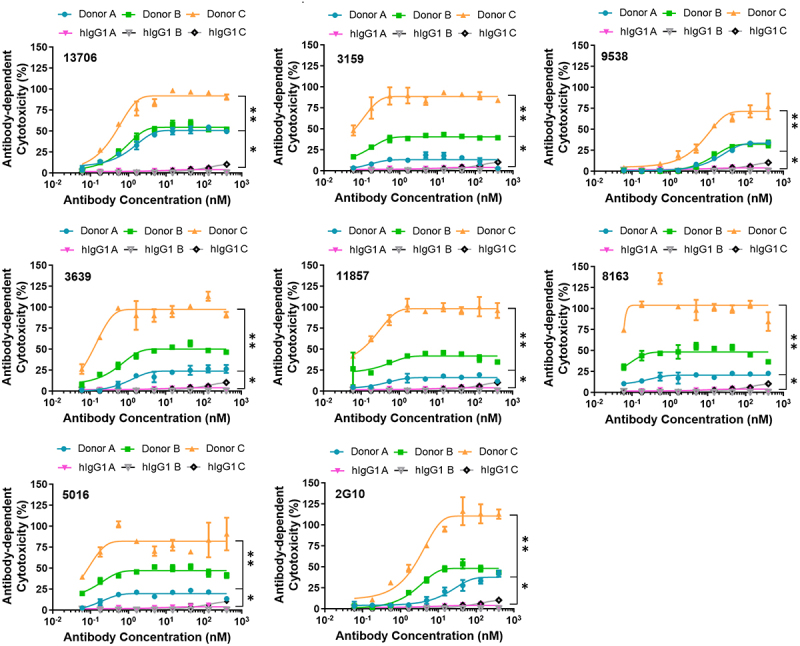
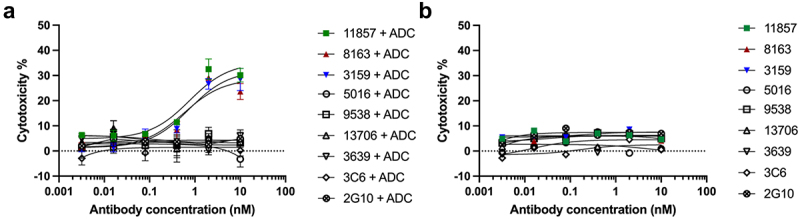
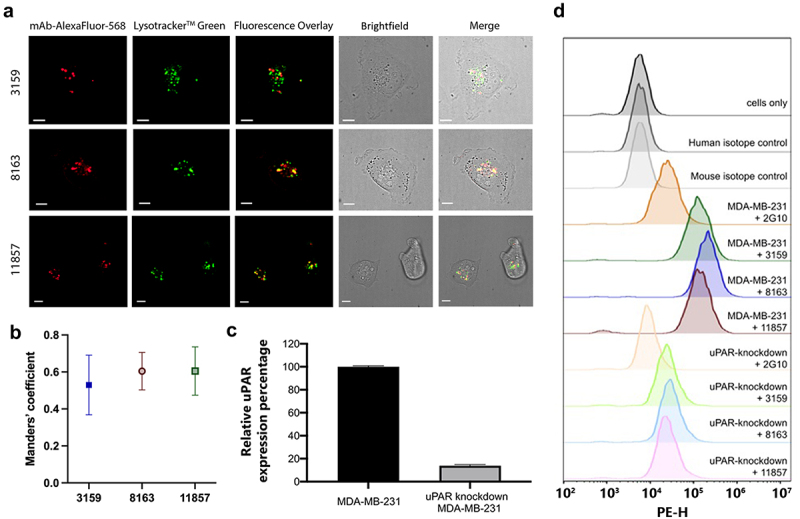
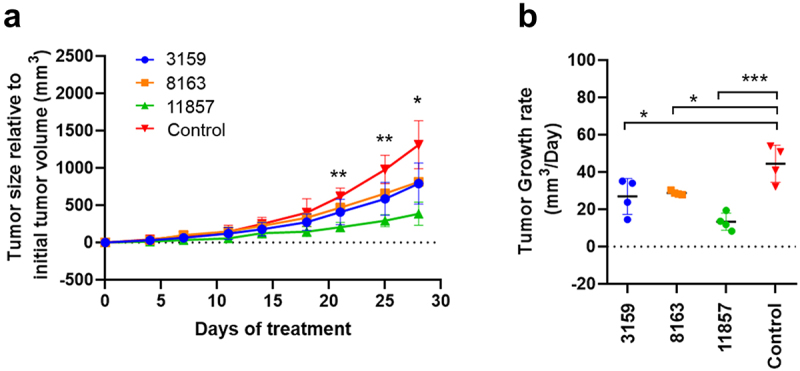
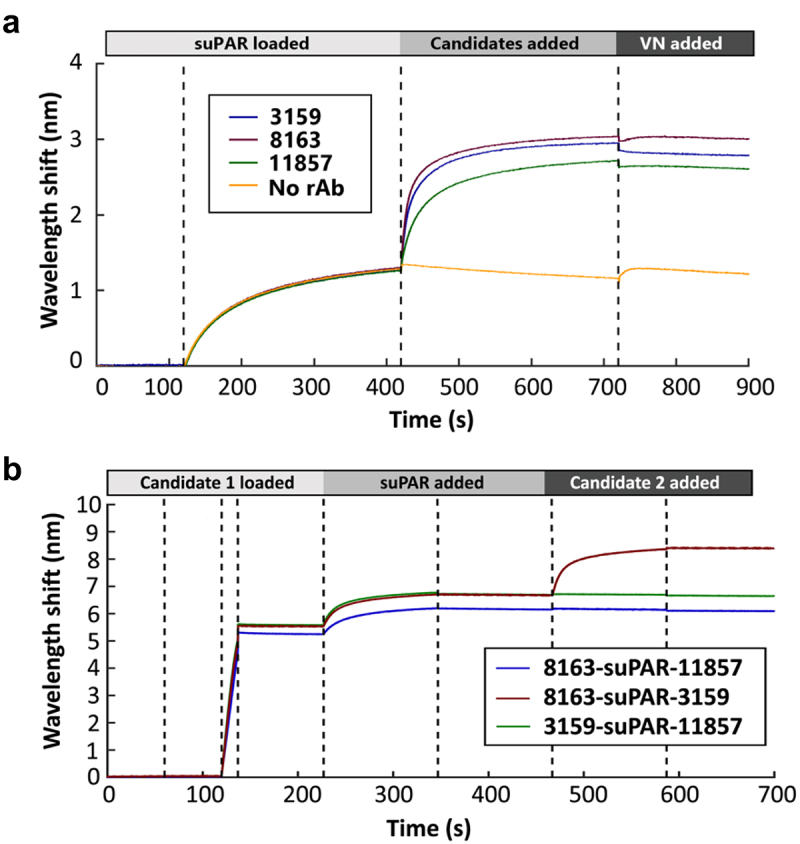
The urokinase-type plasminogen activator receptor (uPAR) is an essential regulator for cell signaling in tumor cell proliferation, adhesion, and metastasis. The ubiquitous nature of uPAR in many aggressive cancer types makes uPAR an attractive target for immunotherapy. Here, we present a rapid and successful workflow for developing cross-reactive anti-uPAR recombinant antibodies (rAbs) using high-throughput optofluidic screening of single B-cells from human uPAR-immunized mice. A total of 80 human and cynomolgus uPAR cross-reactive plasma cells were identified, and selected mouse VH/VL domains were linked to the trastuzumab (Herceptin®) constant domains for the expression of mouse-human chimeric antibodies. The resulting rAbs were characterized by their tumor-cell recognition, binding activity, and cell adhesion inhibition on triple-negative breast cancer cells. In addition, the rAbs were shown to enact antibody-dependent cellular cytotoxicity (ADCC) in the presence of either human natural killer cells or peripheral blood mononuclear cells, and were evaluated for the potential use of uPAR-targeting antibody-drug conjugates (ADCs). Three lead antibodies (11857, 8163, and 3159) were evaluated for their therapeutic efficacy and were shown to suppress tumor growth. Finally, the binding epitopes of the lead antibodies were characterized, providing information on their unique binding modes to uPAR. Altogether, the strategy identified unique cross-reactive antibodies with ADCC, ADC, and functional inhibitory effects by targeting cell-surface uPAR, that can be tested in safety studies and serve as potential immunotherapeutics.
尿激酶型纤溶酶原激活物受体 (uPAR) 是肿瘤细胞增殖、黏附和转移中细胞信号转导的重要调节剂。uPAR 在许多侵袭性癌症类型中普遍存在,使其成为免疫治疗的一个有吸引力的靶点。在这里,我们提出了一种使用高通量光电筛选从人 uPAR 免疫小鼠的单个 B 细胞中快速成功开发交叉反应性抗 uPAR 重组抗体 (rAb) 的工作流程。鉴定了总共 80 个人和食蟹猴 uPAR 交叉反应性浆细胞,并选择了小鼠 VH/VL 结构域与曲妥珠单抗 (赫赛汀®) 恒定结构域连接,用于表达鼠-人嵌合抗体。通过对三阴性乳腺癌细胞的肿瘤细胞识别、结合活性和细胞黏附抑制作用对 rAb 进行了表征。此外,在存在人自然杀伤细胞或外周血单核细胞的情况下,rAb 被证明能引发抗体依赖性细胞毒性 (ADCC),并评估了它们作为 uPAR 靶向抗体药物偶联物 (ADC) 的潜在用途。对三种先导抗体 (11857、8163 和 3159) 的治疗功效进行了评估,并显示出抑制肿瘤生长的作用。最后,对先导抗体的结合表位进行了表征,提供了有关其与 uPAR 独特结合模式的信息。总之,该策略通过靶向细胞表面 uPAR 鉴定出具有 ADCC、ADC 和功能抑制作用的独特交叉反应性抗体,可在安全性研究中进行测试,并可作为潜在的免疫疗法。