Poon Yeuklan, Hui Mamie
Department of Microbiology, Faculty of Medicine, The Chinese University of Hong Kong, Hong Kong SAR, China.
Front Microbiol. 2023 Feb 13;14:1105949. doi: 10.3389/fmicb.2023.1105949. eCollection 2023.
Probiotic strains had been investigated for the potential to protect against infection caused by the major fungal pathogen of human, . Besides antifungal activity, lactobacilli demonstrated a promising inhibitory effect on biofilm formation and filamentation of . On the other hand, two commonly isolated non-albicans species, and , have similar characteristics in filamentation and biofilm formation with . However, there is scant information of the effect of lactobacilli on the two species.
In this study, biofilm inhibitory effects of ATCC 53103, ATCC 8014, and ATCC 4356 were tested on the reference strain SC5314 and six bloodstream isolated clinical strains, two each of , , and .
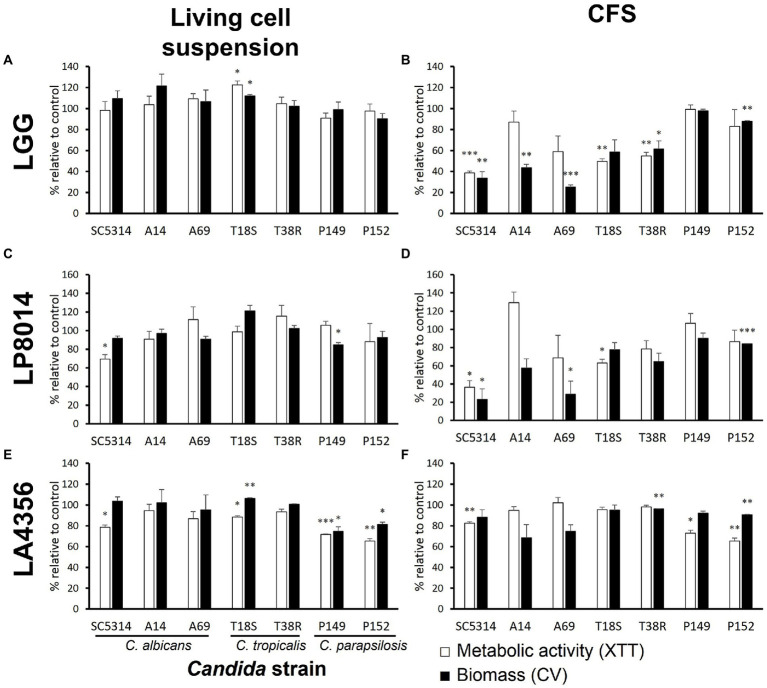
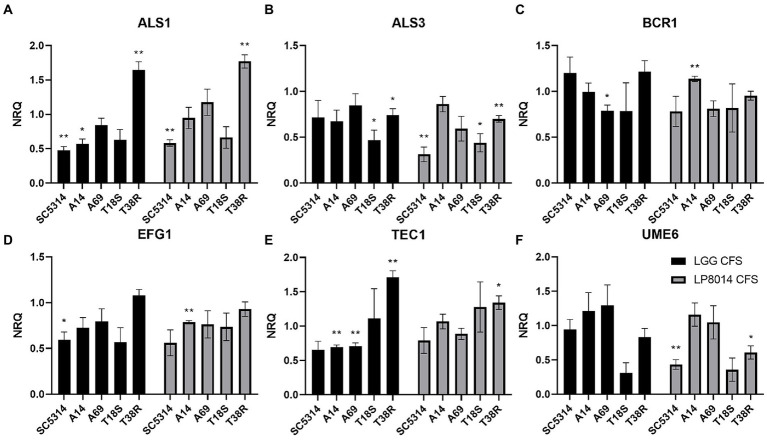
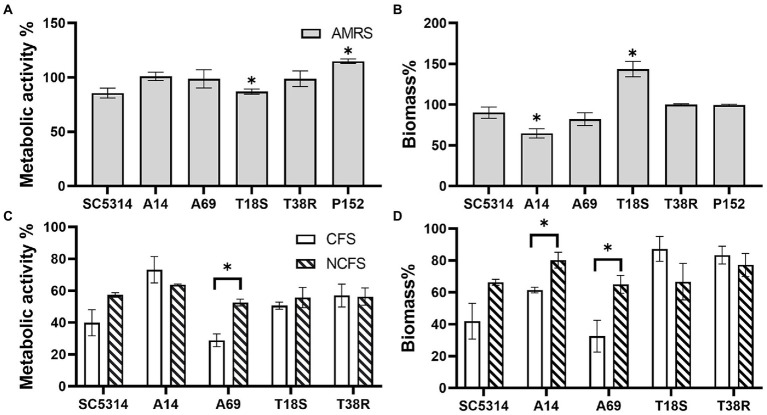
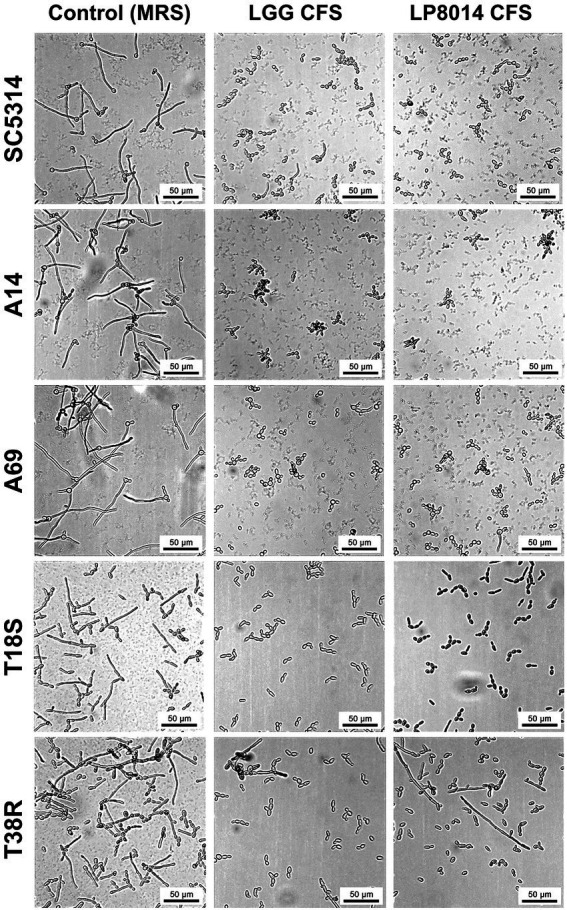
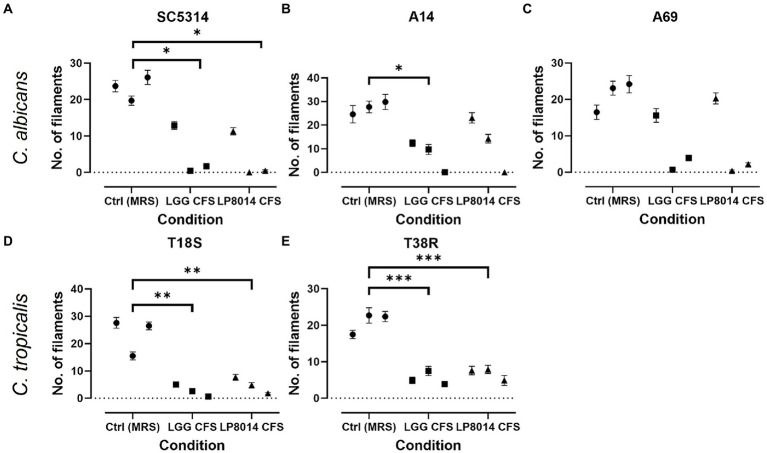
Cell-free culture supernatants (CFSs) of and significantly inhibited biofilm growth of and . , conversely, had little effect on and but was more effective on inhibiting biofilms. Neutralized CFS at pH 7 retained the inhibitory effect, suggesting that exometabolites other than lactic acid produced by the strain might be accounted for the effect. Furthermore, we evaluated the inhibitory effects of and CFSs on the filamentation of and strains. Significantly less filaments were observed after co-incubating with CFSs under hyphae-inducing conditions. Expressions of six biofilm-related genes (, , , , , and in and corresponding orthologs in ) in biofilms co-incubated with CFSs were analyzed using quantitative real-time PCR. When compared to untreated control, the expressions of , , , and genes were downregulated in biofilm. In biofilms, and were downregulated while was upregulated. Taken together, the and strains demonstrated an inhibitory effect, which is likely mediated by the metabolites secreted into culture medium, on filamentation and biofilm formation of and . Our finding suggested an alternative to antifungals for controlling biofilm.
益生菌菌株已被研究用于预防由人类主要真菌病原体引起的感染。除了抗真菌活性外,乳酸菌对生物膜形成和丝状化表现出有前景的抑制作用。另一方面,两种常见的非白色念珠菌属物种,[具体物种1]和[具体物种2],在丝状化和生物膜形成方面与[对比物种]具有相似特征。然而,关于乳酸菌对这两个物种的影响的信息很少。
在本研究中,测试了嗜酸乳杆菌ATCC 53103、植物乳杆菌ATCC 8014和干酪乳杆菌ATCC 4356对参考菌株白色念珠菌SC5314以及六种血流分离临床菌株(每种[具体物种1]、[具体物种2]和[对比物种]各两株)的生物膜抑制作用。
嗜酸乳杆菌和植物乳杆菌的无细胞培养上清液(CFSs)显著抑制了白色念珠菌和光滑念珠菌的生物膜生长。相反,干酪乳杆菌对光滑念珠菌和近平滑念珠菌影响很小,但对抑制热带念珠菌生物膜更有效。pH 7的中和嗜酸乳杆菌CFS保留了抑制作用,表明嗜酸乳杆菌菌株产生的除乳酸外的胞外代谢产物可能是造成这种影响的原因。此外,我们评估了嗜酸乳杆菌和植物乳杆菌CFSs对光滑念珠菌和热带念珠菌菌株丝状化的抑制作用。在菌丝诱导条件下与CFSs共同孵育后,观察到的丝状化明显减少。使用定量实时PCR分析了与CFSs共同孵育的生物膜中六种生物膜相关基因(白色念珠菌中的[基因1]、[基因2]、[基因3]、[基因4]、[基因5]和[基因6]以及[对比物种]中的相应直系同源基因)的表达。与未处理的对照相比,白色念珠菌生物膜中[基因1]、[基因2]、[基因3]和[基因4]的表达下调。在热带念珠菌生物膜中,[基因5]和[基因6]下调而[基因7]上调。综上所述,嗜酸乳杆菌和植物乳杆菌菌株对光滑念珠菌和热带念珠菌的丝状化和生物膜形成表现出抑制作用,这可能是由分泌到培养基中的代谢产物介导的。我们的发现为控制念珠菌生物膜提供了一种抗真菌药物的替代方法。