Clinical and Experimental Medicine Ph.D. Program, University of Modena and Reggio Emilia, Modena, Italy.
Department of Surgical, Medical, Dental, and Morphological Sciences with Interest in Transplant, Oncological and Regenerative Medicine, University of Modena and Reggio Emilia, Modena, Italy.
Microbiol Spectr. 2022 Jun 29;10(3):e0269621. doi: 10.1128/spectrum.02696-21. Epub 2022 May 2.
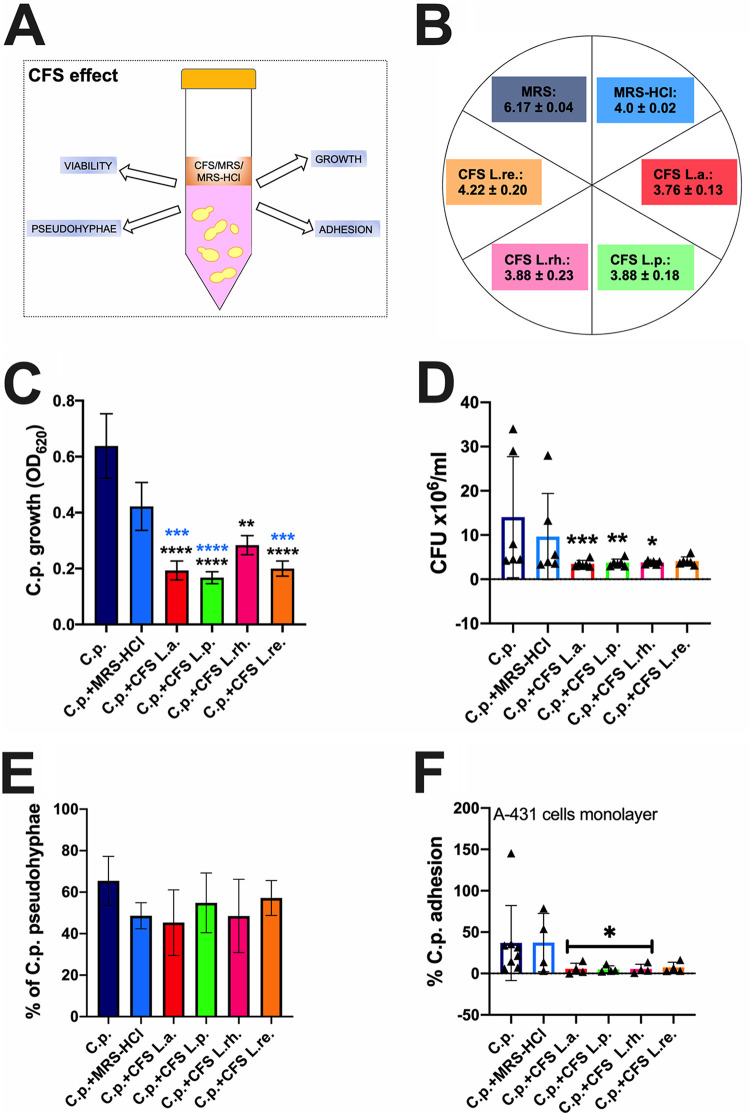
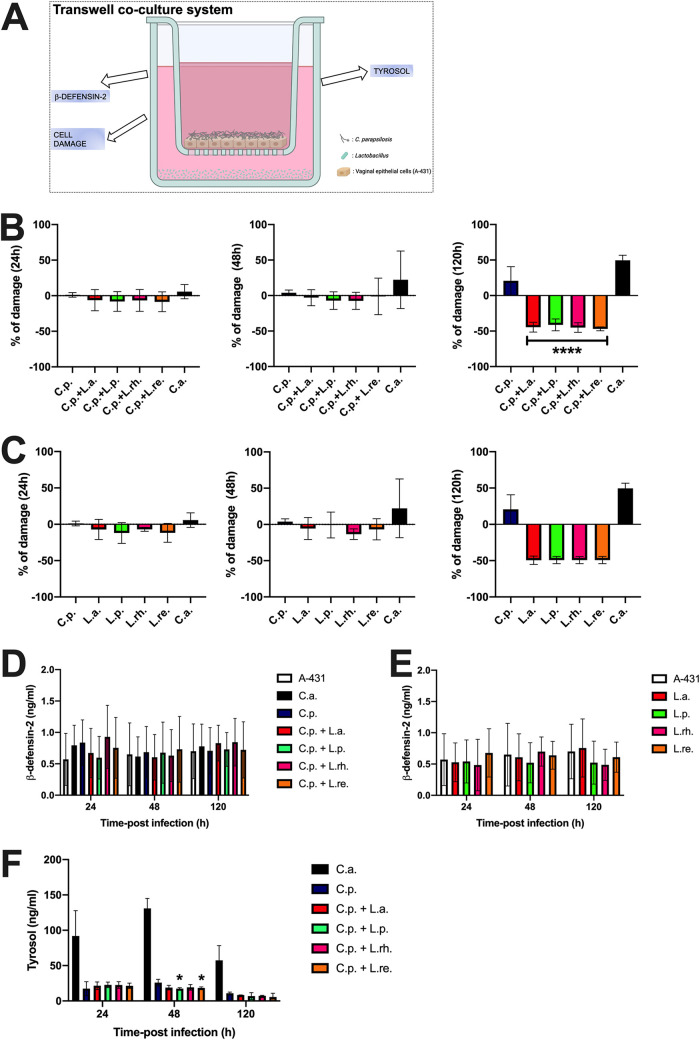
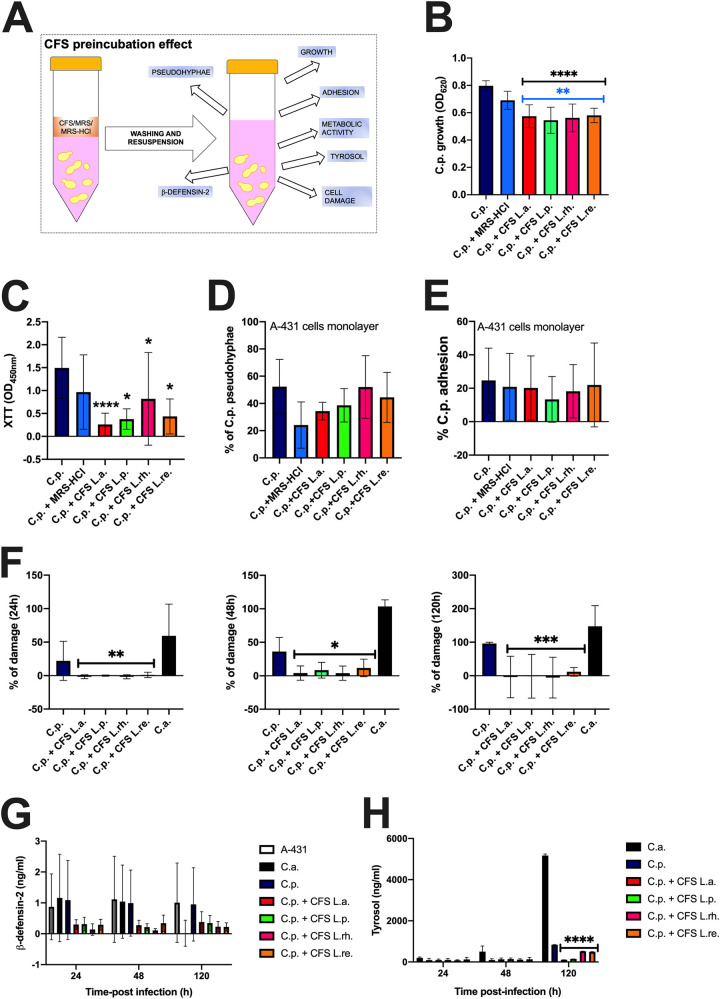
Vulvovaginal candidiasis (VVC) is a common clinical condition with symptoms and signs of vaginal inflammation in the presence of species. At least one episode of VVC is experienced in up to 75% of women in the reproductive age group during their lifetime, and 5% to 8% of such women suffer from the chronic form. Most cases of VVC are still caused by C. albicans. However, the incidence of VVC cases by non-albicans Candida (NAC) species, such as C. parapsilosis, is continuously increasing. Despite the prevalence of VVC from NAC, little is known about these species and almost nothing about the mechanisms that trigger the VVC. spp. are the most widely before represented microorganisms in the vaginal microbiota of healthy women. Here, cell-free supernatants (CFS) obtained from L. acidophilus, L. plantarum, L. rhamnosus, and L. reuteri were assessed for their effect on C. parapsilosis virulence traits. Moreover, we assessed if such an effect persisted even after the removal of the CFS (CFS preincubation effect). Moreover, a transwell coculture system was employed by which the relevant antifungal effect was shown to be attributable to the compounds released by lactobacilli. Our results suggest that lactobacilli can work (i) by reducing C. parapsilosis virulence traits, as indicated by the reduced fungal proliferation, viability, and metabolic activity, and (ii) by improving epithelial resistance to the fungus. Overall, these data suggest that, in the context of the vaginal microbiota, the lactobacilli may play a role in preventing the onset of mucosal C. parapsilosis infection. The incidence of VVC by non-albicans Candida (NAC) species, such as C. parapsilosis, is increasing. Treatment failure is common in NAC-VVC because some species are resistant or poorly susceptible to the antifungal agents normally employed. Research on C. parapsilosis's pathogenic mechanisms and alternative treatments are still lacking. C. albicans triggers the VVC by producing hyphae, which favor the loss of epithelial tolerance. Differently, C. parapsilosis only produces pseudohyphae. Hence, different virulence factors may trigger the VVC. Likewise, the therapeutic options could also involve different fungal targets. Substantial and studies on the pathogenicity mechanisms of C. parapsilosis are lacking. The data presented here ascribe a novel beneficial role to different spp., whose CFS provides a postbiotic-like activity against C. parapsilosis. Further studies are needed to unravel the mechanisms involved in the bioactivities of such compounds, to better understand the role of single postbiotics in the CFS.
外阴阴道假丝酵母菌病(VVC)是一种常见的临床病症,其特征为阴道炎症和 种假丝酵母菌的存在。在育龄期女性中,高达 75%的人一生中至少会经历一次 VVC,其中 5%至 8%的女性患有慢性 VVC。大多数 VVC 仍然是由白假丝酵母菌引起的。然而,非白假丝酵母菌(NAC)物种,如近平滑假丝酵母菌的 VVC 病例的发生率正在不断增加。尽管 NAC 引起的 VVC 很常见,但人们对这些物种知之甚少,几乎不知道引发 VVC 的机制是什么。 种是健康女性阴道微生物群中最广泛存在的微生物。在这里,我们评估了嗜酸乳杆菌、植物乳杆菌、鼠李糖乳杆菌和罗伊氏乳杆菌的无细胞上清液(CFS)对近平滑假丝酵母菌毒力特征的影响。此外,我们还评估了这种效应是否在去除 CFS 后仍然存在(CFS 预孵育效应)。此外,我们还采用了 Transwell 共培养系统,表明相关的抗真菌作用归因于乳杆菌释放的化合物。我们的结果表明,乳杆菌可以通过以下方式发挥作用:(i)降低近平滑假丝酵母菌的毒力特征,如真菌增殖、活力和代谢活性降低;(ii)提高上皮细胞对真菌的抵抗力。总的来说,这些数据表明,在阴道微生物群的背景下,乳杆菌可能在预防阴道假丝酵母菌感染方面发挥作用。 非白假丝酵母菌(NAC)物种,如近平滑假丝酵母菌引起的 VVC 发病率正在上升。由于一些物种对常用抗真菌药物具有耐药性或敏感性差,因此 NAC-VVC 的治疗失败很常见。关于近平滑假丝酵母菌发病机制和替代治疗方法的研究仍然缺乏。白假丝酵母菌通过产生菌丝来引发 VVC,这有利于上皮细胞耐受性的丧失。相比之下,近平滑假丝酵母菌仅产生假菌丝。因此,不同的毒力因子可能引发 VVC。同样,治疗选择也可能涉及不同的真菌靶标。关于近平滑假丝酵母菌致病性机制的大量 和 研究仍然缺乏。这里提出的新数据赋予了不同 种一个新的有益作用,它们的 CFS 对近平滑假丝酵母菌具有后生元样的活性。需要进一步研究来阐明这些化合物的生物活性所涉及的机制,以更好地理解单个后生元在 CFS 中的作用。