Department of Signal Theory and Communications, Universidad Carlos III de Madrid, Leganés, Spain.
Instituto de Investigación Sanitaria Gregorio Marañón, Madrid, Spain.
Sci Rep. 2023 Mar 2;13(1):3546. doi: 10.1038/s41598-023-30085-1.
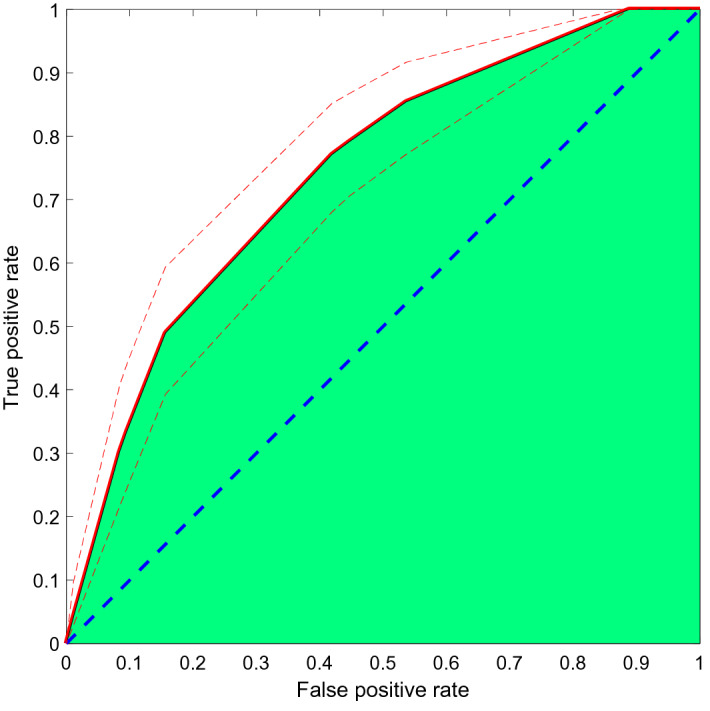
The variability of suicidal thoughts and other clinical factors during follow-up has emerged as a promising phenotype to identify vulnerable patients through Ecological Momentary Assessment (EMA). In this study, we aimed to (1) identify clusters of clinical variability, and (2) examine the features associated with high variability. We studied a set of 275 adult patients treated for a suicidal crisis in the outpatient and emergency psychiatric departments of five clinical centers across Spain and France. Data included a total of 48,489 answers to 32 EMA questions, as well as baseline and follow-up validated data from clinical assessments. A Gaussian Mixture Model (GMM) was used to cluster the patients according to EMA variability during follow-up along six clinical domains. We then used a random forest algorithm to identify the clinical features that can be used to predict the level of variability. The GMM confirmed that suicidal patients are best clustered in two groups with EMA data: low- and high-variability. The high-variability group showed more instability in all dimensions, particularly in social withdrawal, sleep measures, wish to live, and social support. Both clusters were separated by ten clinical features (AUC = 0.74), including depressive symptoms, cognitive instability, the intensity and frequency of passive suicidal ideation, and the occurrence of clinical events, such as suicide attempts or emergency visits during follow-up. Initiatives to follow up suicidal patients with ecological measures should take into account the existence of a high variability cluster, which could be identified before the follow-up begins.
在随访期间,自杀意念和其他临床因素的变化已经成为通过生态瞬时评估(EMA)识别易受影响患者的有前途的表型。在这项研究中,我们旨在:(1)确定临床变化的聚类,(2)检查与高变异性相关的特征。我们研究了一组来自西班牙和法国五个临床中心的门诊和急诊精神科的 275 名成年患者,他们因自杀危机而接受治疗。数据包括总共 48489 个对 32 个 EMA 问题的回答,以及来自临床评估的基线和随访验证数据。使用高斯混合模型(GMM)根据随访期间的 EMA 变异性对患者进行聚类,沿着六个临床领域进行。然后,我们使用随机森林算法来识别可以用于预测变异性水平的临床特征。GMM 证实,自杀患者在两个具有 EMA 数据的组中聚类效果最佳:低变异性组和高变异性组。高变异性组在所有维度上表现出更大的不稳定性,尤其是在社会退缩、睡眠测量、生存意愿和社会支持方面。这两个聚类由十个临床特征分开(AUC=0.74),包括抑郁症状、认知不稳定、被动自杀意念的强度和频率以及临床事件的发生,例如自杀尝试或随访期间的急诊就诊。使用生态措施对自杀患者进行随访的举措应考虑到存在高变异性聚类的情况,该聚类可以在随访开始之前确定。