Department of Histology, Embryology, Genetics and Developmental Biology, Shanghai Key Laboratory for Reproductive Medicine, Shanghai Jiao Tong University School of Medicine, China.
Reproductive Medical Center of Ruijin Hospital, Shanghai Jiao Tong University School of Medicine, China.
FEBS Open Bio. 2023 Apr;13(4):763-778. doi: 10.1002/2211-5463.13589. Epub 2023 Mar 14.
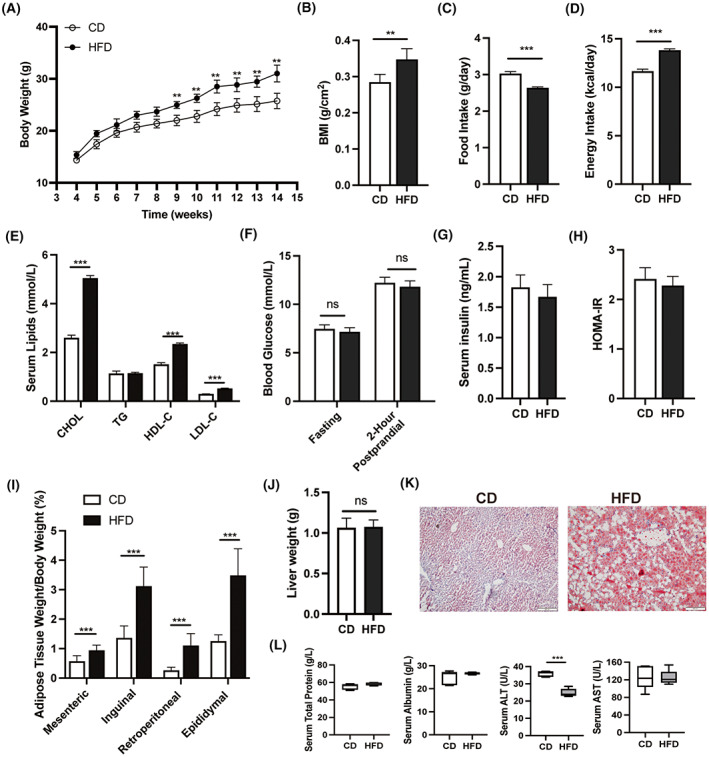
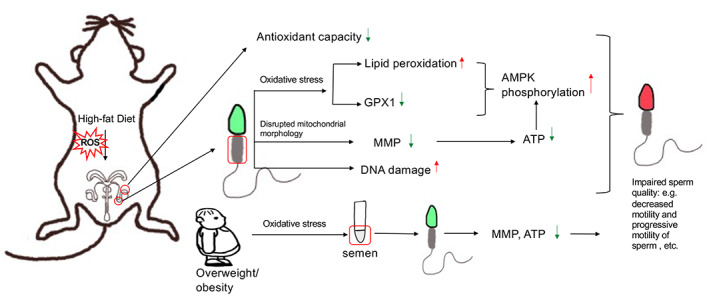
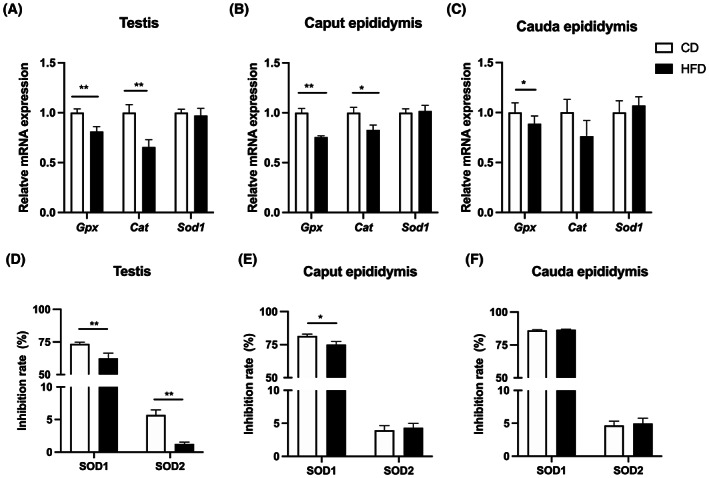
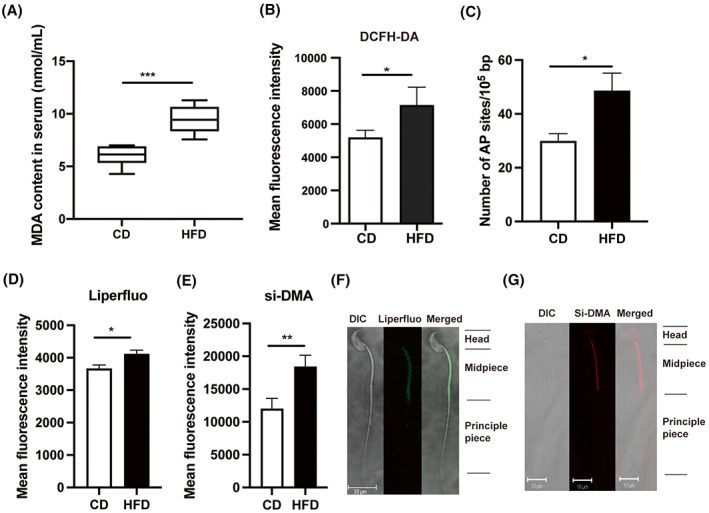
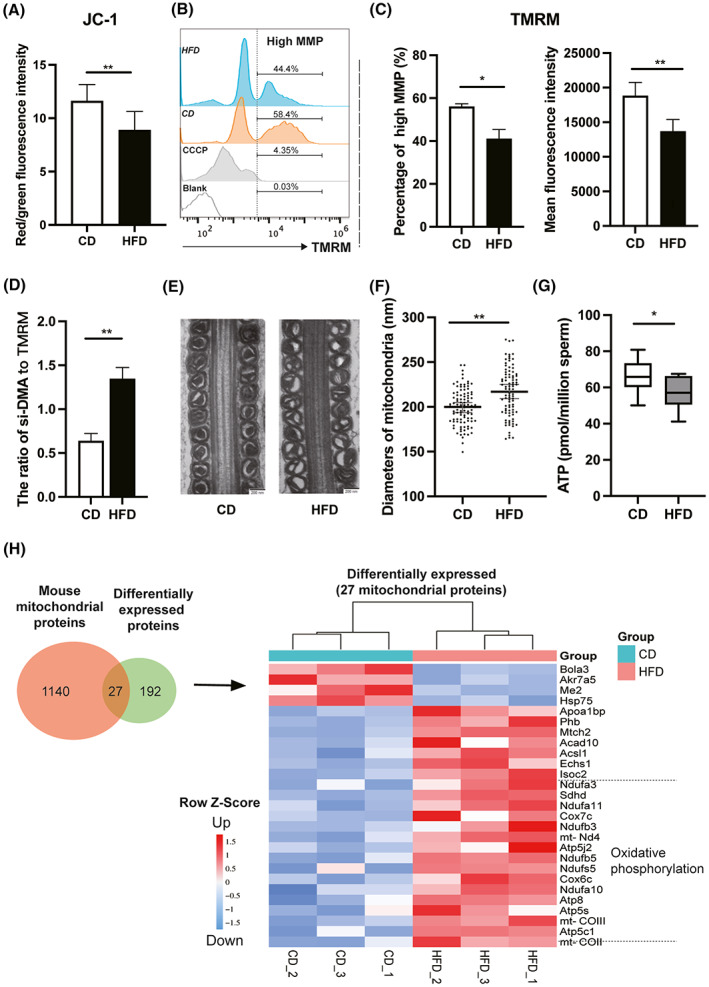
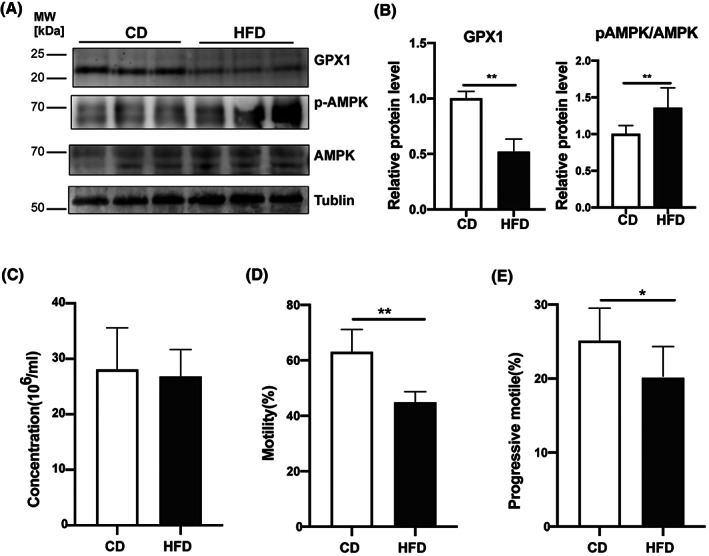
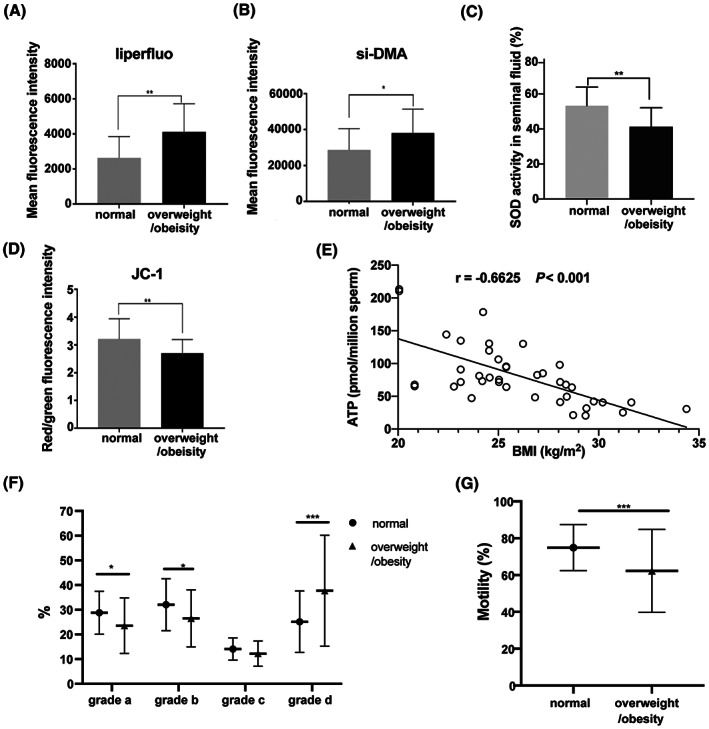
Obesity is a systemic metabolic disease that can induce male infertility or subfertility through oxidative stress. The aim of this study was to determine how obesity impairs sperm mitochondrial structural integrity and function, and reduces sperm quality in both overweight/obese men and mice on a high-fat diet (HFD). Mice fed the HFD demonstrated higher body weight and increased abdominal fat content than those fed the control diet. Such effects accompanied the decline in antioxidant enzymes, such as glutathione peroxidase (GPX) and catalase and superoxide dismutase (SOD) in testicular and epidydimal tissues. Moreover, malondialdehyde (MDA) content significantly increased in sera. Mature sperm in HFD mice demonstrated higher oxidative stress, including increased mitochondrial reactive oxygen species (ROS) levels and decreased protein expression of GPX1, which may impair mitochondrial structural integrity and reduce mitochondrial membrane potential (MMP) and ATP production. Moreover, cyclic AMPK phosphorylation status increased, whereas sperm motility declined in the HFD mice. Clinical studies demonstrated that being overweight/obese reduced SOD enzyme activity in the seminal plasma and increased ROS in sperm, accompanied by lower MMP and low-quality sperm. Furthermore, ATP content in the sperm was negatively correlated with increases in the BMI of all clinical subjects. In conclusion, our results suggest that excessive fat intake had similar disruptive effects on sperm mitochondrial structure and function, as well as oxidative stress levels in humans and mice, which in turn induced lower sperm motility. This agreement strengthens the notion that fat-induced increases in ROS and impaired mitochondrial function contribute to male subfertility.
肥胖是一种全身性代谢疾病,可通过氧化应激导致男性不育或生育力下降。本研究旨在确定肥胖如何损害精子线粒体的结构完整性和功能,并降低超重/肥胖男性和高脂肪饮食(HFD)小鼠的精子质量。与对照组相比,喂食 HFD 的小鼠体重更高,腹部脂肪含量增加。这些影响伴随着睾丸和附睾组织中抗氧化酶(如谷胱甘肽过氧化物酶 (GPX) 和过氧化氢酶以及超氧化物歧化酶 (SOD))的下降。此外,血清中的丙二醛 (MDA) 含量显著增加。HFD 小鼠的成熟精子表现出更高的氧化应激,包括线粒体活性氧 (ROS) 水平升高和 GPX1 蛋白表达降低,这可能损害线粒体结构完整性并降低线粒体膜电位 (MMP) 和 ATP 产生。此外,环 AMPK 磷酸化状态增加,而 HFD 小鼠的精子活力下降。临床研究表明,超重/肥胖会降低精液中的 SOD 酶活性并增加精子中的 ROS,同时伴随着 MMP 降低和精子质量下降。此外,精子中的 ATP 含量与所有临床受试者 BMI 的增加呈负相关。总之,我们的结果表明,过量的脂肪摄入对人类和小鼠的精子线粒体结构和功能以及氧化应激水平具有相似的破坏作用,从而导致精子活力下降。这种一致性加强了这样一种观点,即 ROS 的增加和线粒体功能受损导致肥胖导致男性生育力下降。