Cancer Epidemiology Division, Cancer Council Victoria, Melbourne, Australia.
Centre for Epidemiology and Biostatistics, Melbourne School of Population and Global Health, The University of Melbourne, Melbourne, Australia.
Cancer Epidemiol Biomarkers Prev. 2023 May 1;32(5):588-596. doi: 10.1158/1055-9965.EPI-22-0928.
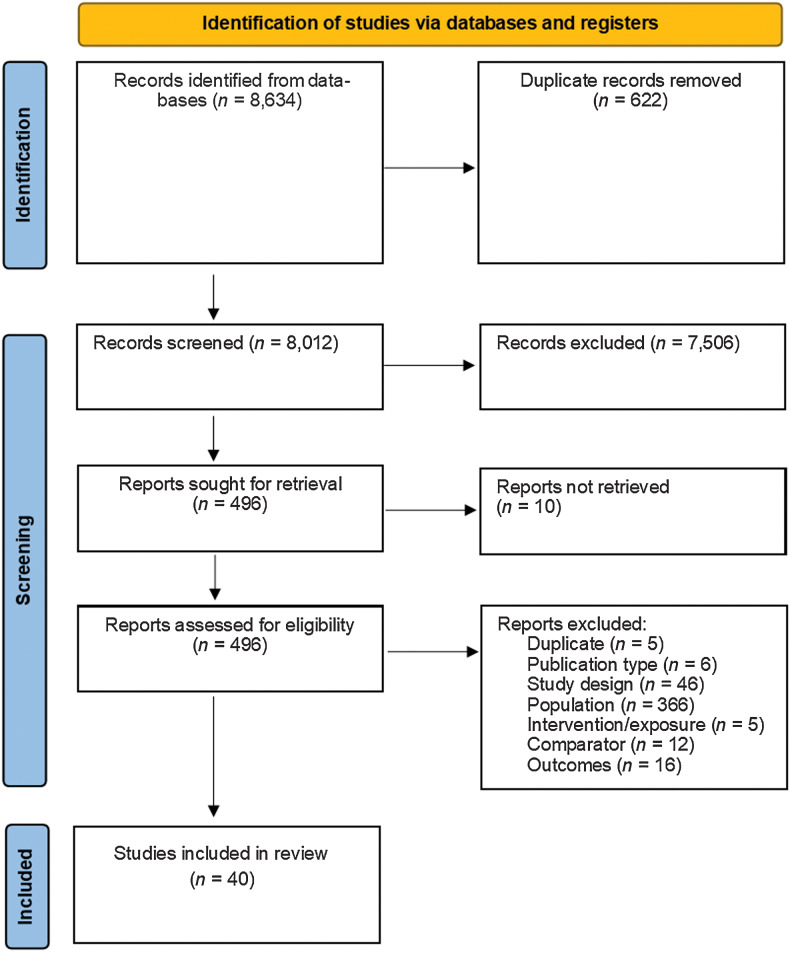
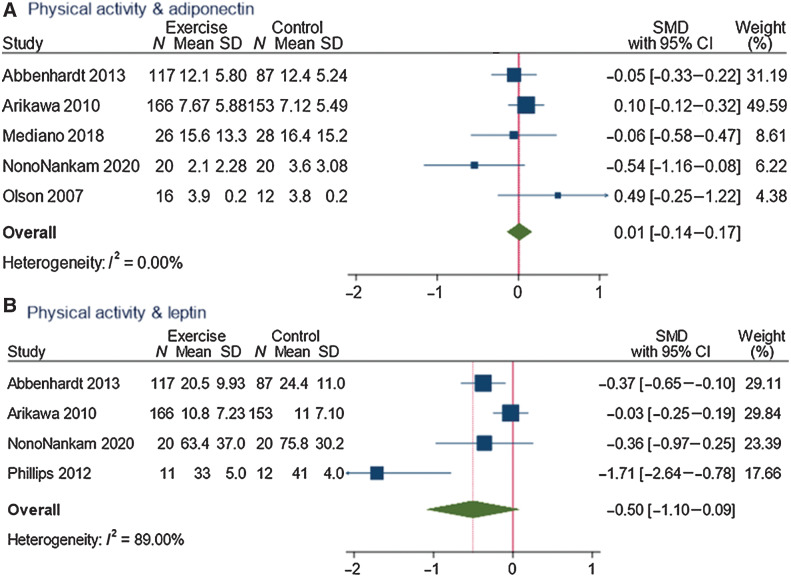
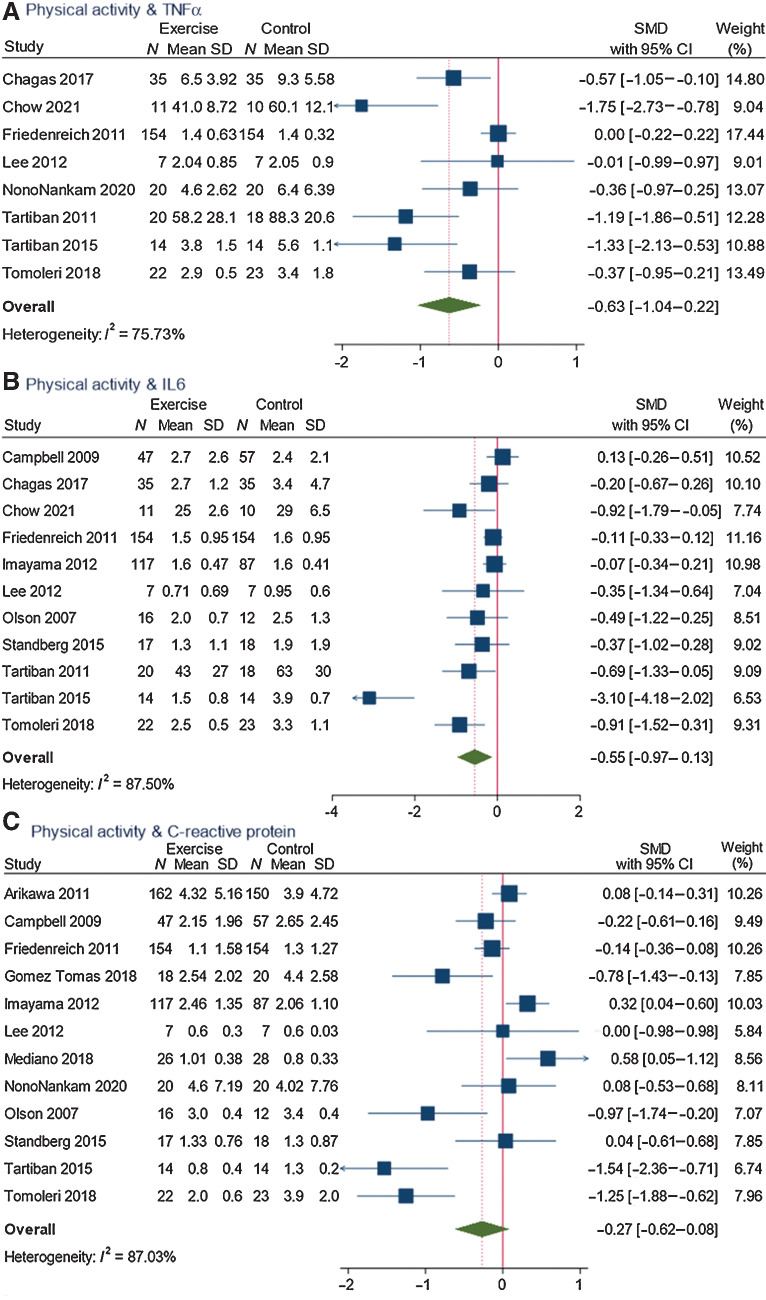
The protective effect of physical activity on breast cancer incidence may partially be mediated by inflammation. Systematic searches of Medline, EMBASE, and SPORTDiscus were performed to identify intervention studies, Mendelian randomization studies, and prospective cohort studies that examined the effects of physical activity on circulating inflammatory biomarkers in adult women. Meta-analyses were performed to generate effect estimates. Risk of bias was assessed, and the Grading of Recommendations Assessment, Development, and Evaluation system was used to determine the overall quality of the evidence. Thirty-five intervention studies and one observational study met the criteria for inclusion. Meta-analyses of randomized controlled trials (RCT) indicated that, compared with control groups, exercise interventions reduced levels of C-reactive protein (CRP) [standardized mean difference (SMD) = -0.27, 95% confidence interval (CI) = -0.62 to 0.08), tumor necrosis factor alpha (TNFα, SMD = -0.63, 95% CI = -1.04 to -0.22), interleukin-6 (IL6, SMD = -0.55, 95% CI = -0.97 to -0.13) and leptin (SMD = -0.50, 95% CI = -1.10 to 0.09). Owing to heterogeneity in effect estimates and imprecision, evidence strength was graded as low (CRP, leptin) or moderate (TNFα and IL6). High-quality evidence indicated that exercise did not change adiponectin levels (SMD = 0.01, 95% CI = -0.14 to 0.17). These findings provide support for the biological plausibility of the first part of the physical activity-inflammation-breast cancer pathway.
身体活动对乳腺癌发病率的保护作用可能部分是通过炎症介导的。系统检索了 Medline、EMBASE 和 SPORTDiscus,以确定研究身体活动对成年女性循环炎症生物标志物影响的干预研究、孟德尔随机化研究和前瞻性队列研究。进行了荟萃分析以生成效应估计值。评估了偏倚风险,并使用推荐评估、制定和评估系统(Grading of Recommendations Assessment, Development, and Evaluation system)来确定证据的总体质量。有 35 项干预研究和 1 项观察性研究符合纳入标准。随机对照试验(RCT)的荟萃分析表明,与对照组相比,运动干预降低了 C 反应蛋白(CRP)[标准化均数差(SMD)=-0.27,95%置信区间(CI)=-0.62 至 0.08]、肿瘤坏死因子-α(TNFα,SMD=-0.63,95%CI=-1.04 至-0.22)、白细胞介素-6(IL6,SMD=-0.55,95%CI=-0.97 至-0.13)和瘦素(SMD=-0.50,95%CI=-1.10 至 0.09)水平。由于效应估计值的异质性和不精确性,证据强度被评为低(CRP、瘦素)或中(TNFα 和 IL6)。高质量的证据表明,运动不会改变脂联素水平(SMD=0.01,95%CI=-0.14 至 0.17)。这些发现为身体活动-炎症-乳腺癌途径的第一部分的生物学合理性提供了支持。