Water Desalination and Reuse Center, Division of Biological and Environmental Science and Engineering, King Abdullah University of Science and Technology (KAUST), Thuwal 23955-6900, Saudi Arabia.
Bioengineering Program, Division of Biological and Environmental Science and Engineering, King Abdullah University of Science and Technology (KAUST), Thuwal 23955-6900, Saudi Arabia.
Sci Total Environ. 2023 Jun 1;875:162466. doi: 10.1016/j.scitotenv.2023.162466. Epub 2023 Mar 1.
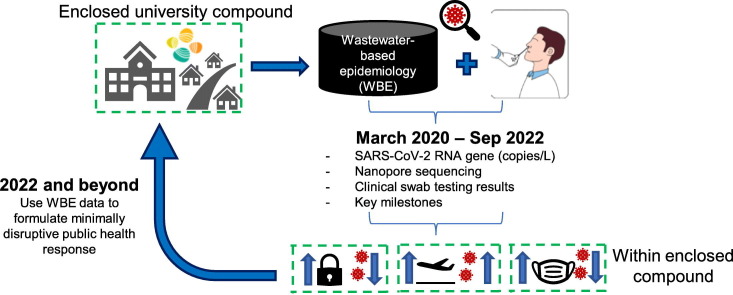
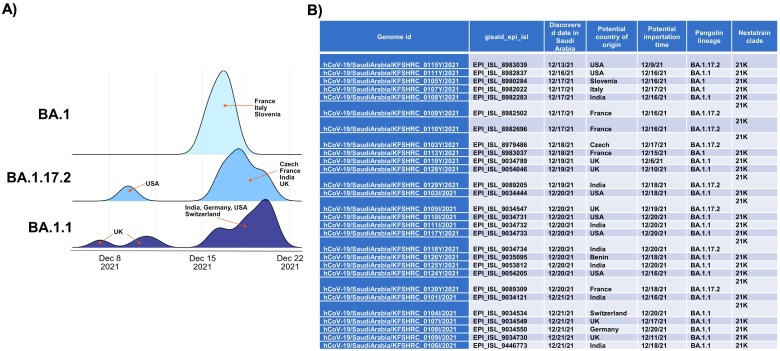
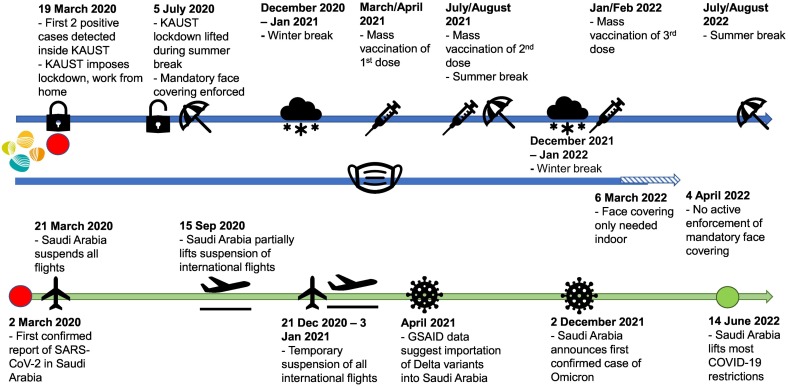
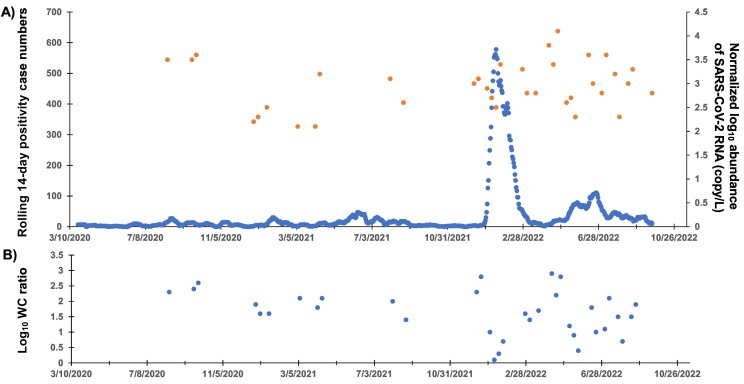
Long-term (>2.5 years) surveillance of SARS-CoV-2 RNA concentrations in wastewater was conducted within an enclosed university compound. This study aims to demonstrate how coupling wastewater-based epidemiology (WBE) with meta-data can identify which factors contribute toward the dissemination of SARS-CoV-2 within a local community. Throughout the pandemic, the temporal dynamics of SARS-CoV-2 RNA concentrations were tracked by quantitative polymerase chain reaction and analyzed in the context of the number of positive swab cases, the extent of human movement, and intervention measures. Our findings suggest that during the early phase of the pandemic, when strict lockdown was imposed, the viral titer load in the wastewater remained below detection limits, with <4 positive swab cases reported over a 14-day period in the compound. After the lockdown was lifted and global travel gradually resumed, SARS-CoV-2 RNA was first detected in the wastewater on 12 August 2020 and increased in frequency thereafter, despite high vaccination rates and mandatory face-covering requirements in the community. Accompanied by a combination of the Omicron surge and significant global travel by community members, SARS-CoV-2 RNA was detected in most of the weekly wastewater samples collected in late December 2021 and January 2022. With the cease of mandatory face covering, SARS-CoV-2 was detected in at least two of the four weekly wastewater samples collected from May through August 2022. Retrospective Nanopore sequencing revealed the presence of the Omicron variant in the wastewater with a multitude of amino acid mutations, from which we could infer the likely geographical origins through bioinformatic analysis. This study demonstrated that long-term tracking of the temporal dynamics and sequencing of variants in wastewater would aid in identifying which factors contribute the most to SARS-CoV-2 dissemination within the local community, facilitating an appropriate public health response to control future outbreaks as we now live with endemic SARS-CoV-2.
对封闭大学校园内的 SARS-CoV-2 RNA 浓度进行了为期 2.5 年以上的长期监测。本研究旨在展示如何将基于污水的流行病学(WBE)与元数据相结合,以确定哪些因素导致 SARS-CoV-2 在当地社区内传播。在整个大流行期间,通过定量聚合酶链反应跟踪 SARS-CoV-2 RNA 浓度的时间动态,并在阳性拭子病例数量、人类活动程度和干预措施的背景下进行分析。我们的研究结果表明,在大流行早期,当实施严格封锁时,废水中的病毒滴度负荷低于检测限,在该大院 14 天内报告的阳性拭子病例数<4 例。封锁解除后,随着全球旅行逐渐恢复,2020 年 8 月 12 日首次在废水中检测到 SARS-CoV-2 RNA,此后其频率增加,尽管社区内的高疫苗接种率和强制戴口罩要求。奥密克戎激增和社区成员大量全球旅行的共同作用下,2021 年 12 月下旬和 2022 年 1 月,收集的大部分每周污水样本中均检测到 SARS-CoV-2 RNA。随着强制戴口罩的停止,至少有两个 2022 年 5 月至 8 月收集的每周污水样本中检测到 SARS-CoV-2。回顾性纳米孔测序显示废水中存在奥密克戎变体,存在多种氨基酸突变,我们可以通过生物信息学分析推断出其可能的地理起源。本研究表明,长期跟踪污水中病毒的时间动态和变体测序有助于确定哪些因素对当地社区内 SARS-CoV-2 的传播贡献最大,从而为控制未来疫情提供适当的公共卫生对策,因为我们现在与地方性 SARS-CoV-2 共存。