Laboratory of Mucosal Barrier Pathobiology, Department of Pathology, Brigham and Women's Hospital, Harvard Medical School, Boston, Massachusetts.
Department of Pathology, University of Chicago, Chicago, Illinois.
Lab Invest. 2023 Apr;103(4):100036. doi: 10.1016/j.labinv.2022.100036. Epub 2023 Jan 10.
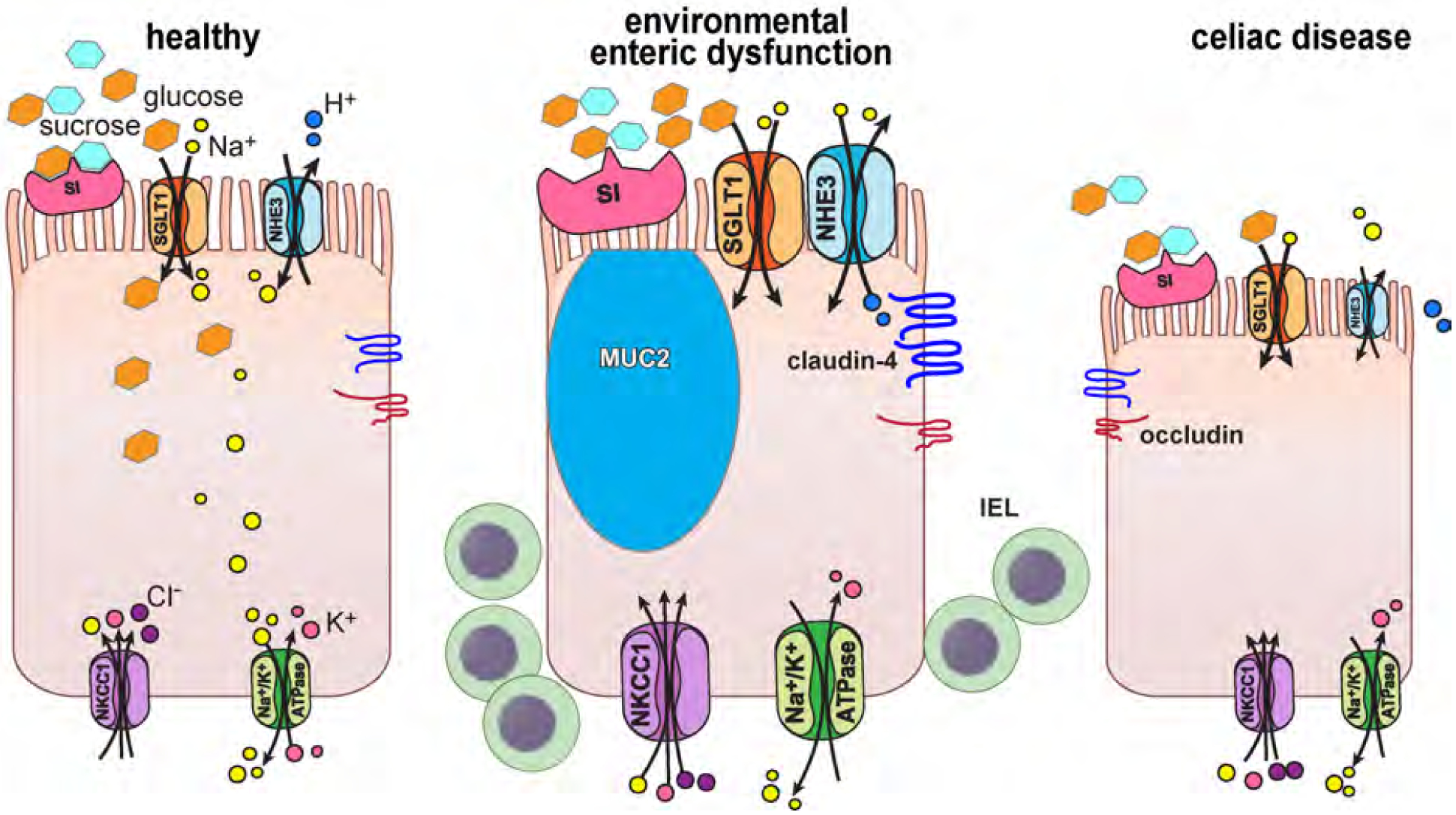
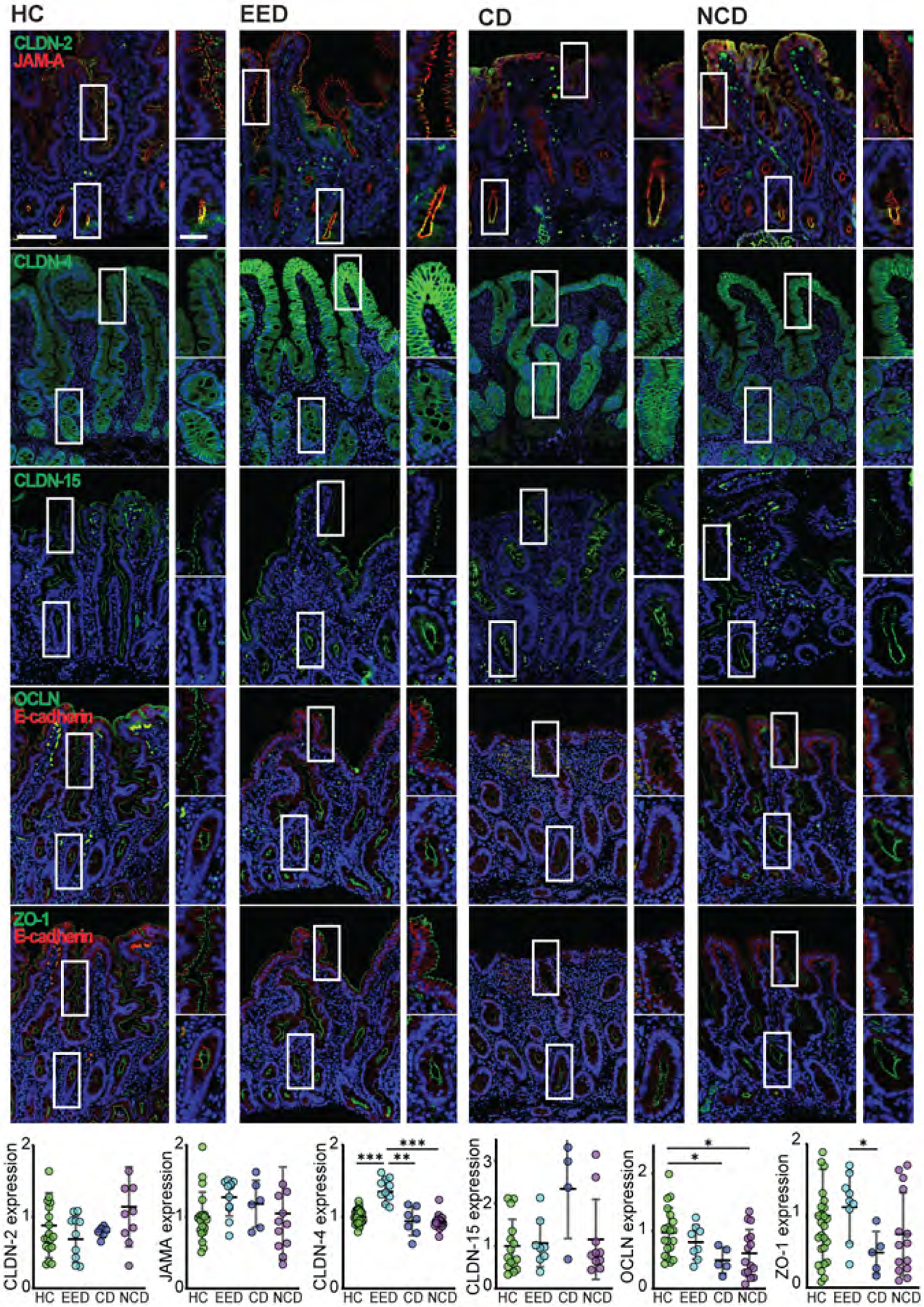
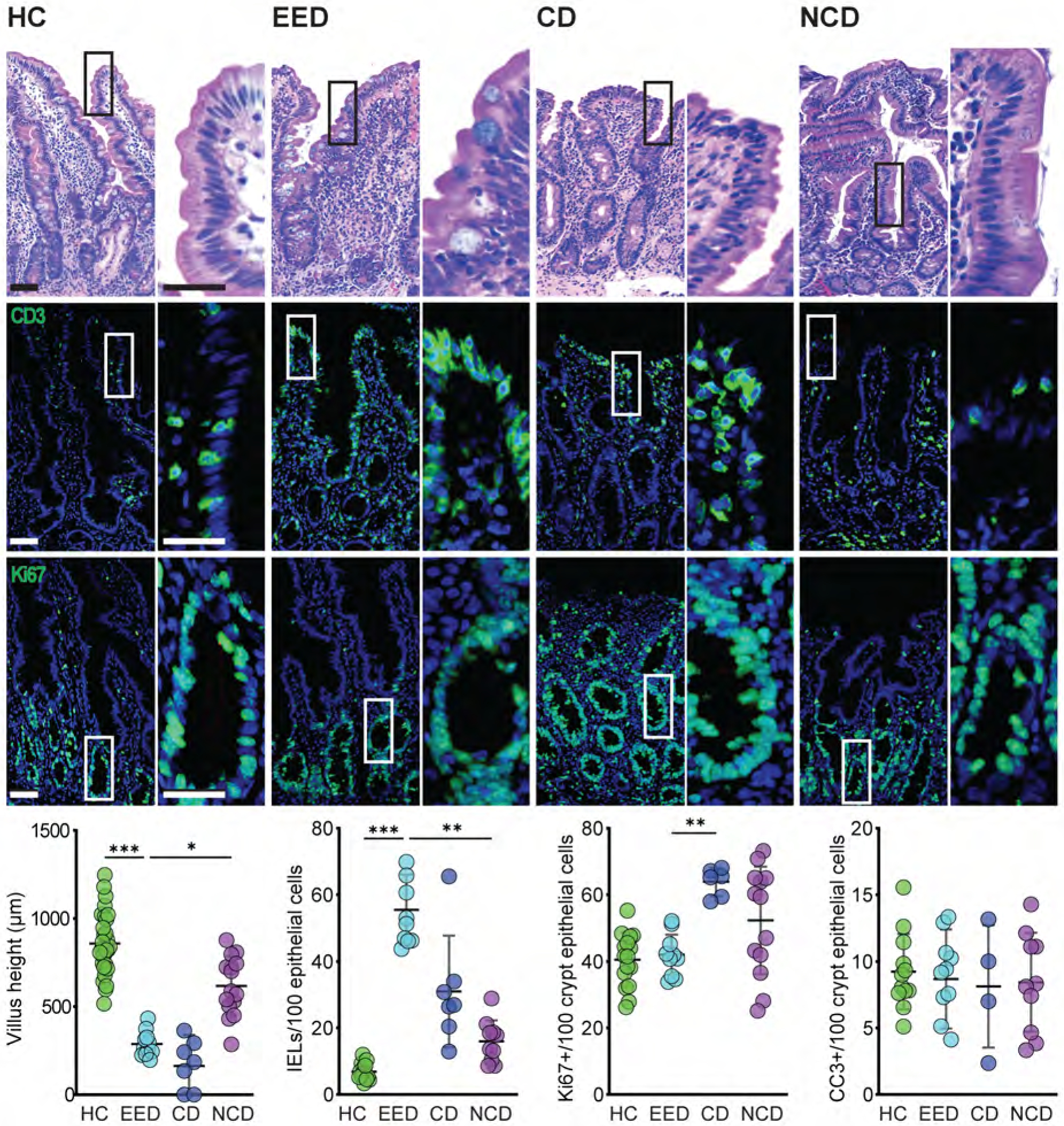
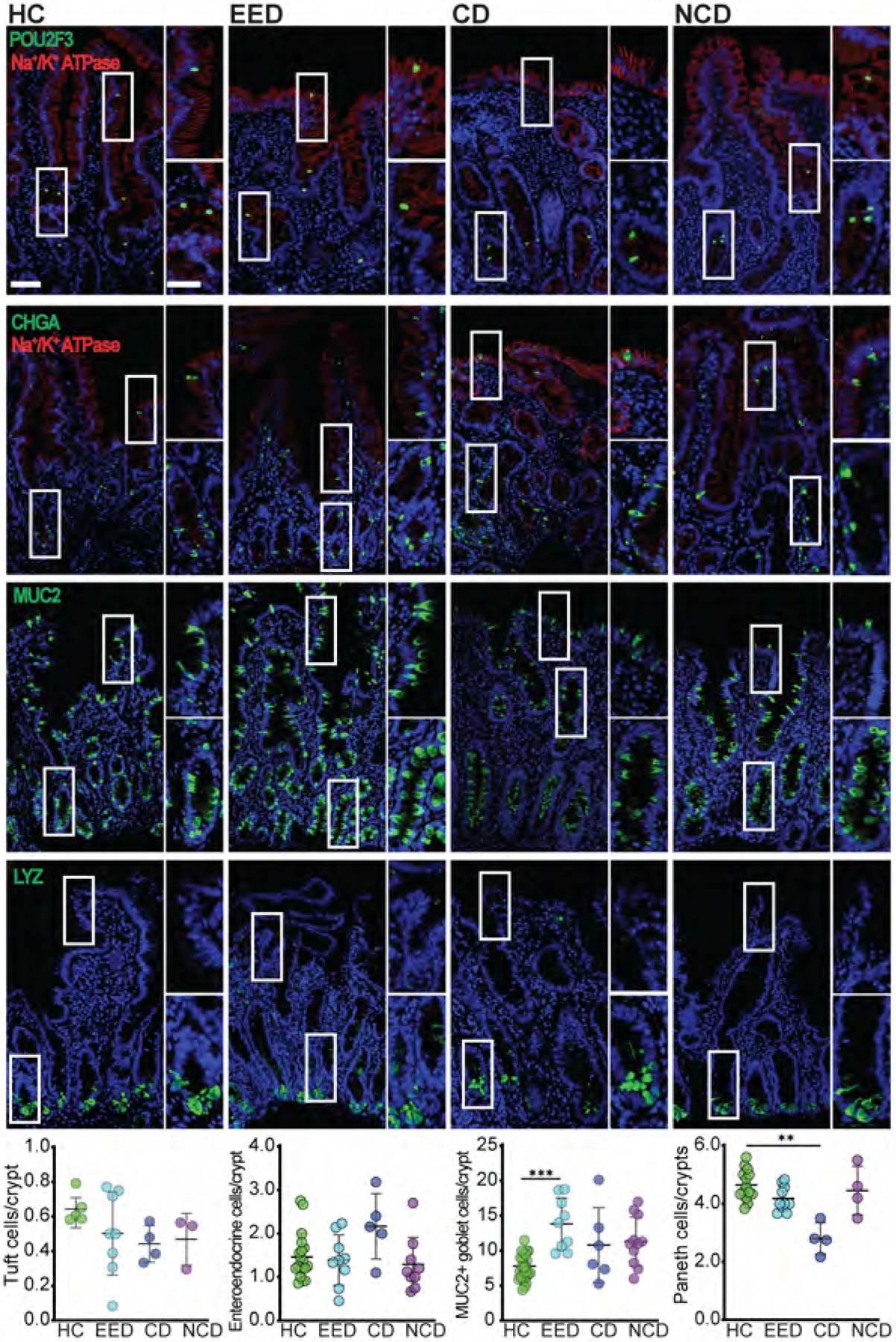
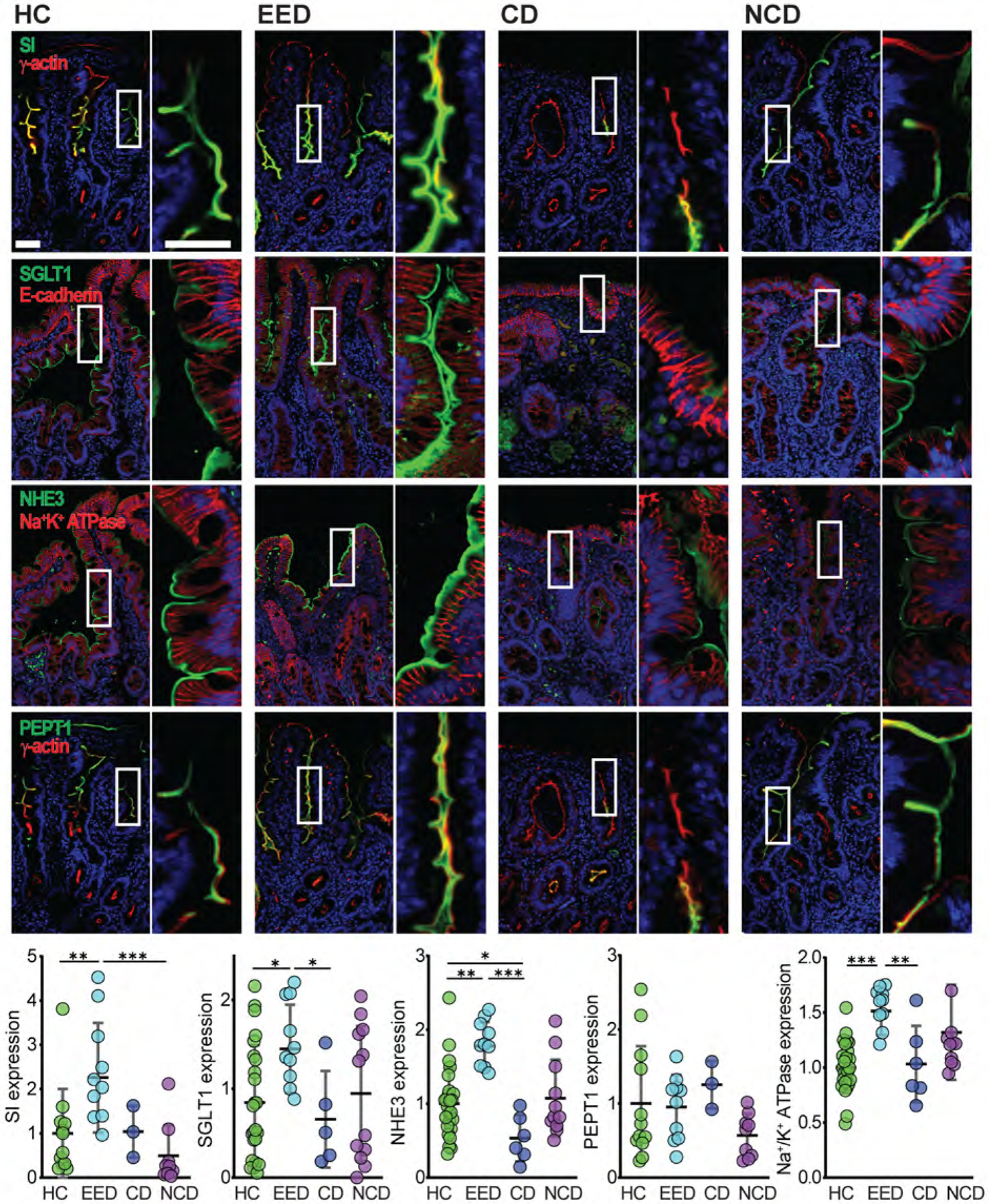
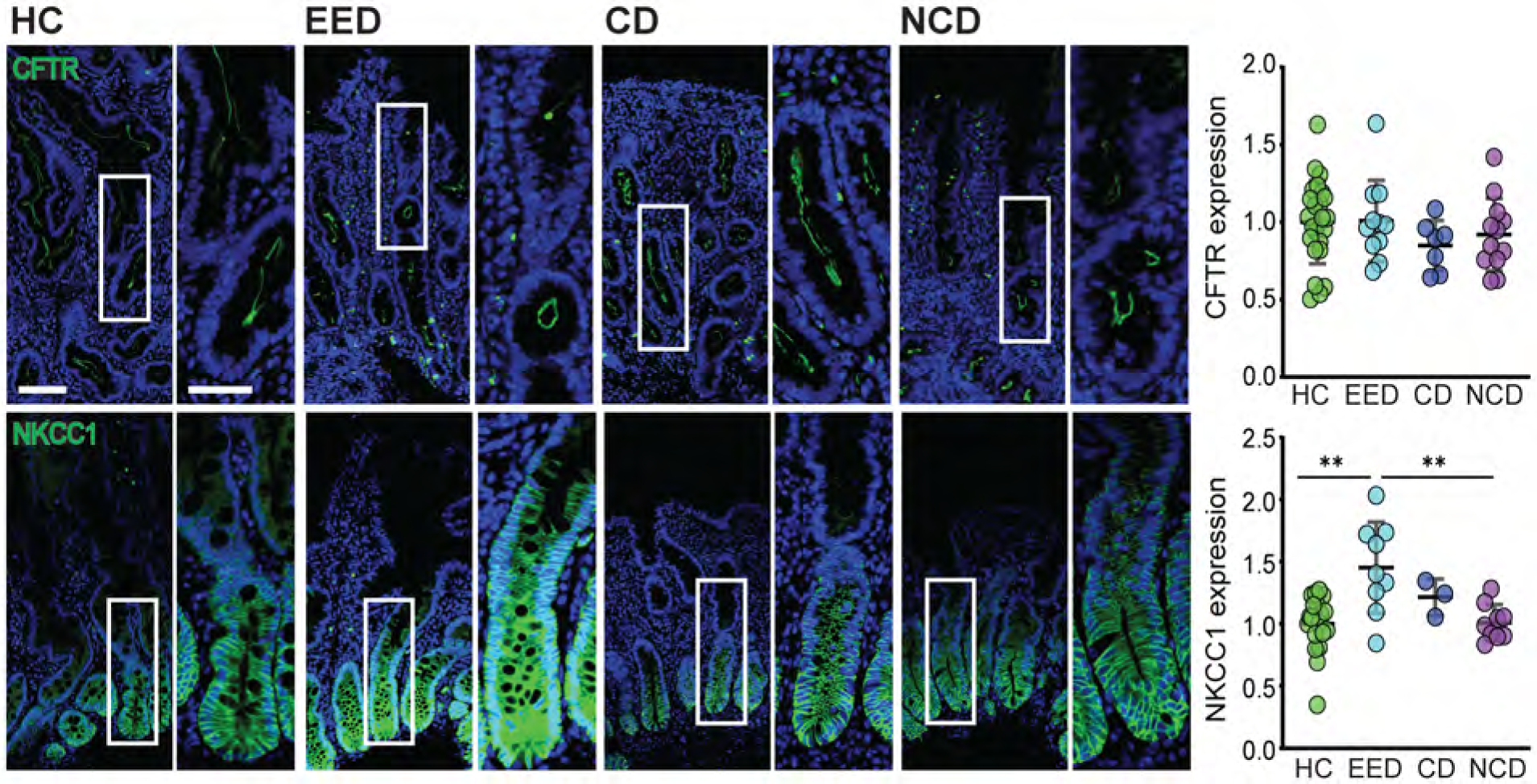
Environmental enteric dysfunction (EED) is characterized by malabsorption and diarrhea that result in irreversible deficits in physical and intellectual growth. We sought to define the expression of transport and tight junction proteins by quantitative analysis of duodenal biopsies from patients with EED. Biopsies from Pakistani children with confirmed EED diagnoses were compared to those from age-matched North American healthy controls, patients with celiac disease, and patients with nonceliac disease with villous atrophy or intraepithelial lymphocytosis. Expression of brush border digestive and transport proteins and paracellular (tight junction) proteins was assessed by quantitative multiplex immunofluorescence microscopy. EED was characterized by partial villous atrophy and marked intraepithelial lymphocytosis. Epithelial proliferation and enteroendocrine, tuft, and Paneth cell numbers were unchanged, but there was significant goblet cell expansion in EED biopsies. Expression of proteins involved in nutrient and water absorption and that of the basolateral Cl transport protein NKCC1 were also increased in EED. Finally, the barrier-forming tight junction protein claudin-4 (CLDN4) was significantly upregulated in EED, particularly within villous enterocytes. In contrast, expression of CFTR, CLDN2, CLDN15, JAM-A, occludin, ZO-1, and E-cadherin was unchanged. Upregulation of a barrier-forming tight junction protein and brush border and basolateral membrane proteins that support nutrient and water transport in EED is paradoxical, as their increased expression would be expected to be correlated with increased intestinal barrier function and enhanced absorption, respectively. These data suggest that EED activates adaptive intestinal epithelial responses to enhance nutrient absorption but that these changes are insufficient to restore health.
环境肠道功能障碍(EED)的特征是吸收不良和腹泻,导致身体和智力成长不可逆转的缺陷。我们试图通过定量分析 EED 患者的十二指肠活检来定义转运蛋白和紧密连接蛋白的表达。将巴基斯坦 EED 确诊患儿的活检与年龄匹配的北美健康对照组、乳糜泻患者和非乳糜泻伴绒毛萎缩或上皮内淋巴细胞增多的患者进行比较。通过定量多重免疫荧光显微镜评估刷状缘消化和转运蛋白以及旁细胞(紧密连接)蛋白的表达。EED 的特征是部分绒毛萎缩和明显的上皮内淋巴细胞增多。上皮细胞增殖和肠内分泌细胞、微绒毛和潘氏细胞数量不变,但 EED 活检中杯状细胞明显扩张。参与营养和水吸收的蛋白以及基底外侧 Cl 转运蛋白 NKCC1 的表达也增加。最后,EED 中屏障形成紧密连接蛋白 Claudin-4(CLDN4)的表达显著上调,特别是在绒毛状肠细胞中。相比之下,CFTR、CLDN2、CLDN15、JAM-A、occludin、ZO-1 和 E-钙黏蛋白的表达不变。EED 中屏障形成紧密连接蛋白和刷状缘及基底外侧膜蛋白的表达上调是矛盾的,因为它们的表达增加预计分别与增加肠屏障功能和增强吸收相关。这些数据表明,EED 激活适应性肠道上皮反应以增强营养吸收,但这些变化不足以恢复健康。