Department of Electrical & Electronics Engineering, Birla Institute of Technology & Science, Pilani, Dubai Campus, Dubai, UAE.
Comput Intell Neurosci. 2023 Feb 22;2023:4808841. doi: 10.1155/2023/4808841. eCollection 2023.
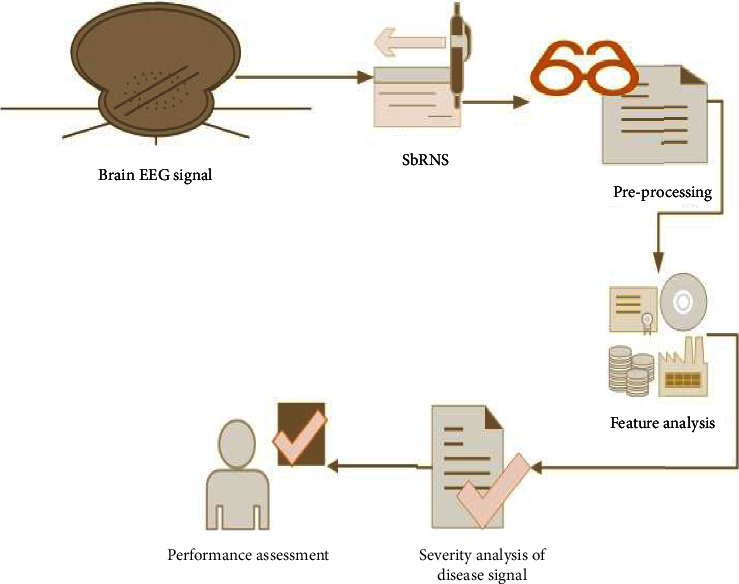
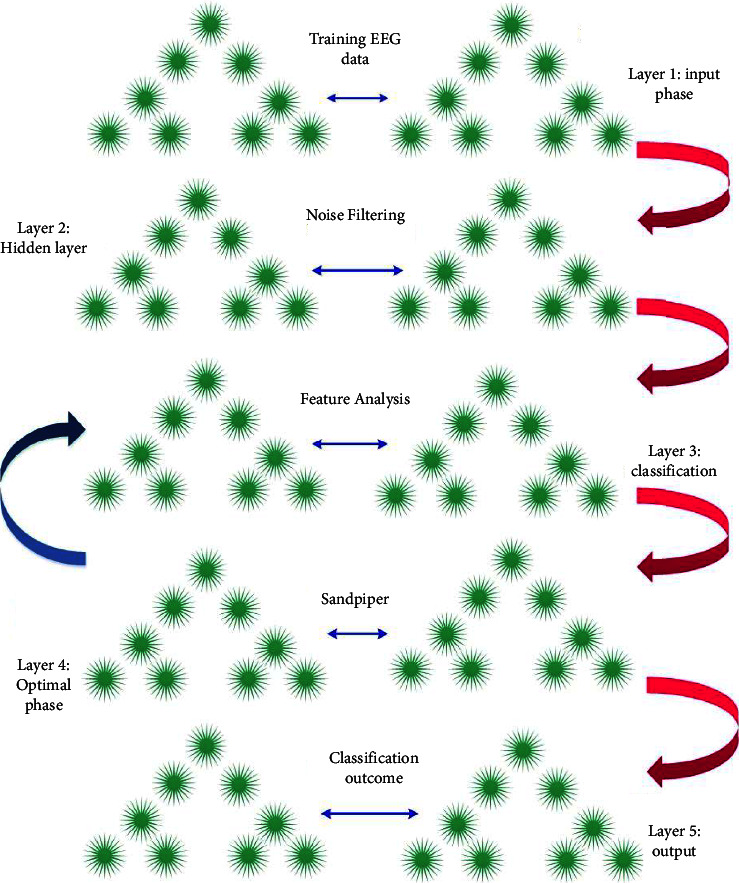
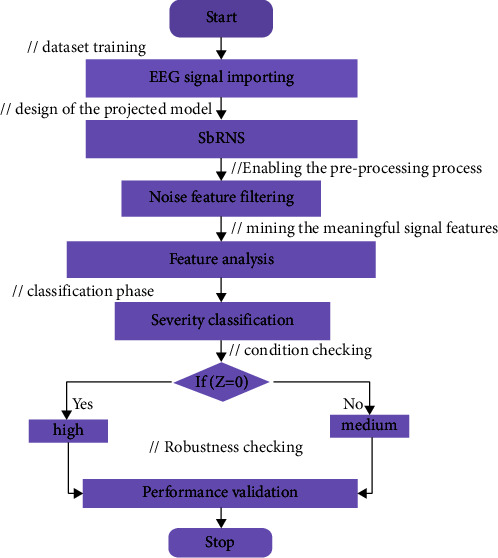
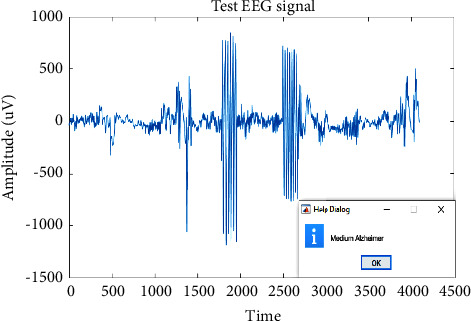
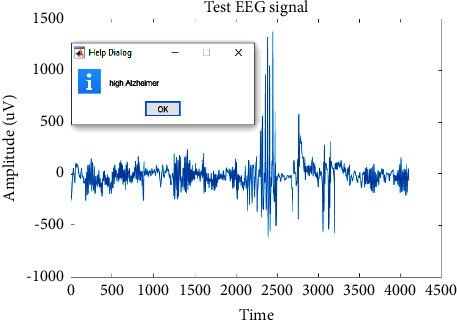
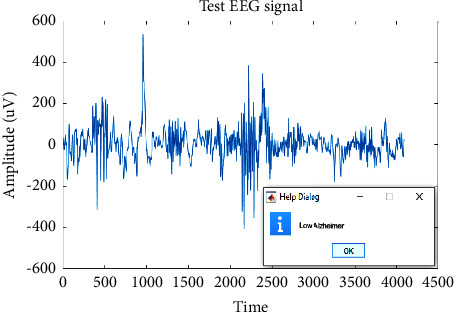
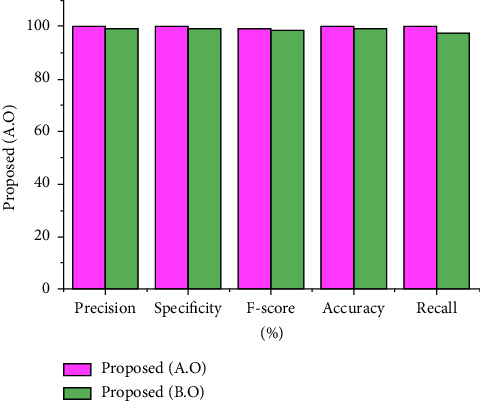
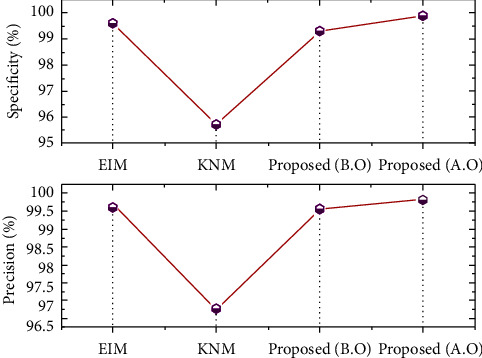
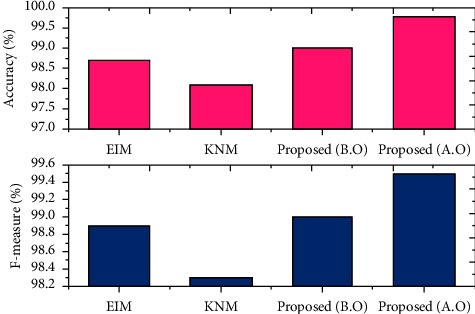
Recent researchers have been drawn to the analysis of electroencephalogram (EEG) signals in order to confirm the disease and severity range by viewing the EEG signal which has complicated the dataset. The conventional models such as machine learning, classifiers, and other mathematical models achieved the lowest classification score. The current study proposes to implement a novel deep feature with the best solution for EEG signal analysis and severity specification. A greedy sandpiper-based recurrent neural system (SbRNS) model for predicting Alzheimer's disease (AD) severity has been proposed. The filtered data are used as input for the feature analysis and the severity range is divided into three classes: low, medium, and high. The designed approach was then implemented in the matrix laboratory (MATLAB) system, and the effectiveness score was calculated using key metrics such as precision, recall, specificity, accuracy, and misclassification score. The validation results show that the proposed scheme achieved the best classification outcome.
最近的研究人员开始分析脑电图 (EEG) 信号,通过观察 EEG 信号来确认疾病和严重程度范围,这使得数据集变得复杂。传统模型,如机器学习、分类器和其他数学模型,实现了最低的分类得分。本研究提出了一种新的深度特征,用于 EEG 信号分析和严重程度指定的最佳解决方案。提出了一种基于贪婪沙锥鸟的递归神经网络系统 (SbRNS) 模型来预测阿尔茨海默病 (AD) 的严重程度。滤波后的数据被用作特征分析的输入,严重程度范围分为三个等级:低、中、高。然后在矩阵实验室 (MATLAB) 系统中实现了所设计的方法,并使用精度、召回率、特异性、准确性和误分类分数等关键指标计算有效性得分。验证结果表明,所提出的方案实现了最佳的分类结果。