Yao Ruyu, He Chunnian, Xiao Peigen
Institute of Medicinal Plant Development, Chinese Academy of Medical Sciences and Peking Union Medical College, Beijing 100193, China.
Chin Herb Med. 2022 Dec 17;15(1):6-14. doi: 10.1016/j.chmed.2022.12.002. eCollection 2023 Jan.
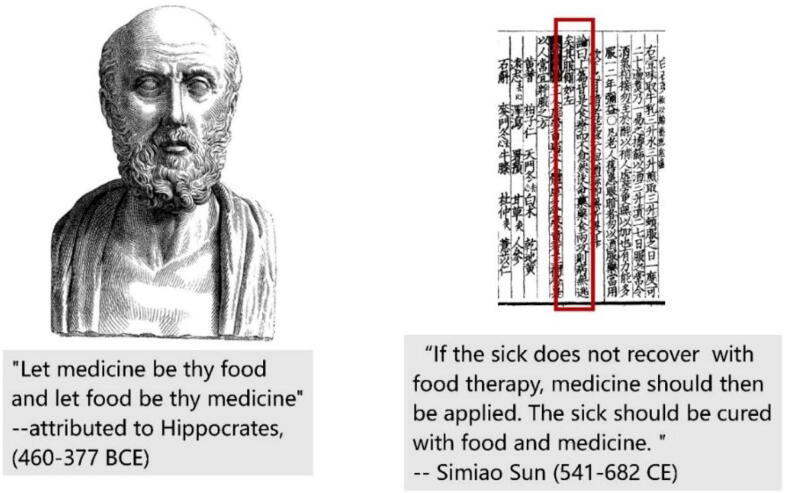
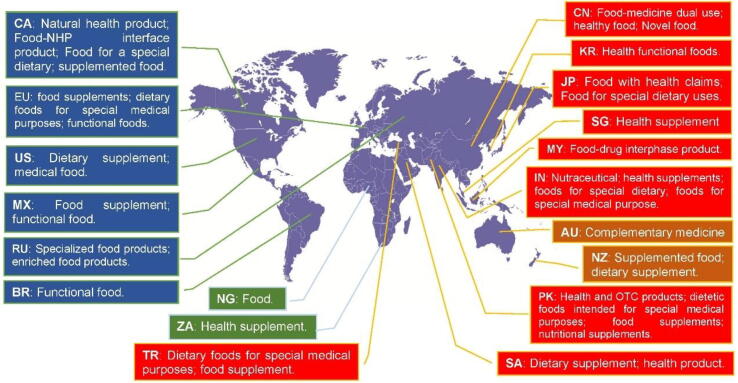
Food-medicine products are important materials for daily health management and are increasingly popular in the global healthy food market. However, because of the biocultural difference, food-medicine knowledge may differ among regions, which hinders the global sharing of such health strategies. Aim at bridging the food-medicine knowledge in the East and West, this study traced the historical roots of food and medicine continuum of the East and West, which was followed by a cross-cultural assessment on the importance of food-medicine products of China, thereafter, the current legislative terms for food-medicine products were studied using an international survey. The results show that the food and medicine continuum in the East and West have their historical roots in the traditional medicines since antiquity, and the food-medicine knowledge in the East and West differs substantially; although the food-medicine products have common properties, their legislative terms are diverse globally; with proofs of traditional uses and scientific evidence, food-medicine products are possible for cross-cultural communication. Finally, we recommend facilitating the cross-cultural communication of the food-medicine knowledge in the East and West, thus to make the best use of the traditional health wisdom in the globe.
食药产品是日常健康管理的重要物质,在全球健康食品市场中越来越受欢迎。然而,由于生物文化差异,食药知识在不同地区可能存在差异,这阻碍了此类健康策略的全球共享。为了弥合东西方的食药知识差距,本研究追溯了东西方食药连续体的历史根源,随后对中国食药产品的重要性进行了跨文化评估,之后通过一项国际调查研究了食药产品的现行立法条款。结果表明,东西方的食药连续体自古以来就扎根于传统医学,东西方的食药知识存在很大差异;尽管食药产品具有共同特性,但其立法条款在全球范围内各不相同;有传统用途的证据和科学依据,食药产品有可能进行跨文化交流。最后,我们建议促进东西方食药知识的跨文化交流,从而充分利用全球的传统健康智慧。