Department of Psychological Medicine, Institute of Psychiatry, Psychology and Neuroscience, King's College London, London, UK.
Centre for Health Services Research, Faculty of Medicine, The University of Queensland, Brisbane, QLD, Australia.
J Psychopharmacol. 2023 Jul;37(7):733-748. doi: 10.1177/02698811231158245. Epub 2023 Mar 6.
Growing numbers of people are using psychedelics for personal psychotherapy outside clinical settings, but research on such use is scarce.
This study investigated the patterns of use, self-reported outcomes and outcome predictors of psychedelic 'self-treatment' of mental health conditions or specific worries/concerns in life.
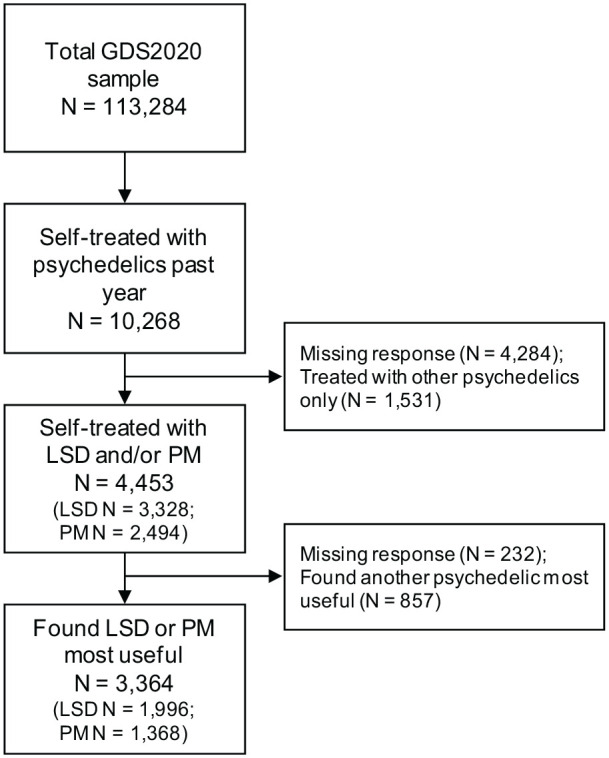
We use data from the Global Drug Survey 2020, a large online survey on drug use collected between November 2019 and February 2020. In all, 3364 respondents reported their self-treatment experiences with lysergic acid diethylamide ( = 1996) or psilocybin mushrooms ( = 1368). The primary outcome of interest was the 17-item self-treatment outcome scale, items reflecting aspects of well-being, psychiatric symptoms, social-emotional skills, and health behaviours.
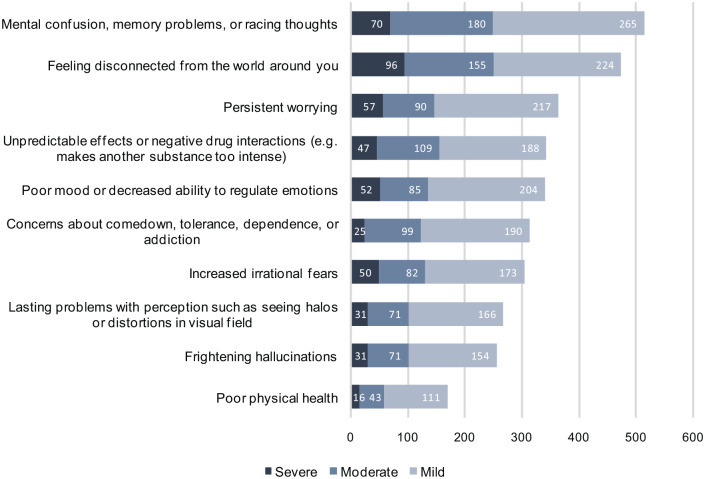
Positive changes were observed across all 17 outcome items, with the strongest benefits on items related to insight and mood. Negative effects were reported by 22.5% of respondents. High intensity of psychedelic experience, seeking advice before treatment, treating with psilocybin mushrooms and treating post-traumatic stress disorder were associated with higher scores on the self-treatment outcome scale after averaging values across all 17 items. Younger age, high intensity of experience and treating with LSD were associated with increased number of negative outcomes.
This study brings important insights into self-treatment practices with psychedelics in a large international sample. Outcomes were generally favourable, but negative effects appeared more frequent than in clinical settings. Our findings can help inform safe practices of psychedelic use in the community, and inspire clinical research. Future research can be improved with utilisation of prospective designs and additional predictive variables.
越来越多的人在临床环境之外使用迷幻剂进行个人心理治疗,但此类使用的研究却很少。
本研究调查了心理健康状况或生活中特定忧虑/担忧的迷幻“自我治疗”的使用模式、自我报告的结果和结果预测因子。
我们使用了 2020 年全球毒品调查的数据,这是一项关于毒品使用的大型在线调查,于 2019 年 11 月至 2020 年 2 月期间收集。共有 3364 名受访者报告了他们使用 LSD( = 1996)或裸盖菇素蘑菇( = 1368)进行自我治疗的经验。主要的研究结果是 17 项自我治疗结果量表,反映了幸福感、精神症状、社会情感技能和健康行为等方面的内容。
所有 17 项结果指标均显示出积极的变化,与洞察力和情绪相关的项目受益最大。22.5%的受访者报告了负面影响。强烈的迷幻体验、在治疗前寻求建议、使用裸盖菇素蘑菇和治疗创伤后应激障碍与在平均所有 17 项结果指标后,自我治疗结果量表的得分更高相关。年轻、强烈的体验和 LSD 的使用与更多的负面结果相关。
本研究在一个大型国际样本中为迷幻剂的自我治疗实践提供了重要的见解。结果通常是有利的,但负面效果似乎比临床环境中更常见。我们的发现可以帮助为社区中迷幻剂的安全使用提供信息,并激发临床研究。未来的研究可以通过使用前瞻性设计和其他预测变量来改进。