Department of Biology, Indiana University-Purdue University Indianapolis, 723 W Michigan St, Indianapolis, IN, 46202, USA.
Department of Human Genetics, KU Leuven, Leuven, Belgium.
Sci Rep. 2023 Mar 6;13(1):3708. doi: 10.1038/s41598-023-30855-x.
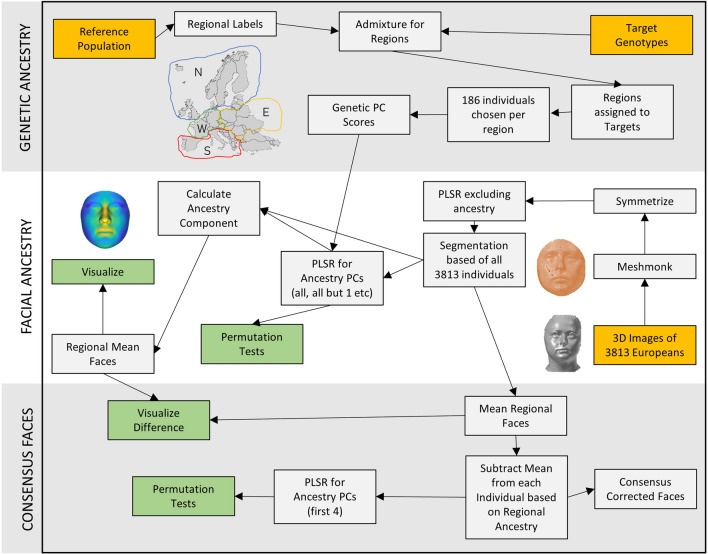
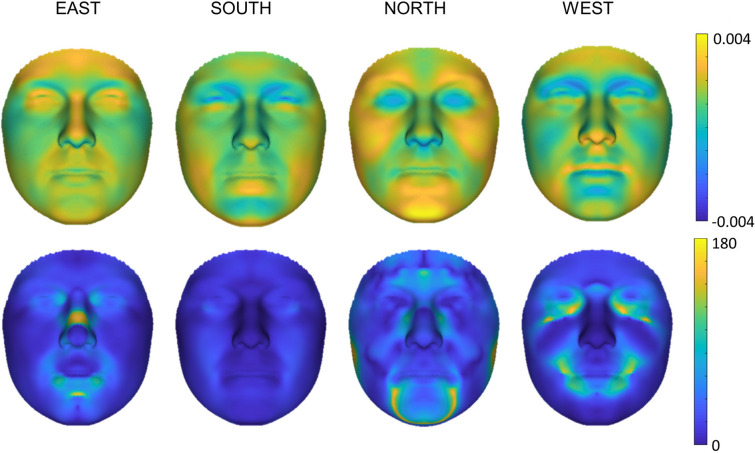
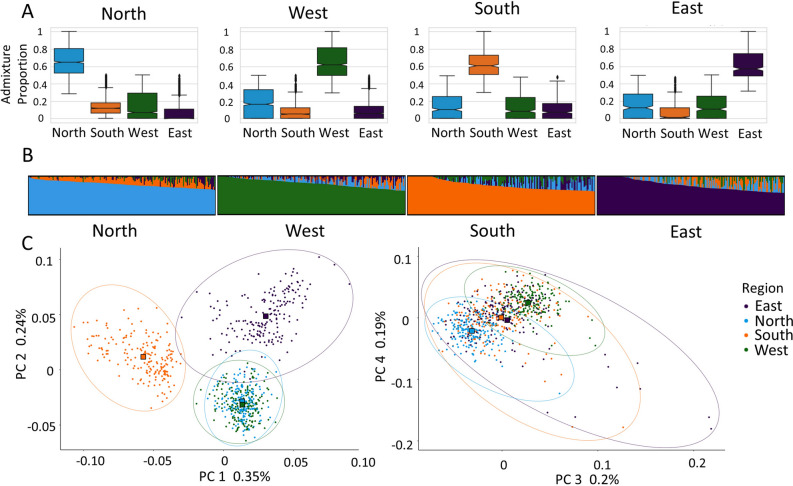
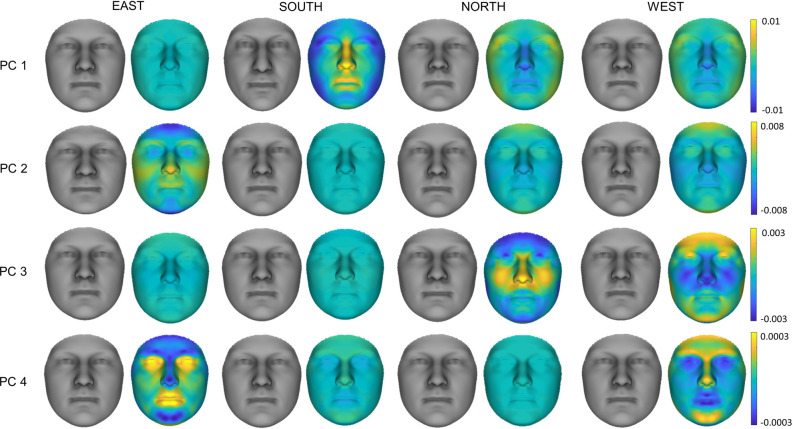
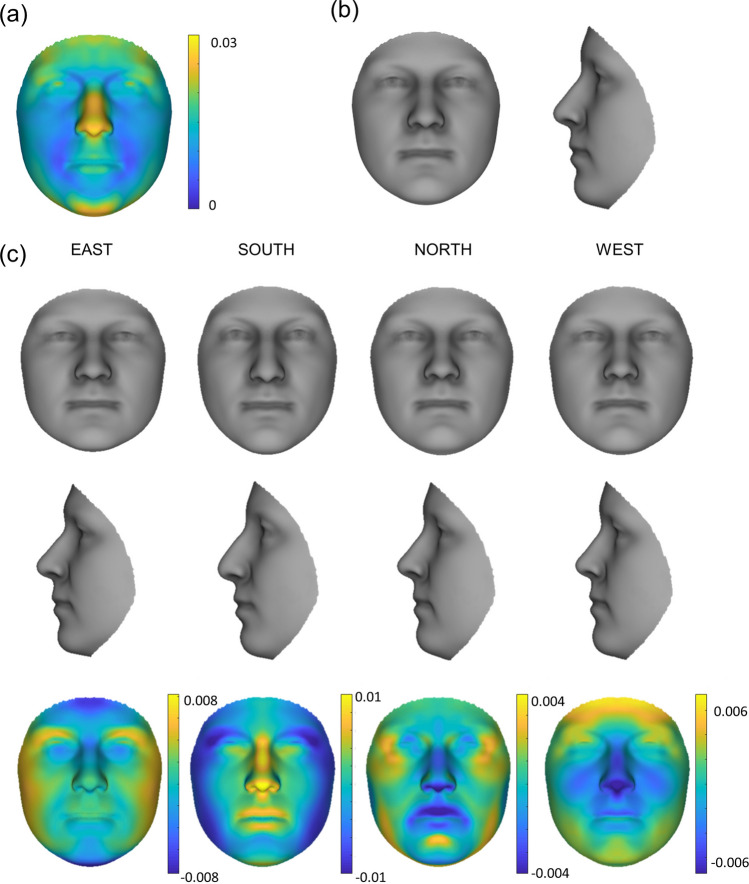
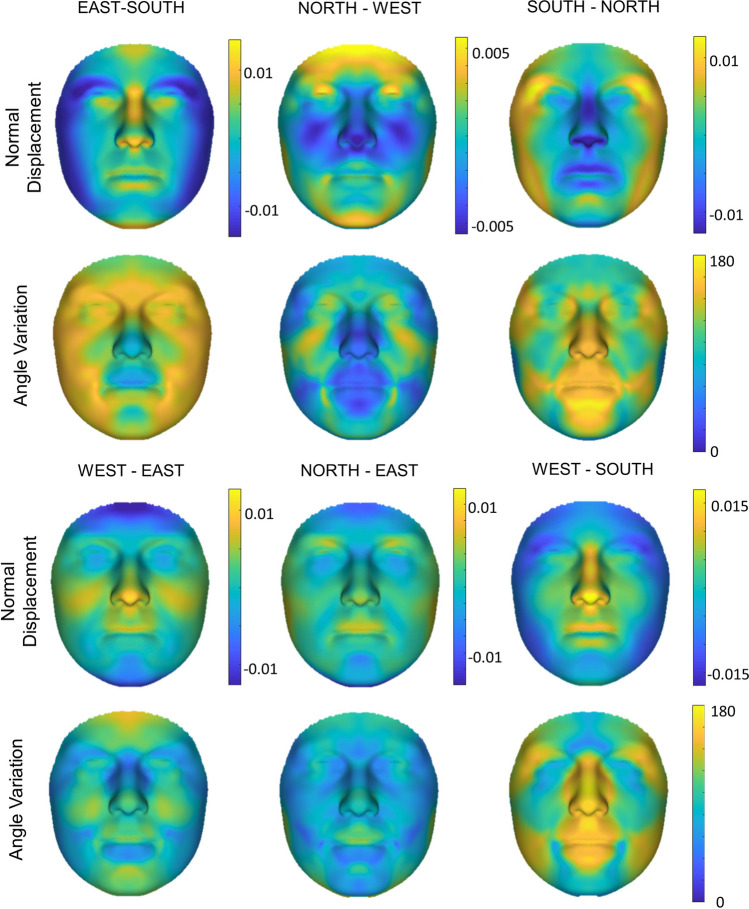
Facial ancestry can be described as variation that exists in facial features that are shared amongst members of a population due to environmental and genetic effects. Even within Europe, faces vary among subregions and may lead to confounding in genetic association studies if unaccounted for. Genetic studies use genetic principal components (PCs) to describe facial ancestry to circumvent this issue. Yet the phenotypic effect of these genetic PCs on the face has yet to be described, and phenotype-based alternatives compared. In anthropological studies, consensus faces are utilized as they depict a phenotypic, not genetic, ancestry effect. In this study, we explored the effects of regional differences on facial ancestry in 744 Europeans using genetic and anthropological approaches. Both showed similar ancestry effects between subgroups, localized mainly to the forehead, nose, and chin. Consensus faces explained the variation seen in only the first three genetic PCs, differing more in magnitude than shape change. Here we show only minor differences between the two methods and discuss a combined approach as a possible alternative for facial scan correction that is less cohort dependent, more replicable, non-linear, and can be made open access for use across research groups, enhancing future studies in this field.
面部祖源可以描述为由于环境和遗传效应,在人群中共享的面部特征中存在的变异。即使在欧洲内部,面部特征也因地域差异而有所不同,如果不加以考虑,这可能会导致遗传关联研究中的混杂。遗传研究使用遗传主成分(PC)来描述面部祖源,以避免这个问题。然而,这些遗传 PC 对面部的表型影响尚未被描述,也没有进行表型替代方法的比较。在人类学研究中,共识面孔被用来描述表型,而不是遗传祖源效应。在这项研究中,我们使用遗传和人类学方法探索了 744 名欧洲人面部祖源的区域差异。两种方法都显示了亚组之间相似的祖源效应,主要集中在前额、鼻子和下巴。共识面孔仅能解释前三个遗传 PC 中观察到的变异,在幅度上的差异大于形状变化。这里我们只展示了两种方法之间的微小差异,并讨论了一种联合方法作为面部扫描校正的可能替代方法,这种方法对队列的依赖性更小、更可复制、非线性,并且可以开放获取,供研究小组使用,从而增强该领域的未来研究。