Department of Radiotherapy, Beijing Friendship Hospital, Capital Medical University, Beijing, 100050, P.R. China.
Department of Oncology, Beijing Friendship Hospital, Capital Medical University, No.95 Yong An Road, Xicheng District, Beijing, 100050, P.R. China.
J Transl Med. 2023 Mar 6;21(1):176. doi: 10.1186/s12967-023-04029-2.
Radiotherapy resistance is the main cause of low tumor regression for locally advanced rectum adenocarcinoma (READ). The biomarkers correlated to radiotherapy sensitivity and potential molecular mechanisms have not been completely elucidated.
A mRNA expression profile and a gene expression dataset of READ (GSE35452) were acquired from The Cancer Genome Atlas (TCGA) and Gene Expression Omnibus (GEO) databases. Differentially expressed genes (DEGs) between radiotherapy responder and non-responder of READ were screened out. Gene ontology (GO) analysis and Kyoto Encyclopedia of Genes and Genomes (KEGG) pathway analysis for DEGs were performed. Random survival forest analysis was used to identified hub genes by randomForestSRC package. Based on CIBERSORT algorithm, Genomics of Drug Sensitivity in Cancer (GDSC) database, Gene set variation analysis (GSVA), enrichment analysis (GSEA), nomogram, motif enrichment and non-coding RNA network analyses, the associations between hub genes and immune cell infiltration, drug sensitivity, specific signaling pathways, prognosis prediction and TF - miRNA regulatory and ceRNA network were investigated. The expressions of hub genes in clinical samples were displayed with the online Human Protein Atlas (HPA).
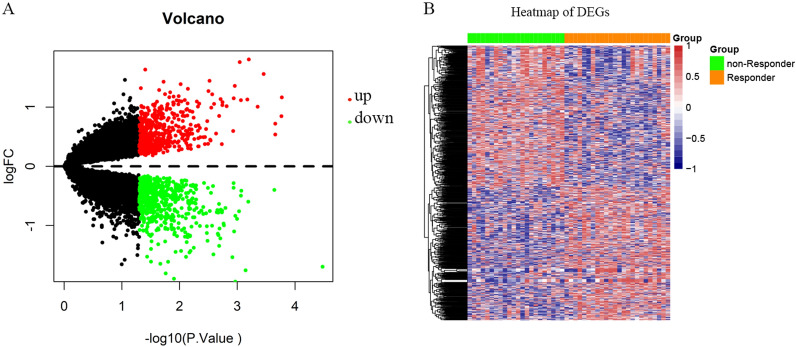
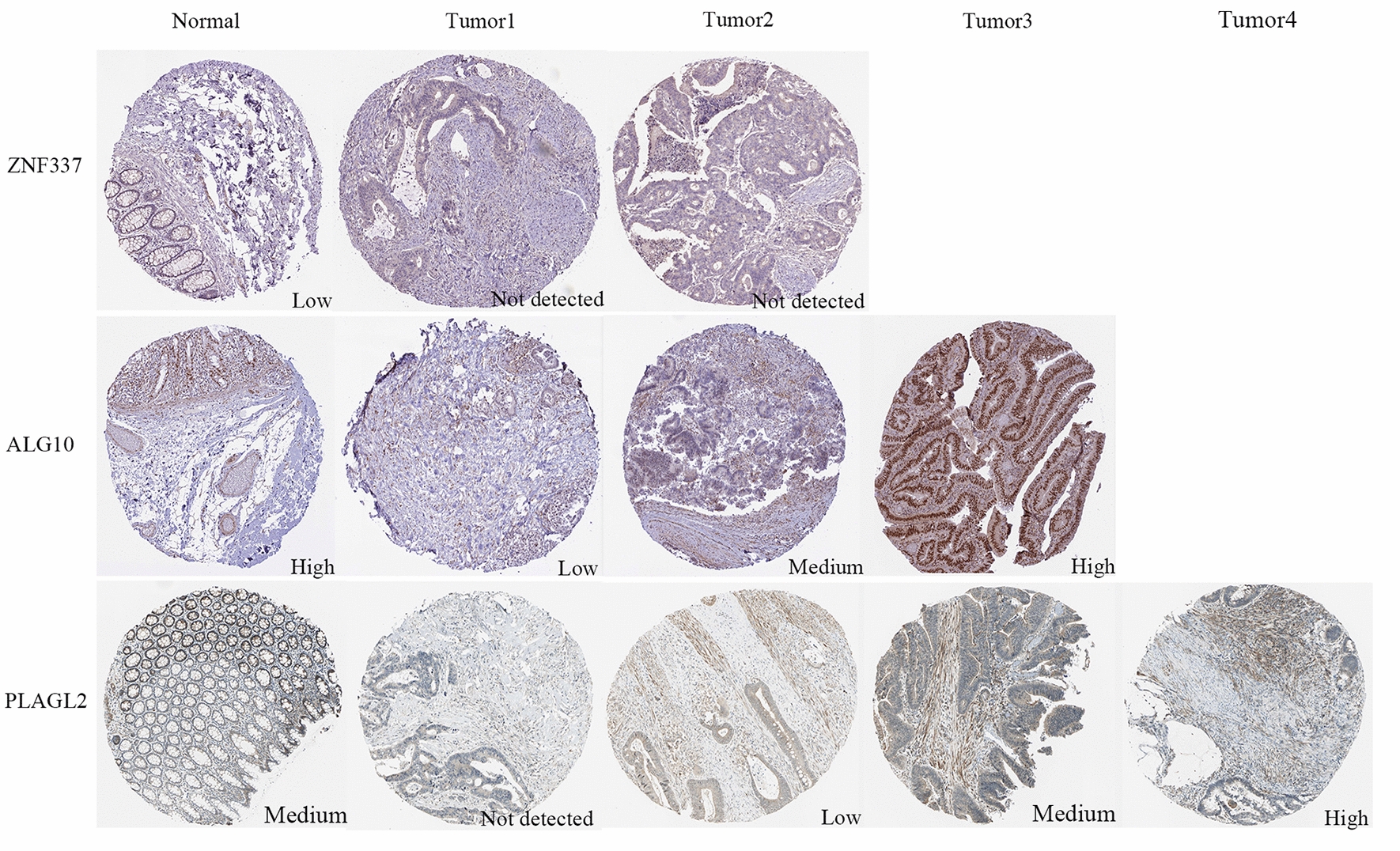
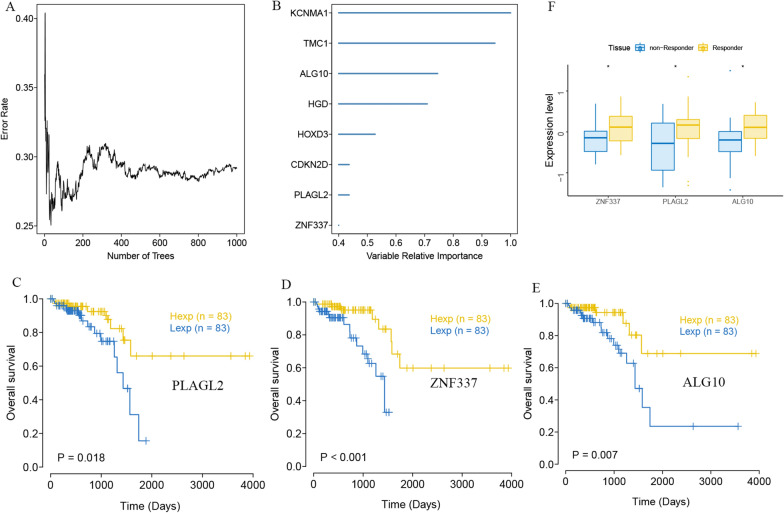
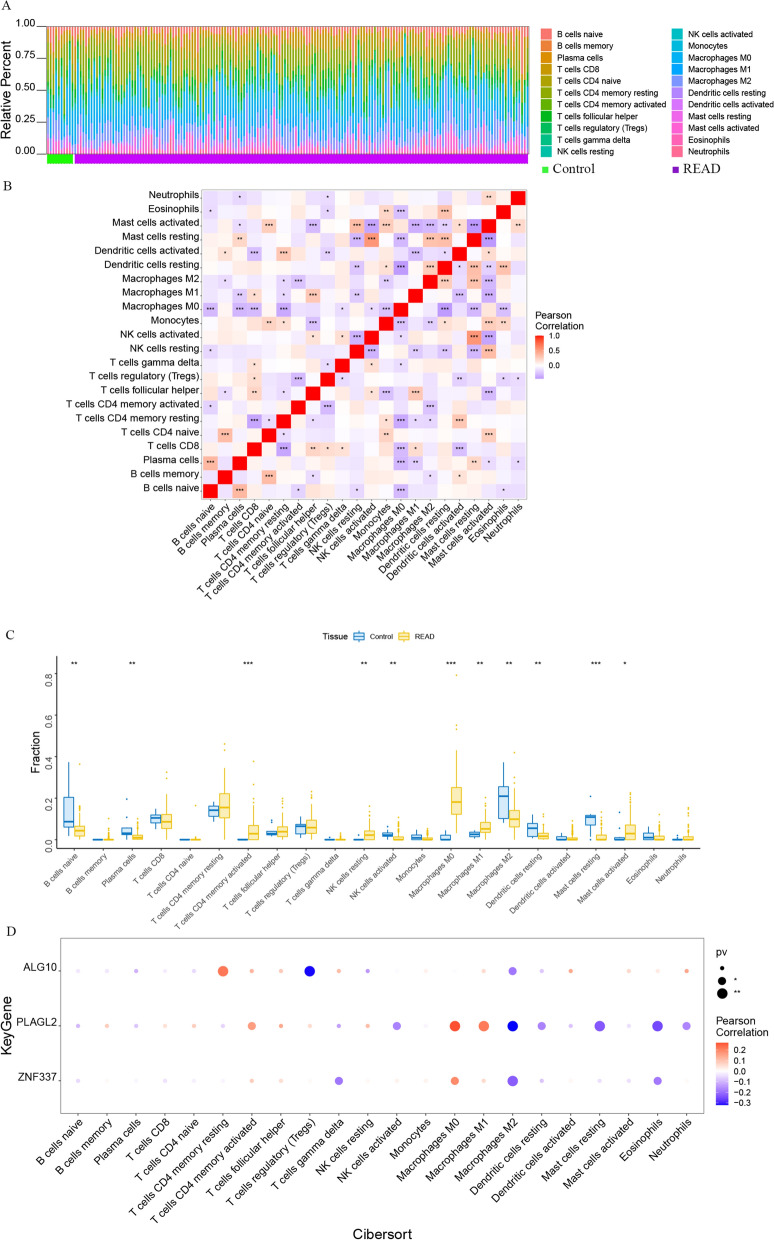
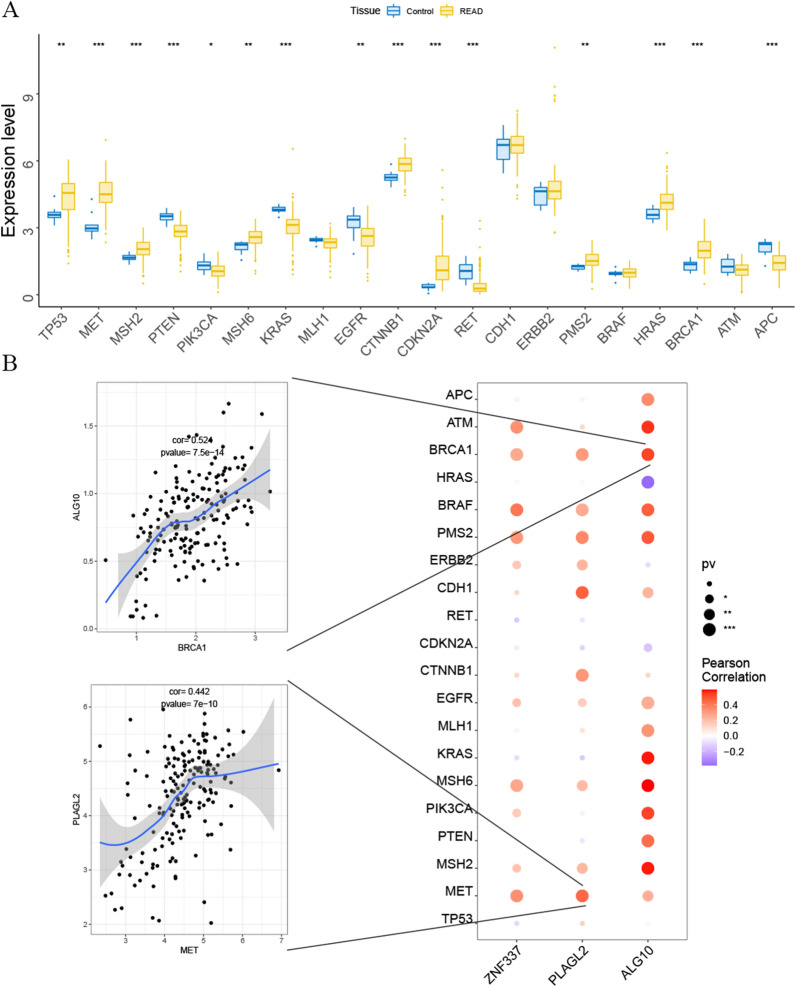
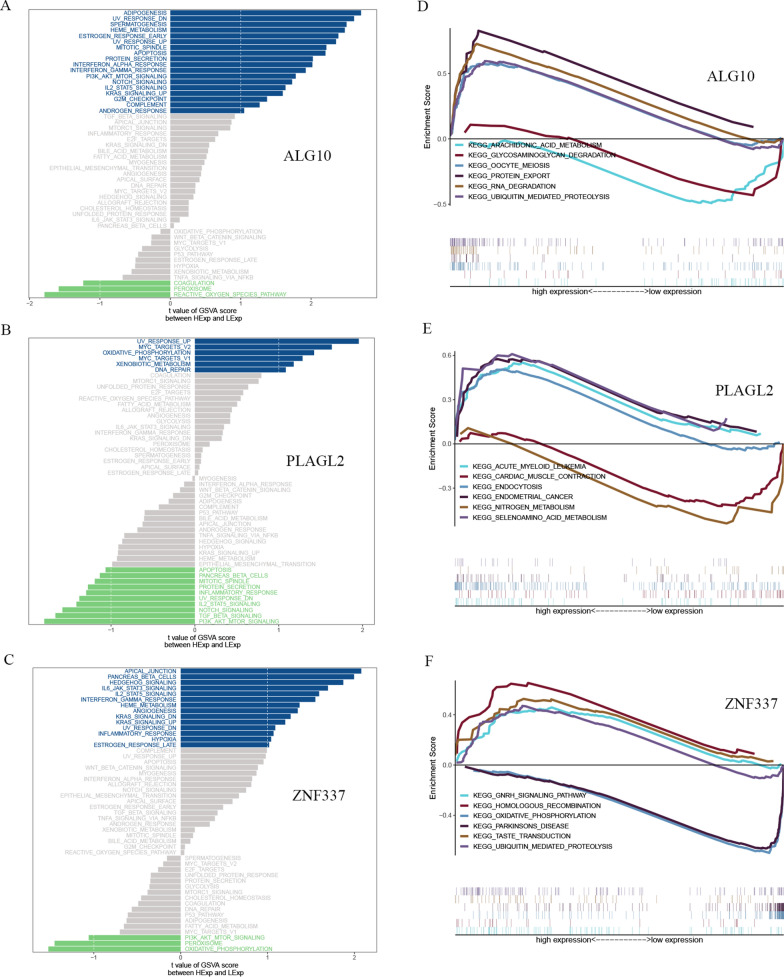
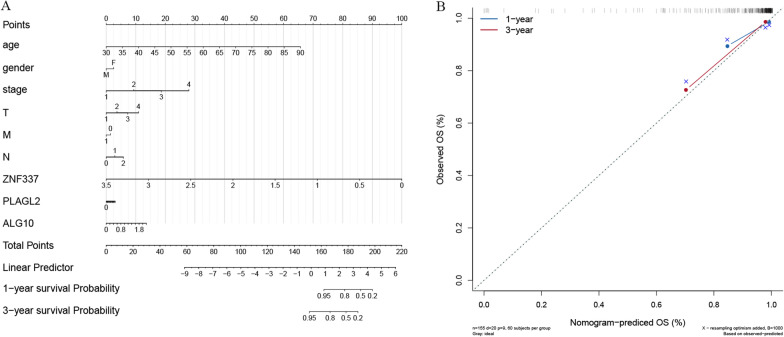
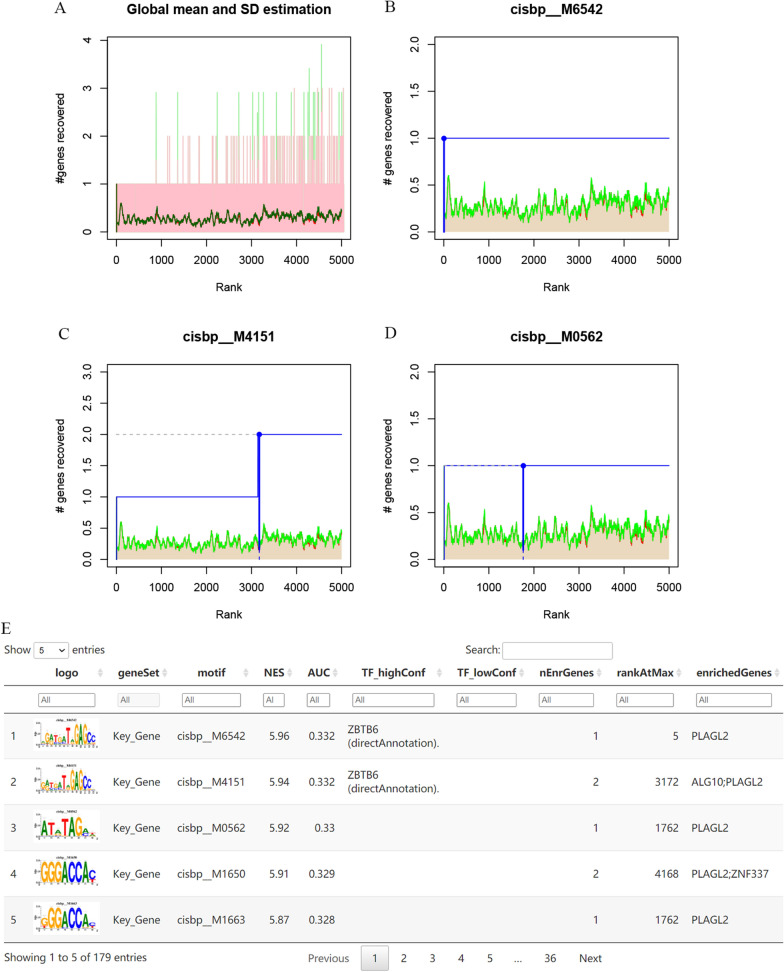
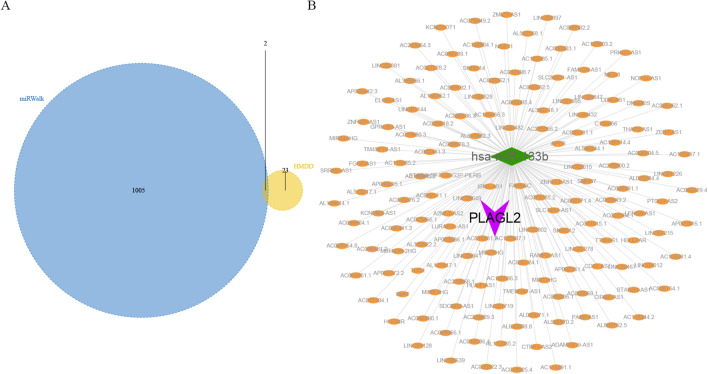
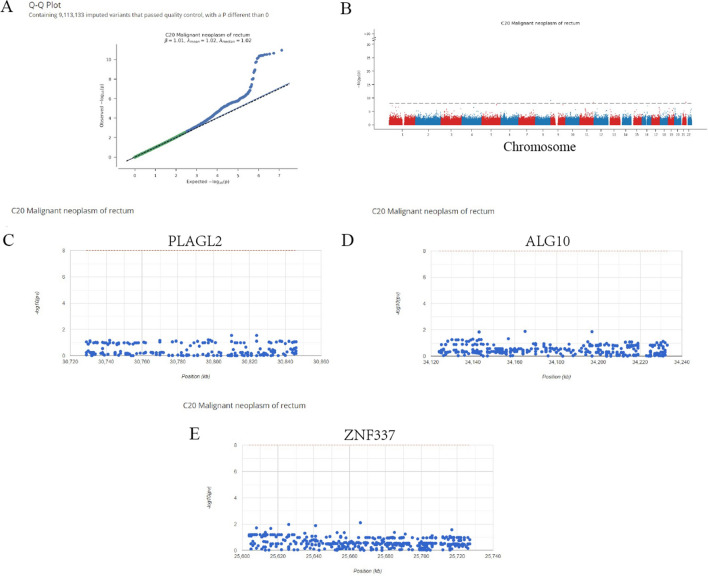
In total, 544 up-regulated and 575 down-regulated DEGs in READ were enrolled. Among that, three hubs including PLAGL2, ZNF337 and ALG10 were identified. These three hub genes were significantly associated with tumor immune infiltration, different immune-related genes and sensitivity of chemotherapeutic drugs. Also, they were correlated with the expression of various disease-related genes. In addition, GSVA and GSEA analysis revealed that different expression levels of PLAGL2, ZNF337 and ALG10 affected various signaling pathways related to disease progression. A nomogram and calibration curves based on three hub genes showed excellent prognosis predictive performance. And then, a regulatory network of transcription factor (ZBTB6) - mRNA (PLAGL2) and a ceRNA network of miRNA (has-miR-133b) - lncRNA were established. Finally, the results from HPA online database demonstrated the protein expression levels of PLAGL2, ZNF337 and ALG10 varied widely in READ patients.
These findings indicated that up-regulation of PLAGL2, ZNF337 and ALG10 in READ associated with radiotherapy response and involved in multiple process of cellular biology in tumor. They might be potential predictive biomarkers for radiotherapy sensitivity and prognosis for READ.
放疗抵抗是局部晚期直肠腺癌(READ)肿瘤消退率低的主要原因。与放疗敏感性相关的生物标志物及其潜在的分子机制尚未完全阐明。
从癌症基因组图谱(TCGA)和基因表达综合数据库(GEO)获取 READ 的 mRNA 表达谱和基因表达数据集(GSE35452)。筛选出 READ 放疗反应者和非反应者之间的差异表达基因(DEGs)。对 DEGs 进行基因本体论(GO)分析和京都基因与基因组百科全书(KEGG)通路分析。使用随机森林 SRC 包通过随机生存森林分析鉴定枢纽基因。基于 CIBERSORT 算法、癌症药物敏感性基因组学(GDSC)数据库、基因集变异分析(GSVA)、富集分析(GSEA)、列线图、基序富集和非编码 RNA 网络分析,研究枢纽基因与免疫细胞浸润、药物敏感性、特定信号通路、预后预测和 TF-miRNA 调控以及 ceRNA 网络的关系。使用在线人类蛋白质图谱(HPA)显示临床样本中枢纽基因的表达。
共纳入 544 个上调和 575 个下调的 READ DEGs。其中,鉴定出三个枢纽基因,包括 PLAGL2、ZNF337 和 ALG10。这三个枢纽基因与肿瘤免疫浸润、不同的免疫相关基因和化疗药物敏感性显著相关。此外,它们与各种疾病相关基因的表达相关。此外,GSVA 和 GSEA 分析表明,PLAGL2、ZNF337 和 ALG10 的不同表达水平影响与疾病进展相关的各种信号通路。基于三个枢纽基因的列线图和校准曲线显示出优异的预后预测性能。然后,建立了转录因子(ZBTB6)-mRNA(PLAGL2)的调控网络和 miRNA(has-miR-133b)-lncRNA 的 ceRNA 网络。最后,从 HPA 在线数据库获得的结果表明,READ 患者的 PLAGL2、ZNF337 和 ALG10 蛋白表达水平差异很大。
READ 中 PLAGL2、ZNF337 和 ALG10 的上调与放疗反应相关,并参与肿瘤细胞生物学的多个过程。它们可能是 READ 放疗敏感性和预后的潜在预测生物标志物。