Bchini Souhail, Hammami Nadhir, Selmi Taoufik, Zalleg Dalenda, Bouassida Anissa
High Institute of Sport and Education of Kef, University of Jendouba, Kef, Tunisia.
Higher Institute of Sport and Physical Education of Ksar Said, University of "La Manouba", Manouba, Tunisia.
BMC Sports Sci Med Rehabil. 2023 Mar 6;15(1):26. doi: 10.1186/s13102-023-00639-x.
Sex differences that appear throughout puberty have a substantial impact on the training process. It remains unclear what effect these sex differences should have on how training programs are planned and performed and what objectives should be established for boys and girls of different ages. This study aimed to investigate the relationship between vertical jump performance and muscle volume based on age and sex.
One hundred eighty healthy males (n = 90) and females (n = 90) performed three different types of vertical jumps (VJ): squat jump (SJ), counter movement jump (CMJ), and counter movement jump with arms (CMJ with arms). We used the anthropometric method to measure muscle volume.
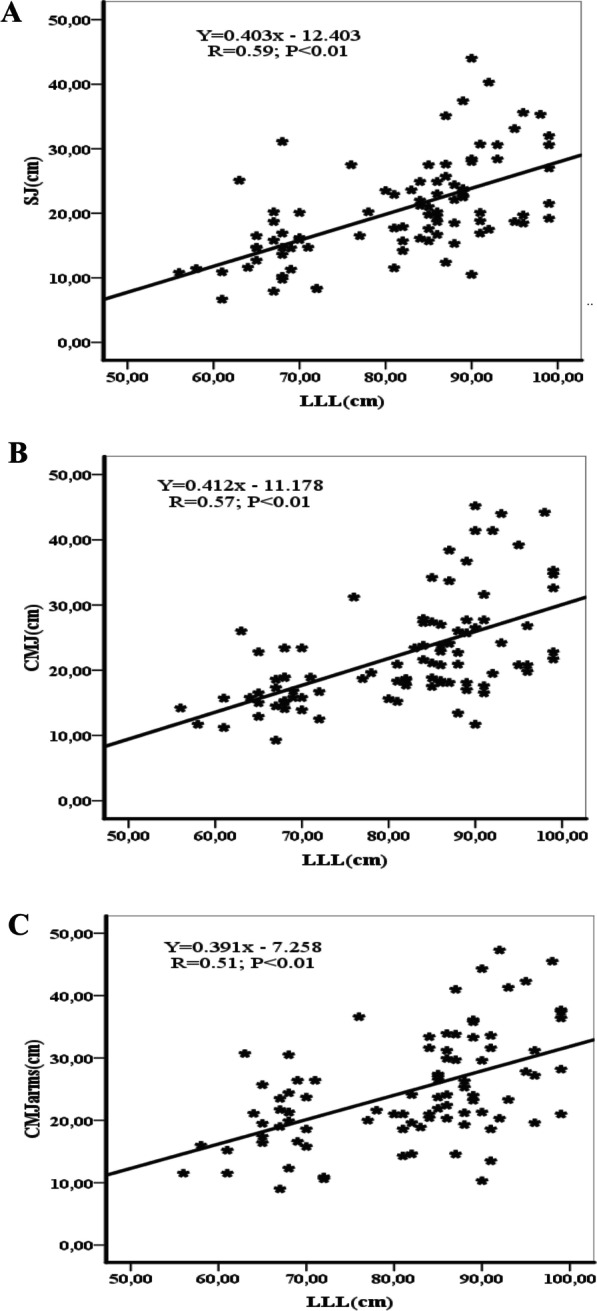
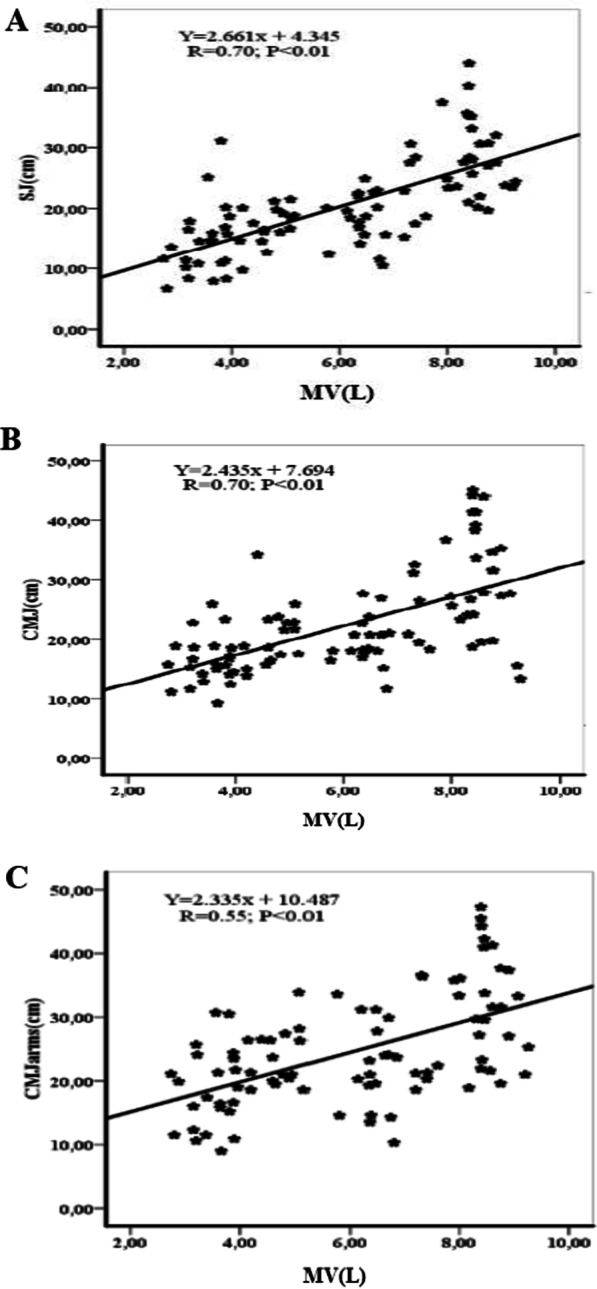
Muscle volume differed across age groups. There were significant effects of age, sex, and their interaction on the SJ, CMJ, and CMJ with arms heights. From the age of 14-15, males exhibited better performances than females, and large effect sizes became apparent in the SJ (d = 1.09, P = 0.04), CMJ (d = 2.18; P = 0.001) and CMJ with arms (d = 1.94; P = 0.004). For the 20-22-year-old age group, there was a significant difference in VJ performance between males and females. Extremely large effect sizes became apparent in the SJ (d = 4.44; P = 0.001), CMJ (d = 4.12; P = 0.001) and CMJ with arms (d = 5.16; P = 0.001). When performances were normalized to the lower limb length, these differences persisted. After normalization to muscle volume, males exhibited better performance when compared to females. This difference persisted only for the 20-22-year-old group on the SJ (p = 0.005), CMJ (p = 0.022) and CMJ with arms (p = 0.016). Among male participants, muscle volume was significantly correlated with SJ (r = 0.70; p < 0.01), CMJ (r = 0.70; p < 0.01) and CMJ with arms (r = 0.55; p < 0.01).
The results indicate that muscle volume may be one of the major determining factors in sex differences in vertical jumping performance.
青春期出现的性别差异对训练过程有重大影响。目前尚不清楚这些性别差异对训练计划的制定和实施应产生何种影响,以及应为不同年龄段的男孩和女孩设定何种目标。本研究旨在基于年龄和性别调查垂直纵跳成绩与肌肉量之间的关系。
180名健康男性(n = 90)和女性(n = 90)进行了三种不同类型的垂直纵跳(VJ):深蹲跳(SJ)、反向纵跳(CMJ)和双臂反向纵跳(双臂CMJ)。我们采用人体测量法测量肌肉量。
肌肉量在不同年龄组之间存在差异。年龄、性别及其交互作用对SJ、CMJ和双臂CMJ的高度有显著影响。从14 - 15岁起,男性的表现优于女性,并且在SJ(d = 1.09,P = 0.04)、CMJ(d = 2.18;P = 0.001)和双臂CMJ(d = 1.94;P = 0.004)中出现了较大的效应量。对于20 - 22岁年龄组,男性和女性在VJ成绩上存在显著差异。在SJ(d = 4.44;P = 0.001)、CMJ(d = 4.12;P = 0.001)和双臂CMJ(d = 5.16;P = 0.001)中出现了极大的效应量。当成绩根据下肢长度进行标准化后,这些差异仍然存在。在根据肌肉量进行标准化后,与女性相比,男性表现更好。这种差异仅在20 - 22岁组的SJ(p = 0.005)、CMJ(p = 0.022)和双臂CMJ(p = 0.016)中持续存在。在男性参与者中,肌肉量与SJ(r = 0.70;p < 0.01)、CMJ(r = 0.70;p < 0.01)和双臂CMJ(r = 0.55;p < 0.01)显著相关。
结果表明,肌肉量可能是垂直纵跳成绩性别差异的主要决定因素之一。