Departamento de Óptica, Farmacología y Anatomía, Universidad de Alicante, Alicante, Spain.
Unidad de Farmacología, Departamento de Medicina Física y Farmacología, Facultad de Medicina, Universidad de La Laguna, Tenerife, Spain.
Pflugers Arch. 2023 Jun;475(6):667-690. doi: 10.1007/s00424-023-02793-0. Epub 2023 Mar 8.
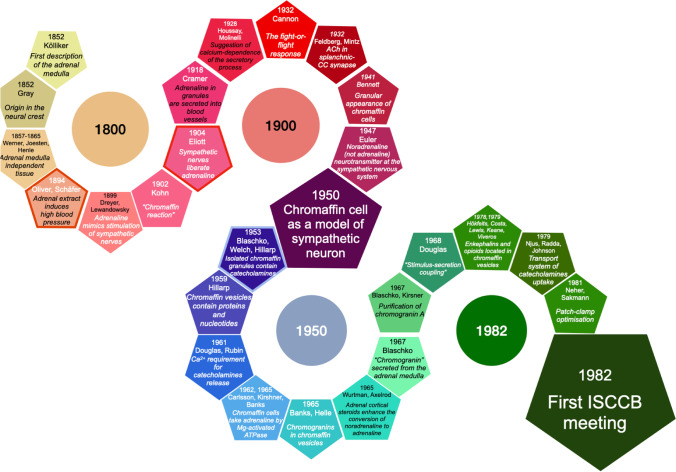
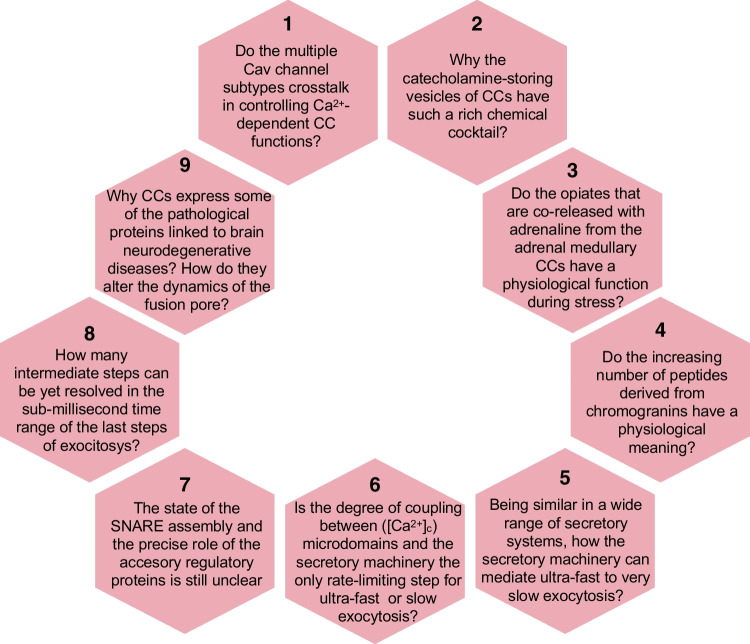
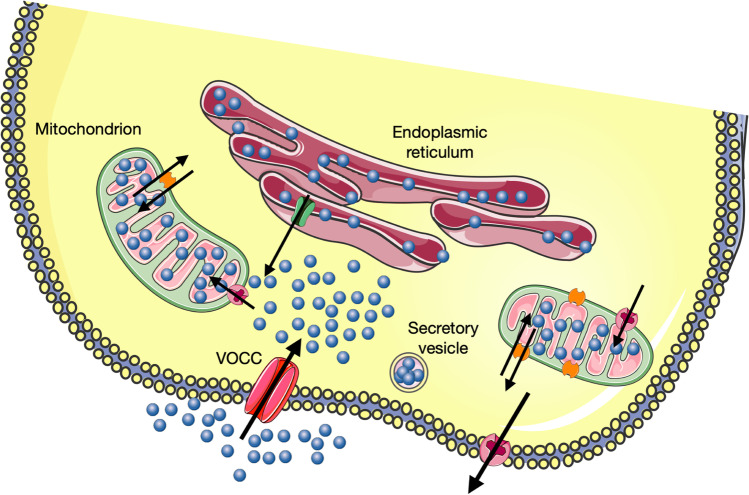
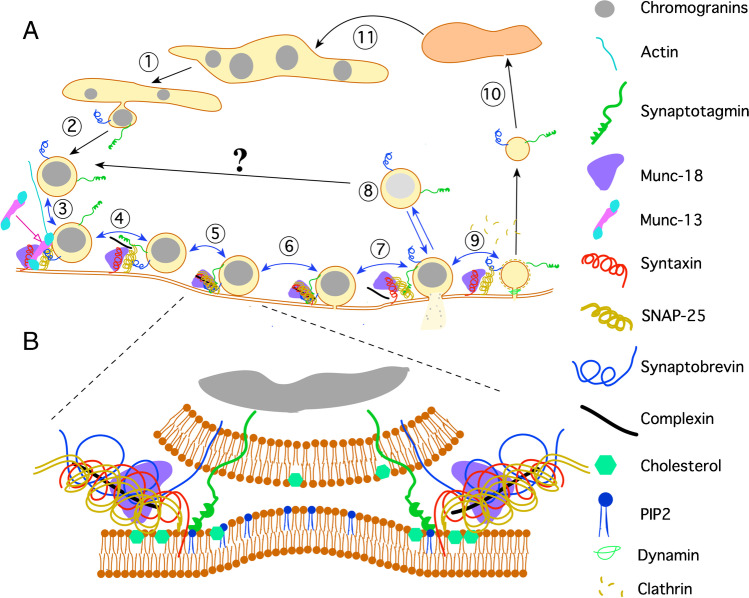
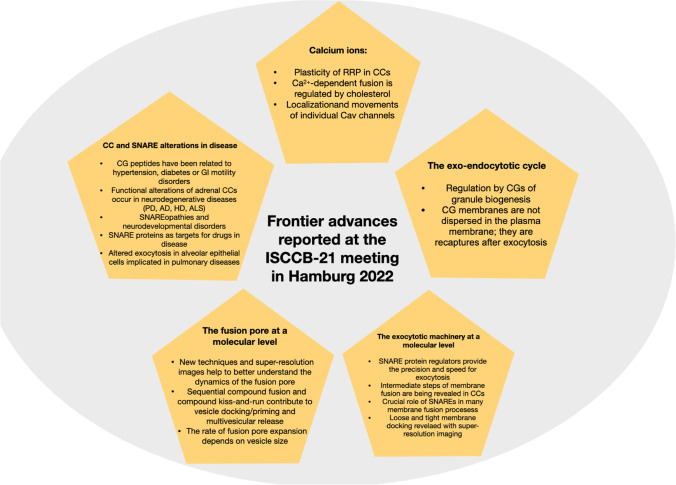
This historical review focuses on the evolution of the knowledge accumulated during the last two centuries on the biology of the adrenal medulla gland and its chromaffin cells (CCs). The review emerged in the context of a series of meetings that started on the Spanish island of Ibiza in 1982 with the name of the International Symposium on Chromaffin Cell Biology (ISCCB). Hence, the review is divided into two periods namely, before 1982 and from this year to 2022, when the 21st ISCCB meeting was just held in Hamburg, Germany. The first historical period extends back to 1852 when Albert Kölliker first described the fine structure and function of the adrenal medulla. Subsequently, the adrenal staining with chromate salts identified the CCs; this was followed by the establishment of the embryological origin of the adrenal medulla, and the identification of adrenaline-storing vesicles. By the end of the nineteenth century, the basic morphology, histochemistry, and embryology of the adrenal gland were known. The twentieth century began with breakthrough findings namely, the experiment of Elliott suggesting that adrenaline was the sympathetic neurotransmitter, the isolation of pure adrenaline, and the deciphering of its molecular structure and chemical synthesis in the laboratory. In the 1950s, Blaschko isolated the catecholamine-storing vesicles from adrenal medullary extracts. This switched the interest in CCs as models of sympathetic neurons with an explosion of studies concerning their functions, i.e., uptake of catecholamines by chromaffin vesicles through a specific coupled transport system; the identification of several vesicle components in addition to catecholamines including chromogranins, ATP, opioids, and other neuropeptides; the calcium-dependence of the release of catecholamines; the underlying mechanism of exocytosis of this release, as indicated by the co-release of proteins; the cross-talk between the adrenal cortex and the medulla; and the emission of neurite-like processes by CCs in culture, among other numerous findings. The 1980s began with the introduction of new high-resolution techniques such as patch-clamp, calcium probes, marine toxins-targeting ion channels and receptors, confocal microscopy, or amperometry. In this frame of technological advances at the Ibiza ISCCB meeting in 1982, 11 senior researchers in the field predicted a notable increase in our knowledge in the field of CCs and the adrenal medulla; this cumulative knowledge that occurred in the last 40 years of history of the CC is succinctly described in the second part of this historical review. It deals with cell excitability, ion channel currents, the exocytotic fusion pore, the handling of calcium ions by CCs, the kinetics of exocytosis and endocytosis, the exocytotic machinery, and the life cycle of secretory vesicles. These concepts together with studies on the dynamics of membrane fusion with super-resolution imaging techniques at the single-protein level were extensively reviewed by top scientists in the field at the 21st ISCCB meeting in Hamburg in the summer of 2022; this frontier topic is also briefly reviewed here. Many of the concepts arising from those studies contributed to our present understanding of synaptic transmission. This has been studied in physiological or pathophysiological conditions, in CCs from animal disease models. In conclusion, the lessons we have learned from CC biology as a peripheral model for brain and brain disease pertain more than ever to cutting-edge research in neurobiology. In the 22nd ISCCB meeting in Israel in 2024 that Uri Asheri is organizing, we will have the opportunity of seeing the progress of the questions posed in Ibiza, and on other questions that undoubtedly will arise.
这篇历史综述聚焦于过去两个世纪积累的关于肾上腺髓质腺和其嗜铬细胞 (CC) 生物学知识的演变。该综述源于一系列始于 1982 年西班牙伊比萨岛的会议,这些会议名为国际嗜铬细胞生物学研讨会 (ISCCB)。因此,综述分为两个时期,即 1982 年之前和从这一年到 2022 年,当时第 21 届 ISCCB 会议刚刚在德国汉堡举行。第一个历史时期可以追溯到 1852 年,当时阿尔伯特·科利克 (Albert Kölliker) 首次描述了肾上腺髓质的精细结构和功能。随后,用铬酸盐对肾上腺进行染色,确定了 CCs;随后,确定了肾上腺髓质的胚胎起源,并鉴定了肾上腺素储存囊泡。到 19 世纪末,肾上腺的基本形态、组织化学和胚胎学已经为人所知。20 世纪始于突破性的发现,即埃利奥特 (Elliott) 的实验表明肾上腺素是交感神经递质,纯肾上腺素的分离,以及在实验室中阐明其分子结构和化学合成。20 世纪 50 年代,布拉什科 (Blaschko) 从肾上腺髓质提取物中分离出储存儿茶酚胺的囊泡。这一发现将 CCs 作为交感神经元的模型的兴趣转移了,随之而来的是对其功能的大量研究,即通过特定的偶联转运系统摄取嗜铬囊泡中的儿茶酚胺;除了儿茶酚胺之外,还鉴定了几种囊泡成分,包括嗜铬粒蛋白、ATP、阿片类物质和其他神经肽;儿茶酚胺释放的钙离子依赖性;该释放的胞吐作用的潜在机制,如蛋白质的共释放所表明的;肾上腺皮质和髓质之间的串扰;以及 CC 在培养中发射神经突样过程等。20 世纪 80 年代开始引入新的高分辨率技术,如膜片钳、钙探针、靶向离子通道和受体的海洋毒素、共聚焦显微镜或安培法。在 1982 年伊比萨 ISCCB 会议上的这些技术进步框架内,该领域的 11 位资深研究人员预测我们在 CC 和肾上腺髓质领域的知识将显著增加;在 CC 历史的最后 40 年中积累的这些知识在本历史综述的第二部分中简要描述。它涉及细胞兴奋性、离子通道电流、胞吐融合孔、CC 处理钙离子、胞吐和胞内摄作用的动力学、胞吐机制以及分泌囊泡的生命周期。这些概念以及使用超分辨率成像技术在单个蛋白质水平上对膜融合动力学的研究,在 2022 年夏天于德国汉堡举行的第 21 届 ISCCB 会议上,由该领域的顶尖科学家进行了广泛的综述;这里也简要综述了这个前沿课题。这些研究中的许多概念有助于我们目前对突触传递的理解。这在生理或病理生理条件下,在动物疾病模型的 CC 中进行了研究。总之,我们从 CC 生物学中学到的经验,作为大脑和脑部疾病的外周模型,比以往任何时候都更适用于神经生物学的前沿研究。在 2024 年以色列的第 22 届 ISCCB 会议上,由 Uri Asheri 组织,我们将有机会看到在伊比萨提出的问题的进展,以及无疑会出现的其他问题。