Department of Neuroscience, University of Wisconsin-Madison, Madison, United States.
Howard Hughes Medical Institute, Madison, United States.
Elife. 2024 Mar 27;12:RP90632. doi: 10.7554/eLife.90632.
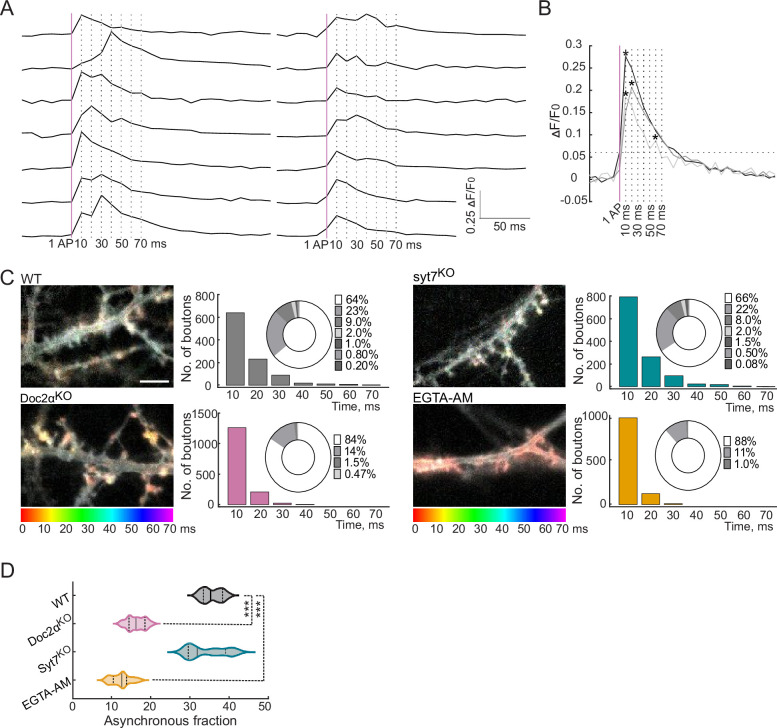
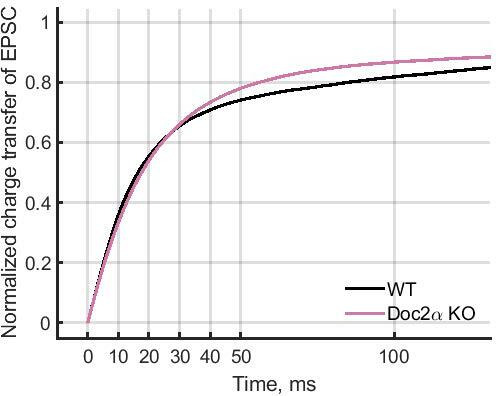
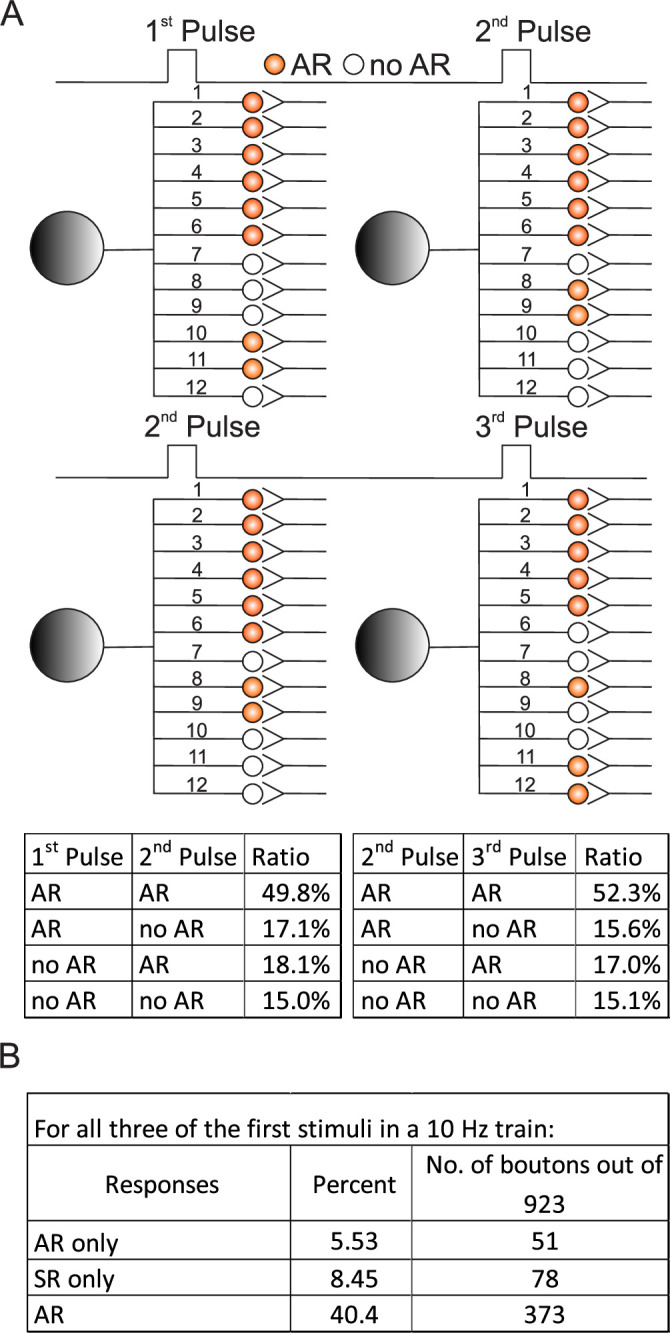
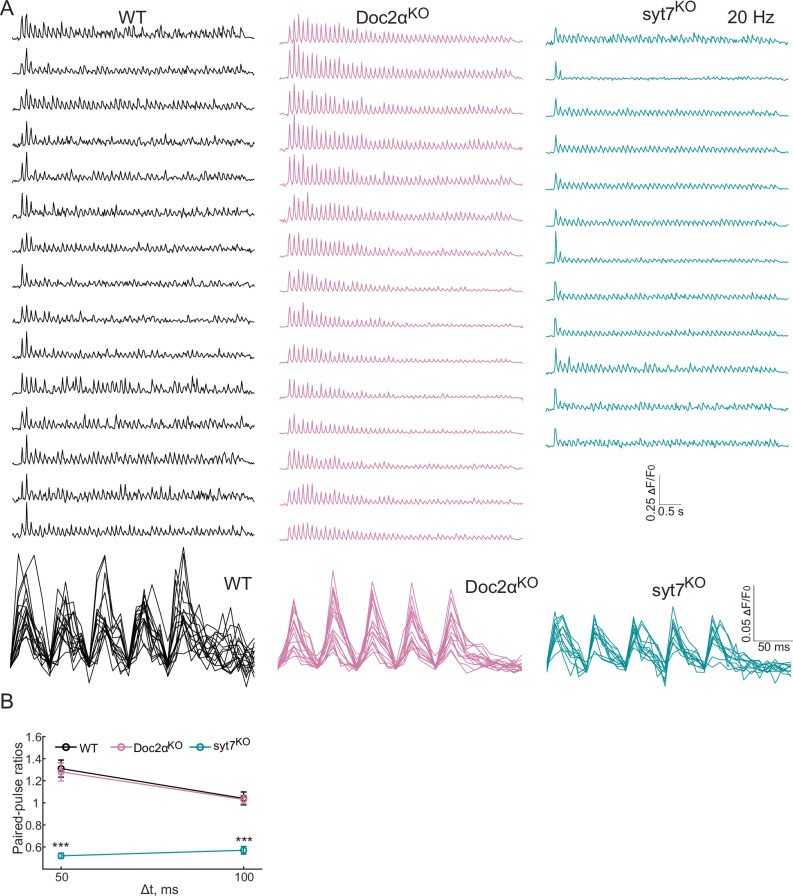
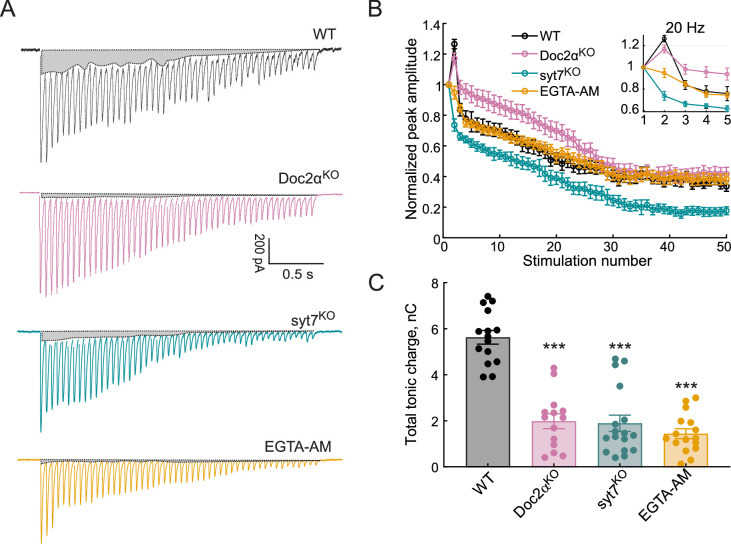
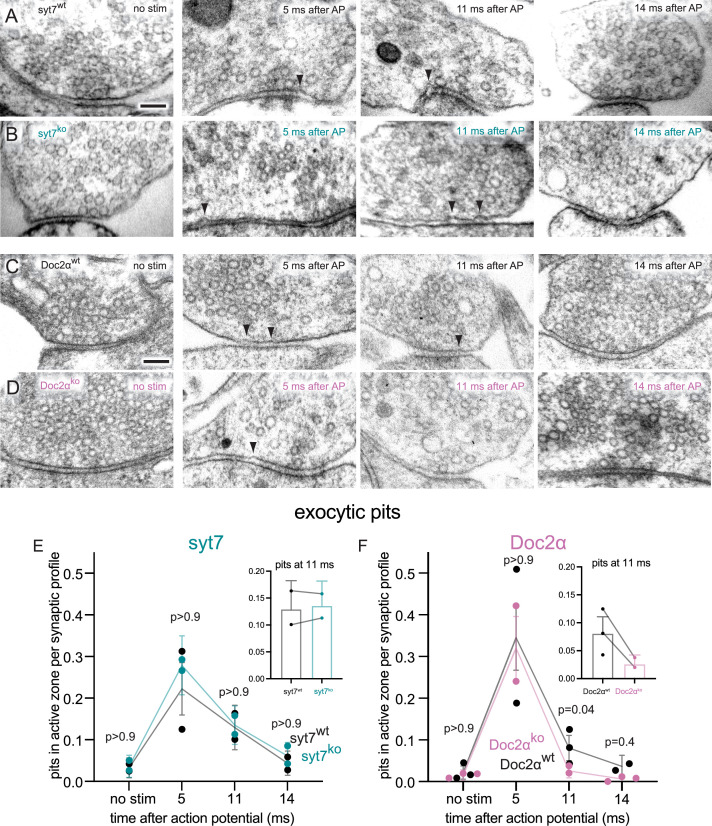
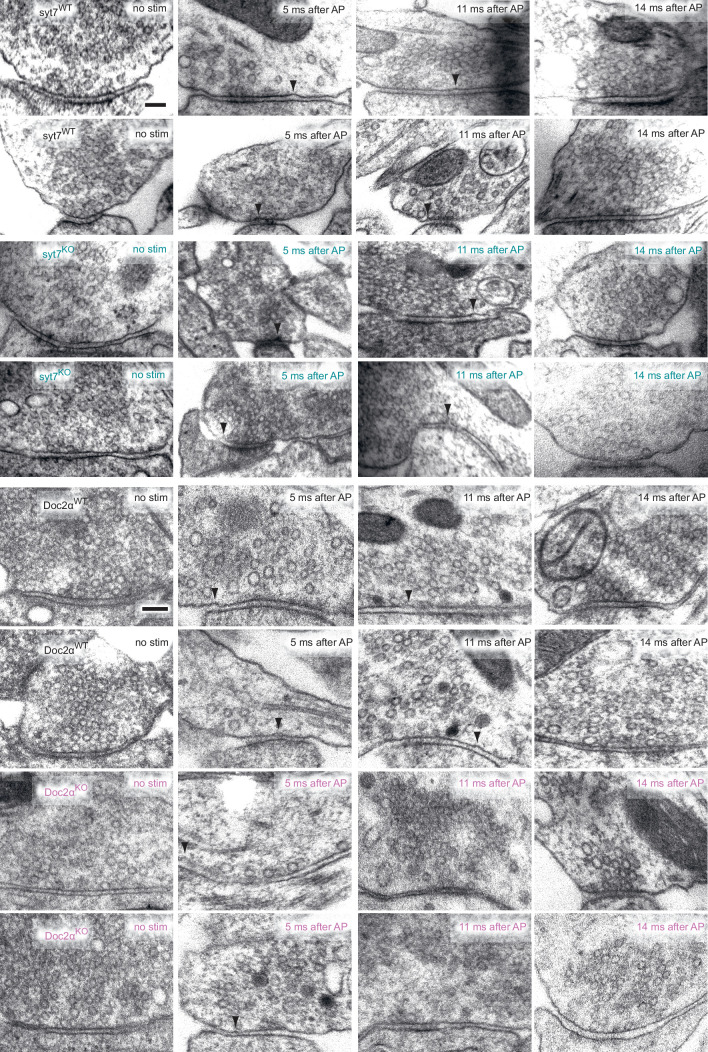
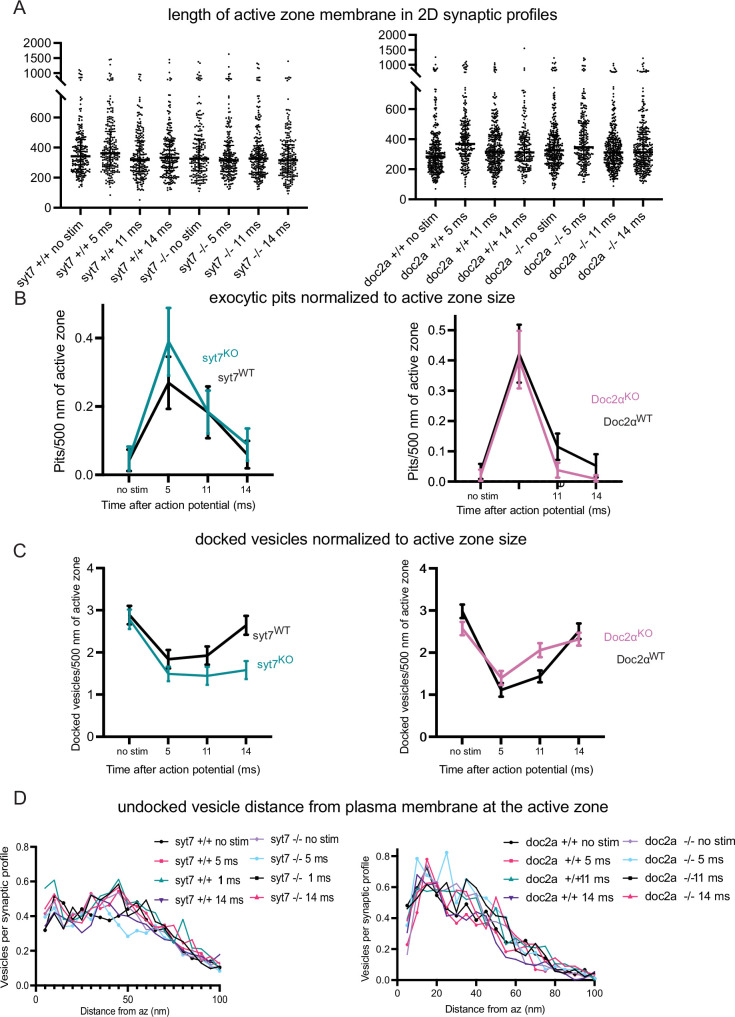
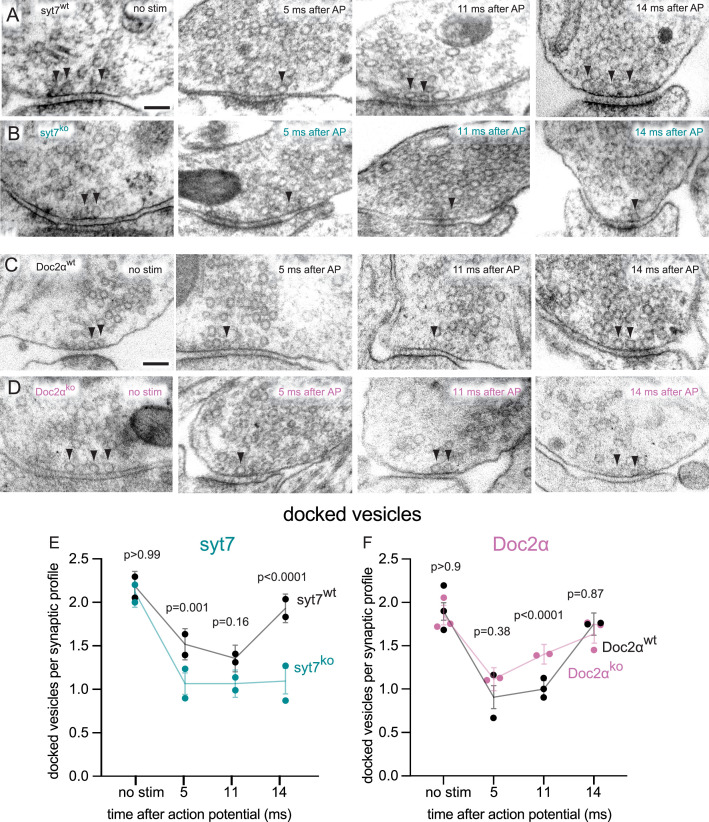
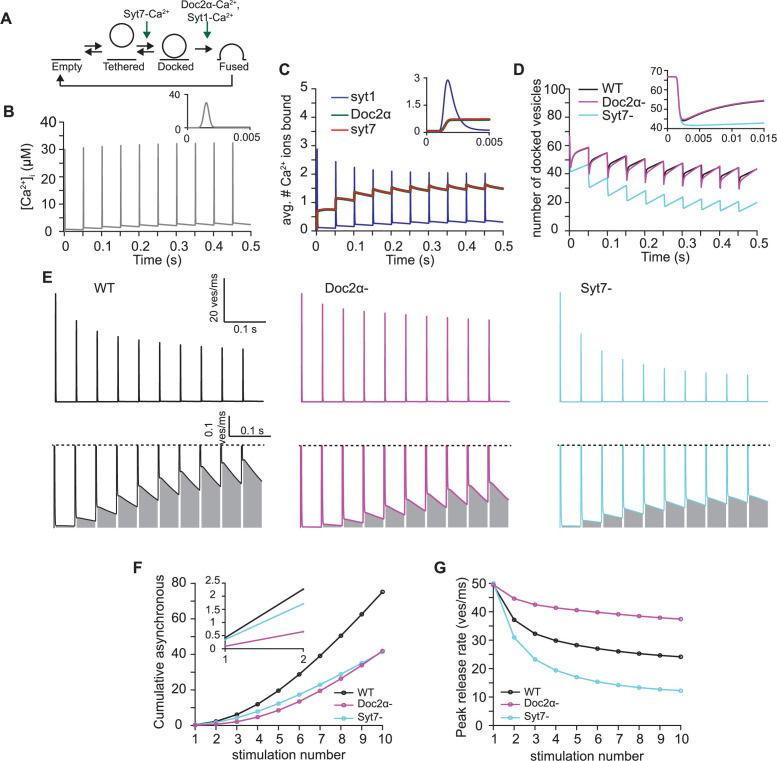
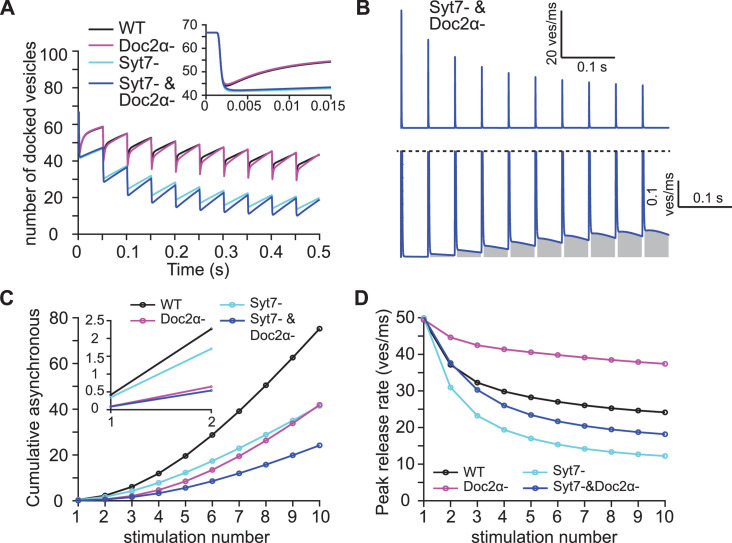
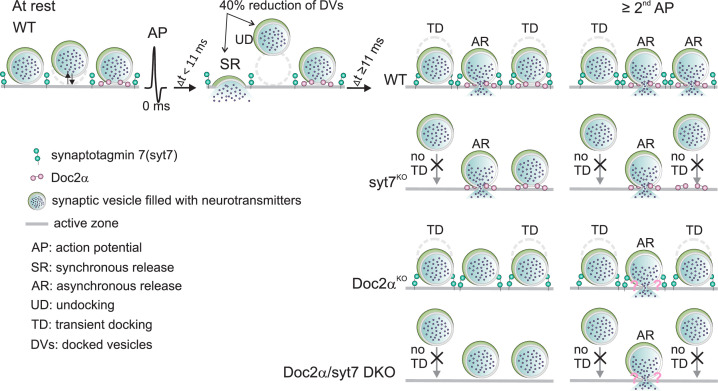
Despite decades of intense study, the molecular basis of asynchronous neurotransmitter release remains enigmatic. Synaptotagmin (syt) 7 and Doc2 have both been proposed as Ca sensors that trigger this mode of exocytosis, but conflicting findings have led to controversy. Here, we demonstrate that at excitatory mouse hippocampal synapses, Doc2α is the major Ca sensor for asynchronous release, while syt7 supports this process through activity-dependent docking of synaptic vesicles. In synapses lacking Doc2α, asynchronous release after single action potentials is strongly reduced, while deleting syt7 has no effect. However, in the absence of syt7, docked vesicles cannot be replenished on millisecond timescales. Consequently, both synchronous and asynchronous release depress from the second pulse onward during repetitive activity. By contrast, synapses lacking Doc2α have normal activity-dependent docking, but continue to exhibit decreased asynchronous release after multiple stimuli. Moreover, disruption of both Ca sensors is non-additive. These findings result in a new model whereby syt7 drives activity-dependent docking, thus providing synaptic vesicles for synchronous (syt1) and asynchronous (Doc2 and other unidentified sensors) release during ongoing transmission.
尽管经过了数十年的深入研究,神经递质释放的异步性的分子基础仍然很神秘。突触结合蛋白 7(syt7)和 Doc2 都被认为是触发这种胞吐方式的钙传感器,但相互矛盾的发现导致了争议。在这里,我们证明在兴奋性小鼠海马突触中,Doc2α 是异步释放的主要钙传感器,而 syt7 通过突触小泡的活性依赖性对接来支持这个过程。在缺乏 Doc2α 的突触中,单个动作电位后的异步释放会强烈减少,而删除 syt7 则没有影响。然而,在没有 syt7 的情况下,突触小泡不能在毫秒级的时间尺度上补充。因此,在重复活动期间,同步和异步释放都会从第二个脉冲开始减弱。相比之下,缺乏 Doc2α 的突触具有正常的活性依赖性对接,但在多次刺激后,异步释放仍会减少。此外,两种钙传感器的破坏不是加性的。这些发现导致了一个新的模型,其中 syt7 驱动活性依赖性对接,从而在持续传递过程中为同步(syt1)和异步(Doc2 和其他未识别的传感器)释放提供突触小泡。