Department of Human Development and Family Sciences, University of Texas at Austin.
J Fam Psychol. 2023 Jun;37(4):528-537. doi: 10.1037/fam0001078. Epub 2023 Mar 9.
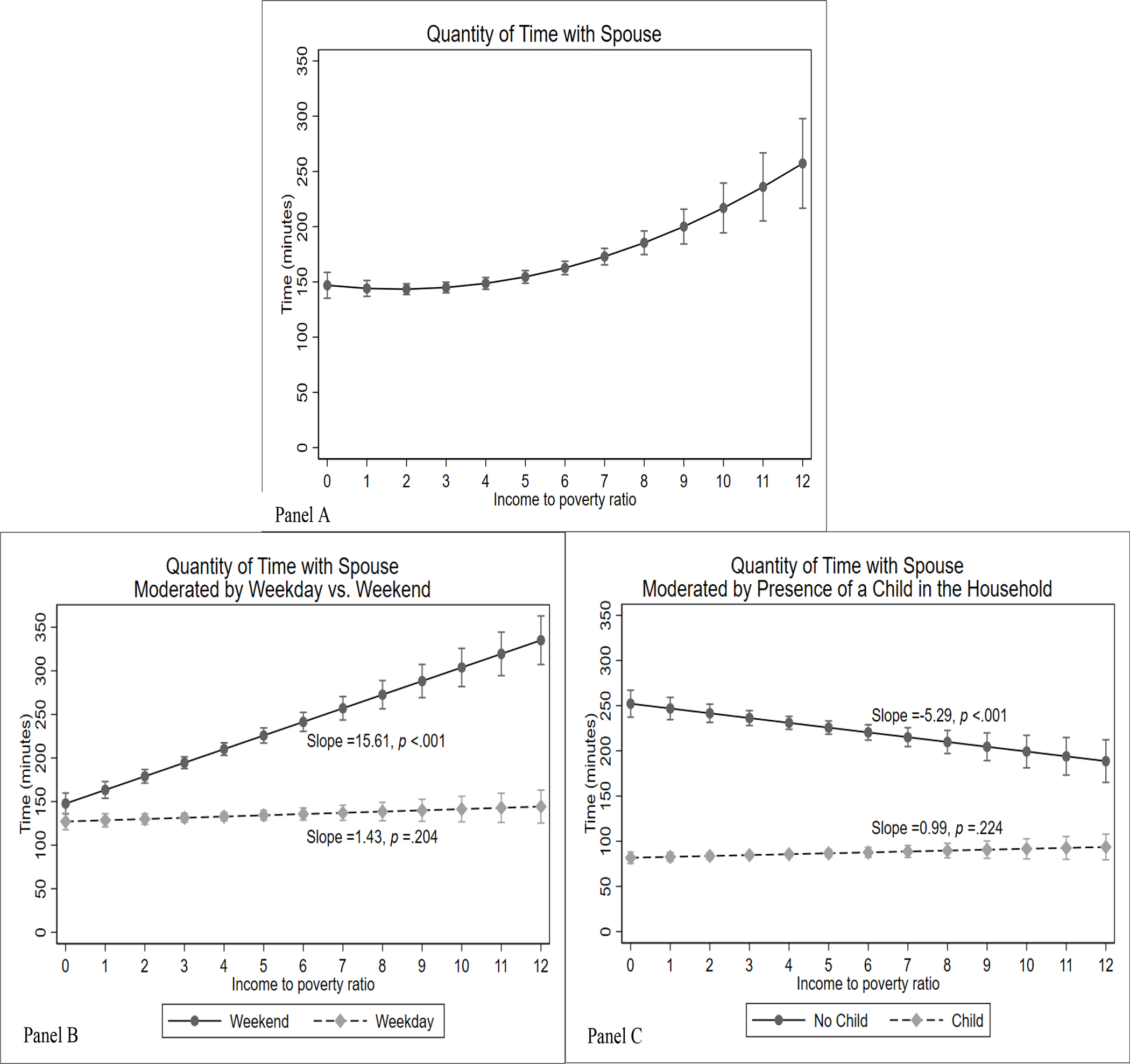
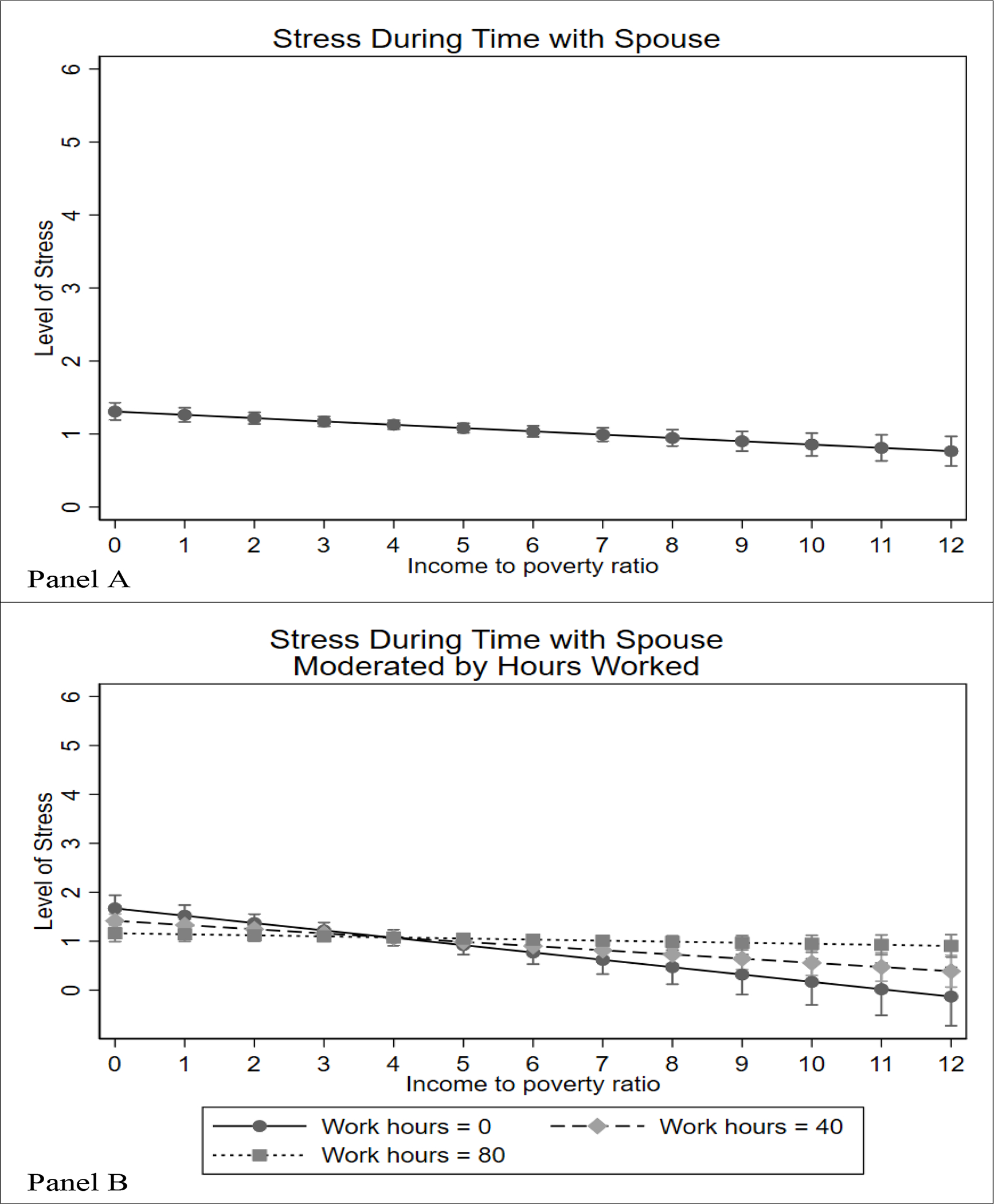
Shared time is a centrally important component of relationship maintenance, and over the past few decades, couples have reported spending increasingly more time together. However, over this same time period divorce rates have risen much higher for lower income couples compared to higher income couples. One theorized explanation for the disparity in divorce rates between lower and higher income couples is a difference across the socioeconomic strata in the quantity and quality of time couples spend together. This theory argues that lower income couples may experience a time deficit because they face a greater number of stressors that take up time, diminishing the of time they have available to spend together. They may also need to use the time they do have available to deal with stressors rather than engaging in more enjoyable activities together, diminishing the of time they share. Using a sample of = 14,788 respondents from the American Time Use Survey, the present study examined whether household income was associated with the quantity and quality of time married couples spend together. Consistent with predictions, lower income couples spent less alone time together but this was moderated by weekday versus weekend and presence of children. Lower income couples also reported higher levels of stress during time spent with their spouse than higher income couples, and this association was moderated by hours worked by the couples. Results support the theory, indicating that quantity and quality of time may be important factors in understanding differences in relationship outcomes between lower and higher income couples. (PsycInfo Database Record (c) 2023 APA, all rights reserved).
共享时间是维持关系的一个核心重要组成部分,在过去几十年中,夫妻双方报告称他们在一起的时间越来越多。然而,在同一时期,与高收入夫妇相比,低收入夫妇的离婚率上升得更高。对于低收入夫妇和高收入夫妇之间离婚率差异的一个理论解释是,夫妻双方在一起度过的时间的数量和质量在社会经济阶层上存在差异。这一理论认为,低收入夫妇可能会经历时间不足,因为他们面临更多的压力源,这些压力源占用了时间,减少了他们可用于一起度过的时间。他们可能还需要利用现有的时间来应对压力源,而不是一起进行更愉快的活动,从而减少他们共同度过的时间。本研究使用了来自美国时间使用调查的 14788 名已婚受访者的样本,检验了家庭收入是否与已婚夫妇在一起度过的时间的数量和质量有关。与预测一致,低收入夫妇在一起的独处时间较少,但这受到工作日与周末和是否有孩子的调节。与高收入夫妇相比,低收入夫妇在与配偶共度时光时报告的压力水平更高,这种关联受到夫妇工作时间的调节。研究结果支持了这一理论,表明时间的数量和质量可能是理解低收入和高收入夫妇之间关系结果差异的重要因素。