Toneasy Inc., Tokyo, Japan.
Department of Ophthalmology, Keio University, School of Medicine, Tokyo, Japan.
PLoS One. 2023 Mar 9;18(3):e0282911. doi: 10.1371/journal.pone.0282911. eCollection 2023.
To develop artificial eye models using 3D printing and to evaluate the correlation between different corneal thicknesses and intraocular pressures (IOPs).
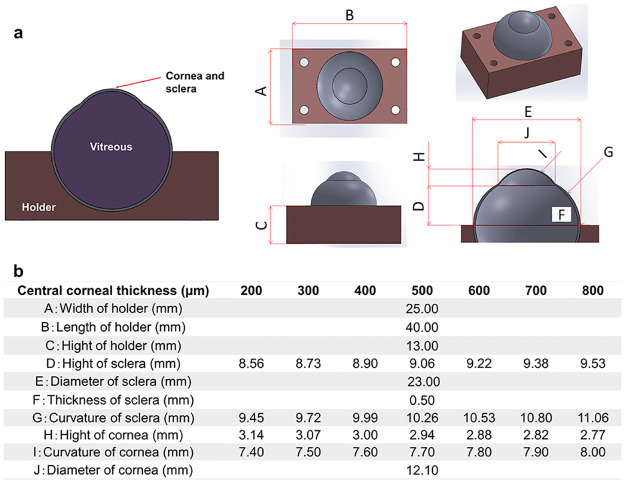
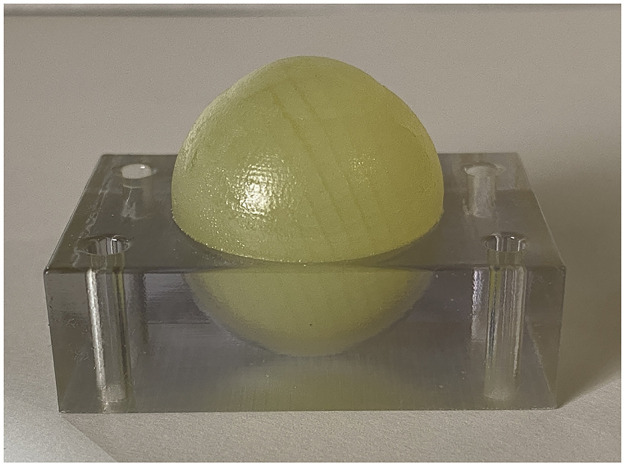
We designed 7 artificial eye models using a computer-aided design system and fabricated them using 3D printing. Corneal curvature and axial length were based on the Gullstrand eye model. Hydrogels were injected into the vitreous cavity, and seven different corneal thicknesses (200 to 800 μm) were prepared. In this proposed design, we also produced different corneal stiffnesses. A Tono-Pen AVIA tonometer was used by the same examiner to perform five consecutive IOP measurements in each eye model.
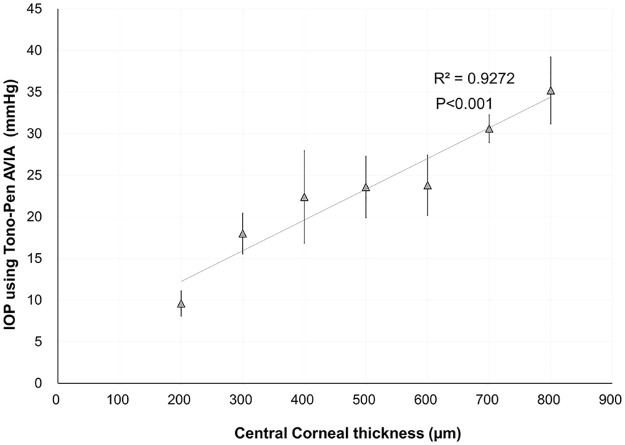
Different eye models were ideally created using 3D printing. IOP measurements were successfully performed in each eye model. The corneal thickness was significantly correlated with IOP (R2 = 0.927; 𝑃<0.001).
The 3D-printed eye model is useful for evaluating IOP measurements. This technique might be a promising alternative to the conventional porcine eye model.
使用 3D 打印技术开发人工眼球模型,并评估不同角膜厚度与眼内压(IOP)之间的相关性。
我们使用计算机辅助设计系统设计了 7 个人工眼球模型,并使用 3D 打印技术制造了这些模型。角膜曲率和眼轴长度基于古尔斯特兰德眼球模型。将水凝胶注入玻璃体腔,并制备了 7 种不同的角膜厚度(200 至 800μm)。在这个设计中,我们还产生了不同的角膜硬度。由同一位检查者使用 Tono-Pen AVIA 眼压计在每个眼球模型中连续进行了 5 次 IOP 测量。
使用 3D 打印技术理想地创建了不同的眼球模型。成功地在每个眼球模型中进行了 IOP 测量。角膜厚度与 IOP 呈显著相关(R2 = 0.927;P<0.001)。
3D 打印眼球模型可用于评估 IOP 测量值。该技术可能是传统猪眼模型的一种有前途的替代方法。