Genentech, 1 DNA Way, South San Francisco, CA, 94080, USA.
Present address: Biomarker Discovery OMNI, Genentech Inc., South San Francisco, CA, USA.
Microbiome. 2023 Mar 9;11(1):47. doi: 10.1186/s40168-023-01486-1.
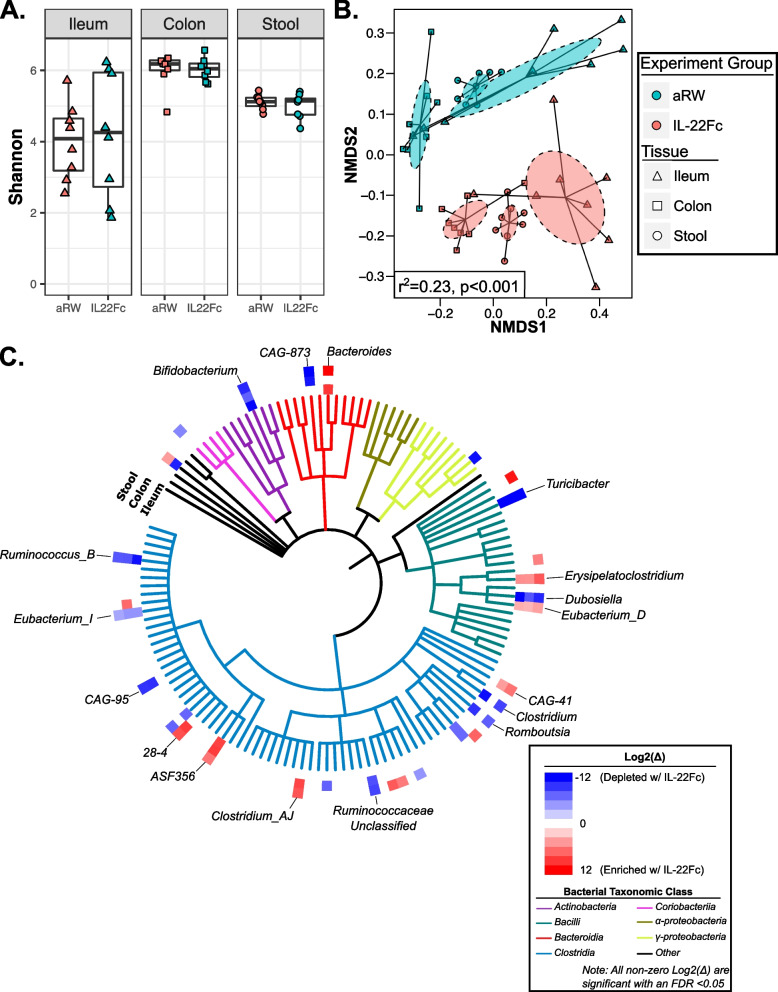
IL-22 is induced by aryl hydrocarbon receptor (AhR) signaling and plays a critical role in gastrointestinal barrier function through effects on antimicrobial protein production, mucus secretion, and epithelial cell differentiation and proliferation, giving it the potential to modulate the microbiome through these direct and indirect effects. Furthermore, the microbiome can in turn influence IL-22 production through the synthesis of L-tryptophan (L-Trp)-derived AhR ligands, creating the prospect of a host-microbiome feedback loop. We evaluated the impact IL-22 may have on the gut microbiome and its ability to activate host AhR signaling by observing changes in gut microbiome composition, function, and AhR ligand production following exogenous IL-22 treatment in both mice and humans.
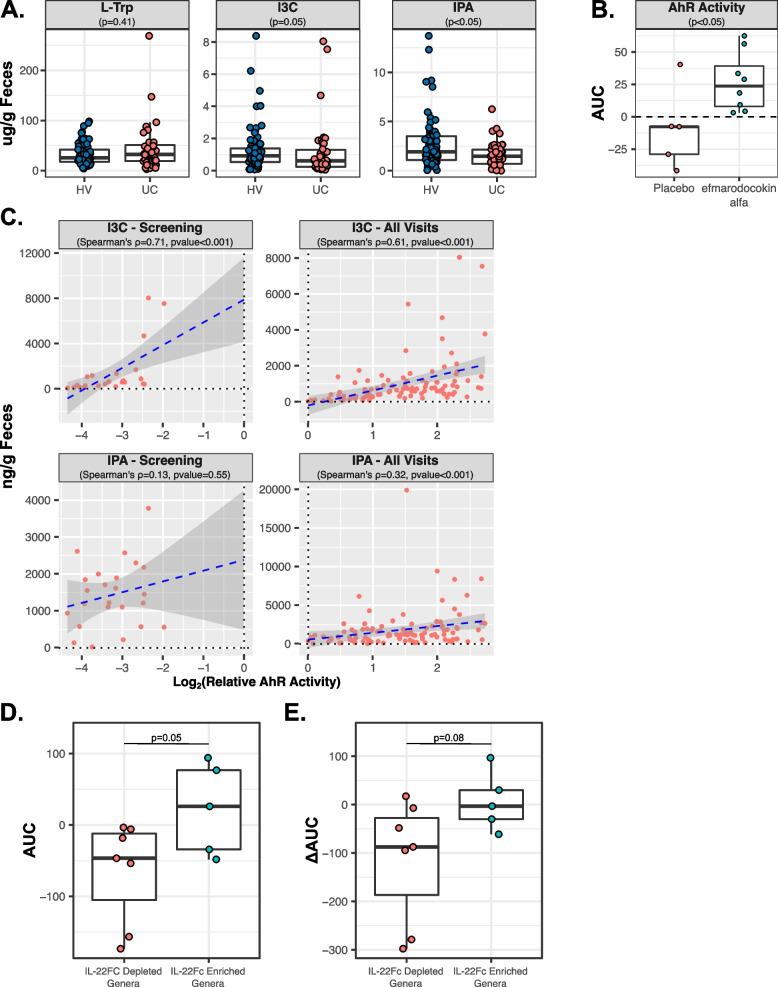
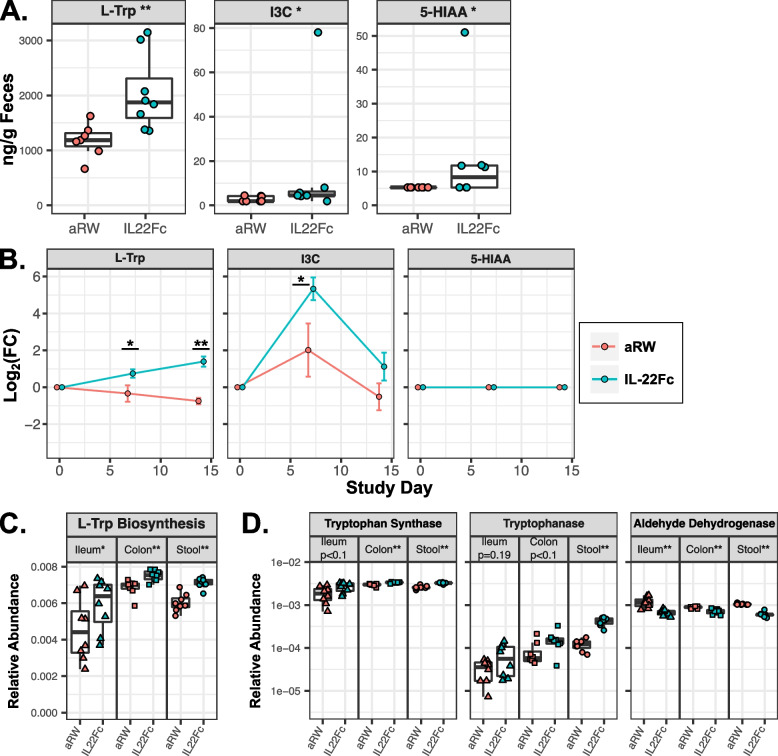
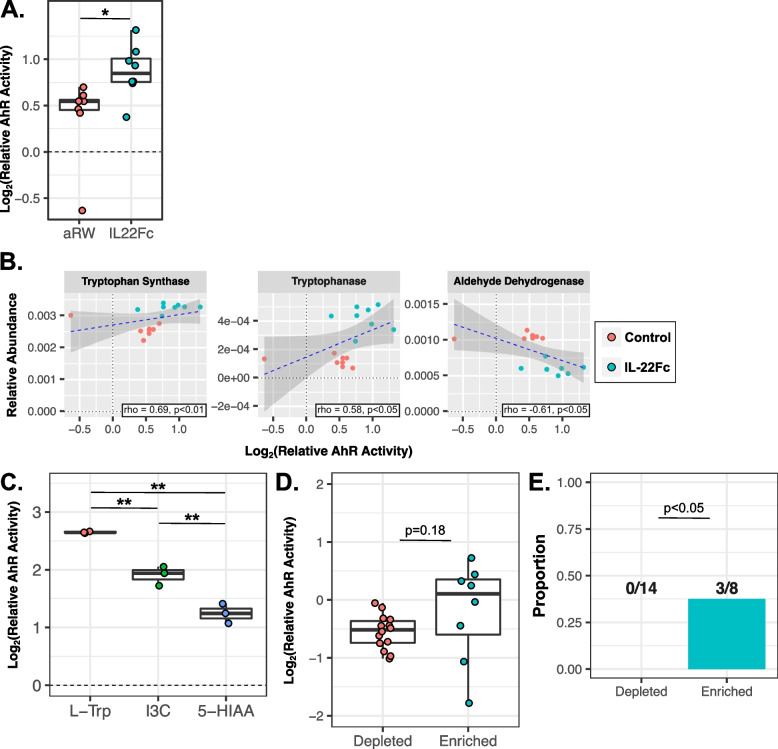
Microbiome alterations were observed across the gastrointestinal tract of IL-22-treated mice, accompanied by an increased microbial functional capacity for L-Trp metabolism. Bacterially derived indole derivatives were increased in stool from IL-22-treated mice and correlated with increased fecal AhR activity. In humans, reduced fecal concentrations of indole derivatives in ulcerative colitis (UC) patients compared to healthy volunteers were accompanied by a trend towards reduced fecal AhR activity. Following exogenous IL-22 treatment in UC patients, both fecal AhR activity and concentrations of indole derivatives increased over time compared to placebo-treated UC patients.
Overall, our findings indicate IL-22 shapes gut microbiome composition and function, which leads to increased AhR signaling and suggests exogenous IL-22 modulation of the microbiome may have functional significance in a disease setting. Video Abstract.
白细胞介素 22(IL-22)由芳香烃受体(AhR)信号诱导,通过影响抗菌蛋白的产生、黏液分泌、上皮细胞的分化和增殖,在胃肠道屏障功能中发挥关键作用,从而具有通过这些直接和间接作用来调节微生物组的潜力。此外,微生物组可以通过合成 L-色氨酸(L-Trp)衍生的 AhR 配体反过来影响 IL-22 的产生,从而产生宿主-微生物组反馈回路的前景。我们通过观察外源性 IL-22 治疗后肠道微生物组组成、功能和 AhR 配体产生的变化,评估了 IL-22 对肠道微生物组及其激活宿主 AhR 信号的能力可能产生的影响。
在接受 IL-22 治疗的小鼠的整个胃肠道中观察到微生物组的改变,同时微生物对 L-Trp 代谢的功能能力增加。来自 IL-22 治疗小鼠粪便中的细菌衍生吲哚衍生物增加,并与粪便 AhR 活性增加相关。在人类中,与健康志愿者相比,溃疡性结肠炎(UC)患者粪便中吲哚衍生物的浓度降低,同时粪便 AhR 活性呈下降趋势。与安慰剂治疗的 UC 患者相比,UC 患者接受外源性 IL-22 治疗后,粪便 AhR 活性和吲哚衍生物的浓度随时间增加。
总的来说,我们的发现表明 IL-22 塑造了肠道微生物组的组成和功能,导致 AhR 信号增强,并表明外源性 IL-22 对微生物组的调节可能在疾病状态下具有功能意义。