Andric Fanny, Al-Fairouzi Ala, Wettergren Yvonne, Szeponik Louis, Bexe-Lindskog Elinor, Cusack James C, Tumusiime Gerald, Quiding-Järbrink Marianne, Ljungman David
Department of Microbiology and Immunology, Institute of Biomedicine, Sahlgrenska Academy, University of Gothenburg, 412 96 Gothenburg, Sweden.
Department of Surgery, Institute of Clinical Sciences, Sahlgrenska Academy, University of Gothenburg, 412 96 Gothenburg, Sweden.
Cancers (Basel). 2023 Feb 24;15(5):1457. doi: 10.3390/cancers15051457.
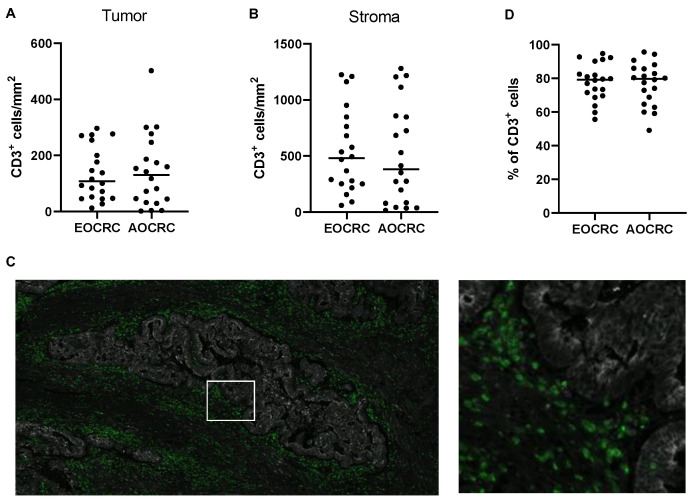
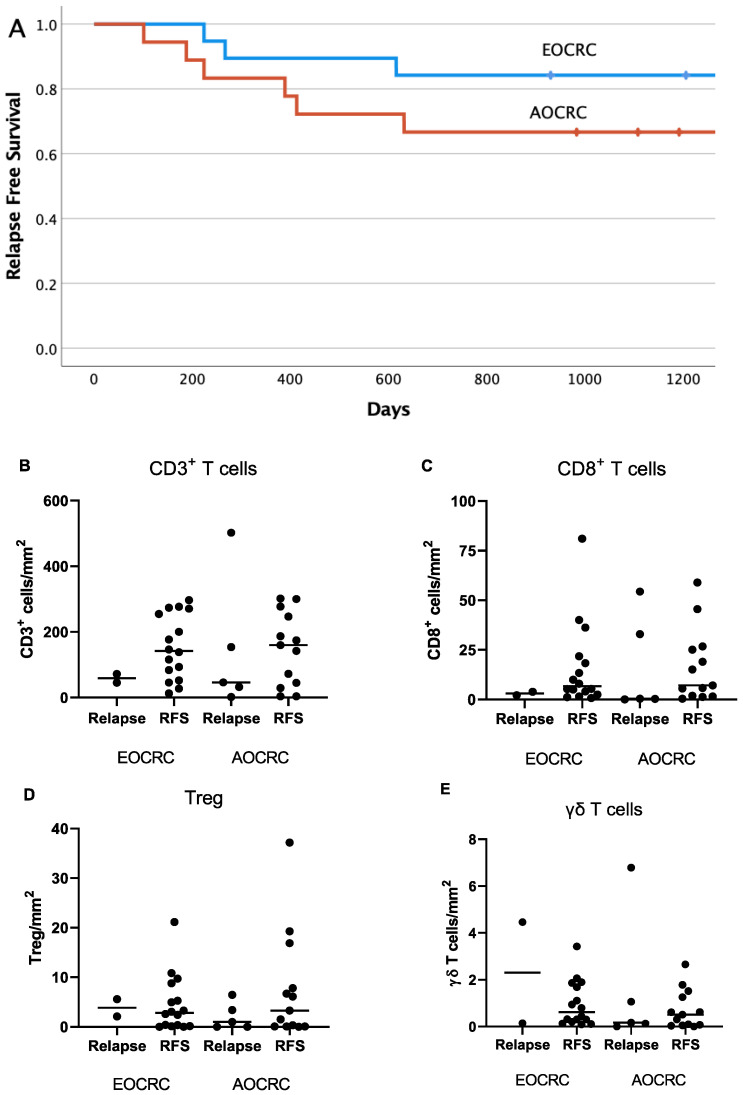
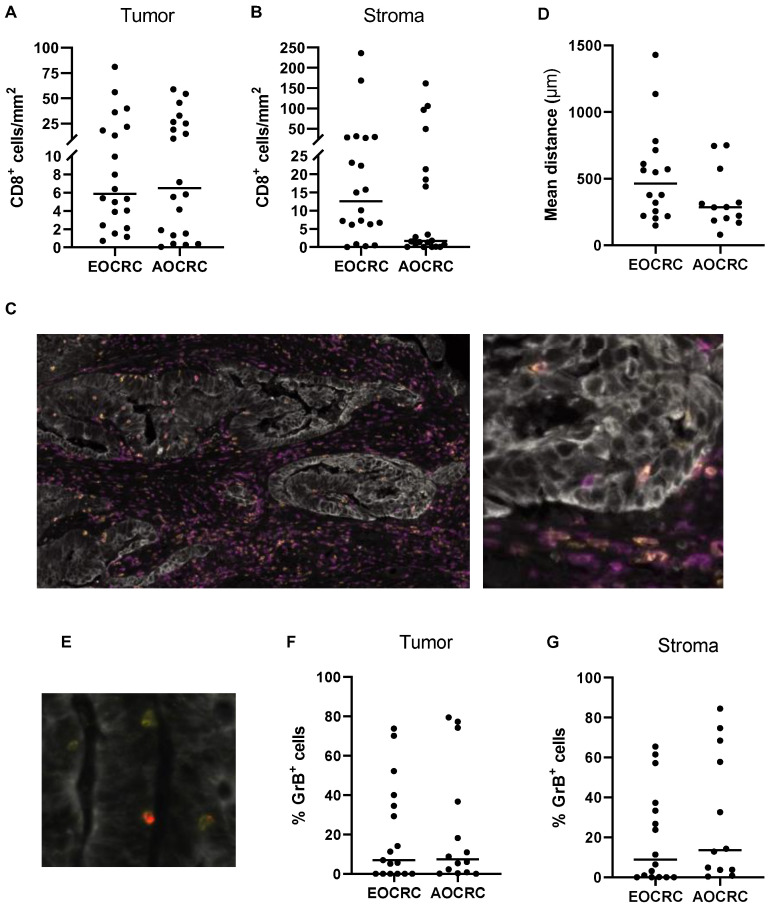
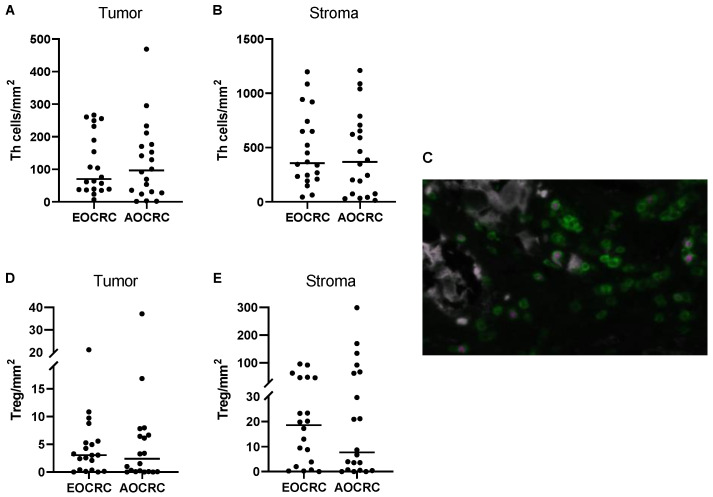
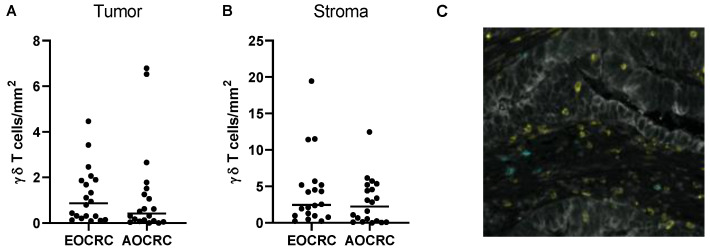
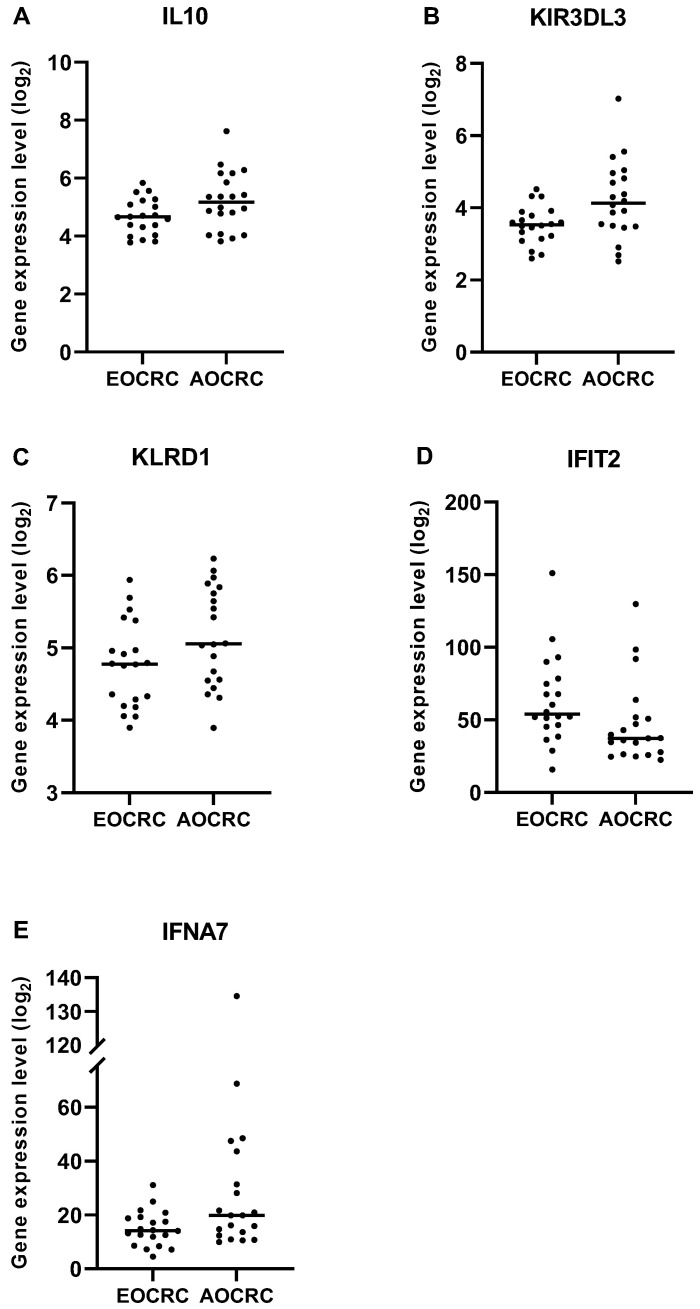
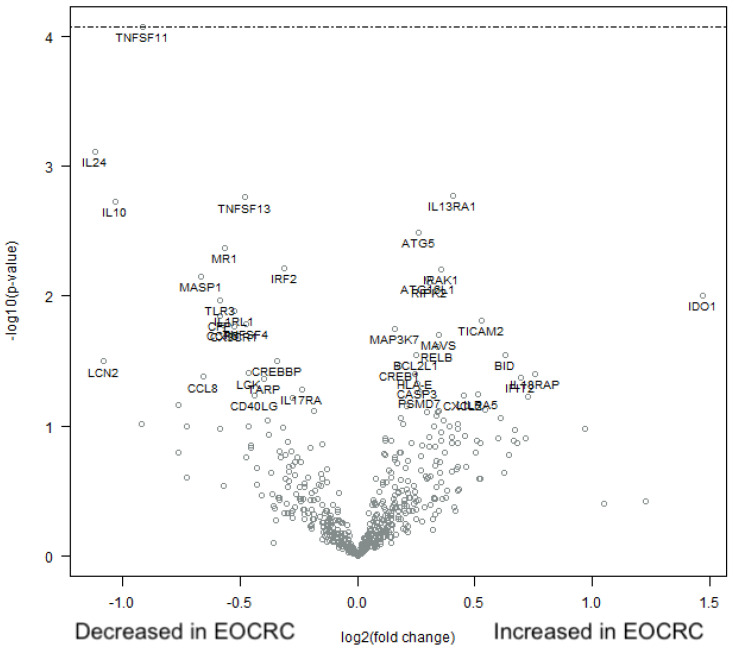
The incidence of left-sided colon and rectal cancer in young people are increasing worldwide, but its causes are poorly understood. It is not clear if the tumor microenvironment is dependent on age of onset, and little is known about the composition of tumor-infiltrating T cells in early-onset colorectal cancer (EOCRC). To address this, we investigated T-cell subsets and performed gene expression immune profiling in sporadic EOCRC tumors and matched average-onset colorectal cancer (AOCRC) tumors. Left-sided colon and rectal tumors from 40 cases were analyzed; 20 EOCRC (<45 years) patients were matched 1:1 to AOCRC (70-75 years) patients by gender, tumor location, and stage. Cases with germline pathogenic variants, inflammatory bowel disease or neoadjuvant-treated tumors were excluded. For T cells in tumors and stroma, a multiplex immunofluorescence assay combined with digital image analysis and machine learning algorithms was used. Immunological mediators in the tumor microenvironment were assessed by NanoString gene expression profiling of mRNA. Immunofluorescence revealed no significant difference between EOCRC and AOCRC with regard to infiltration of total T cells, conventional CD4 and CD8 T cells, regulatory T cells, or γδ T cells. Most T cells were located in the stroma in both EOCRC and AOCRC. Immune profiling by gene expression revealed higher expression in AOCRC of the immunoregulatory cytokine IL-10, the inhibitory NK cell receptors KIR3DL3 and KLRB1 (CD161), and IFN-a7 (IFNA7). In contrast, the interferon-induced gene IFIT2 was more highly expressed in EOCRC. However, in a global analysis of 770 tumor immunity genes, no significant differences could be detected. T-cell infiltration and expression of inflammatory mediators are similar in EOCRC and AOCRC. This may indicate that the immune response to cancer in left colon and rectum is not related to age of onset and that EOCRC is likely not driven by immune response deficiency.
全球范围内,年轻人左侧结肠癌和直肠癌的发病率正在上升,但其病因尚不清楚。目前尚不清楚肿瘤微环境是否依赖于发病年龄,对于早发性结直肠癌(EOCRC)中肿瘤浸润性T细胞的组成也知之甚少。为了解决这个问题,我们在散发性EOCRC肿瘤和匹配的平均发病年龄结直肠癌(AOCRC)肿瘤中研究了T细胞亚群并进行了基因表达免疫分析。分析了40例患者的左侧结肠和直肠肿瘤;20例EOCRC(<45岁)患者按性别、肿瘤位置和分期与AOCRC(70 - 75岁)患者1:1匹配。排除了具有种系致病性变异、炎症性肠病或接受新辅助治疗的肿瘤患者。对于肿瘤和基质中的T细胞,使用了多重免疫荧光测定法,并结合数字图像分析和机器学习算法。通过mRNA的NanoString基因表达谱分析评估肿瘤微环境中的免疫介质。免疫荧光显示,在总T细胞、传统CD4和CD8 T细胞、调节性T细胞或γδ T细胞的浸润方面,EOCRC和AOCRC之间没有显著差异。在EOCRC和AOCRC中,大多数T细胞都位于基质中。基因表达免疫分析显示,免疫调节细胞因子IL-10、抑制性NK细胞受体KIR3DL3和KLRB1(CD161)以及IFN-a7(IFNA7)在AOCRC中的表达较高。相比之下,干扰素诱导基因IFIT2在EOCRC中的表达更高。然而,在对770个肿瘤免疫基因的全面分析中,未检测到显著差异。EOCRC和AOCRC中T细胞浸润和炎症介质的表达相似。这可能表明,左结肠和直肠对癌症的免疫反应与发病年龄无关,并且EOCRC可能不是由免疫反应缺陷驱动的。