School of Health Sciences, Queen Margaret University, Edinburgh EH21 6UU, UK.
NHS Lothian Speech and Language Therapy Department, Edinburgh EH16 4TJ, UK.
Int J Environ Res Public Health. 2023 Mar 1;20(5):4401. doi: 10.3390/ijerph20054401.
Visual supports are an important intervention for autistic individuals and others with neurodevelopmental differences. However, families often report limited access to visual supports and lack of information and confidence in their use at home. This pilot study aimed to evaluate the feasibility and effectiveness of a home-based visual supports intervention.
29 families with children (n = 20 males; mean age 6.59 years [Range 3.64-12.21 years SD 2.57]) receiving support for autism or related needs participated in the study. Parents engaged in an individualised assessment and intervention process through home visits, completing pre- and post-measures. Qualitative methods were used to explore the parents' experiences of the intervention.
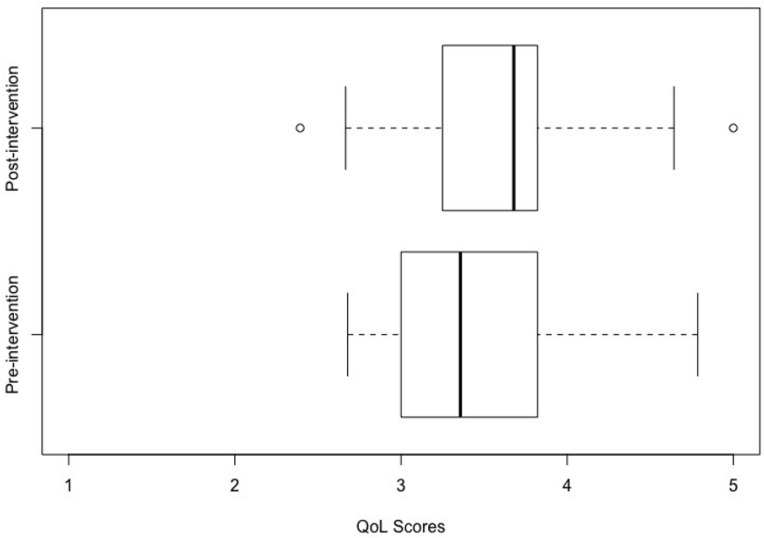
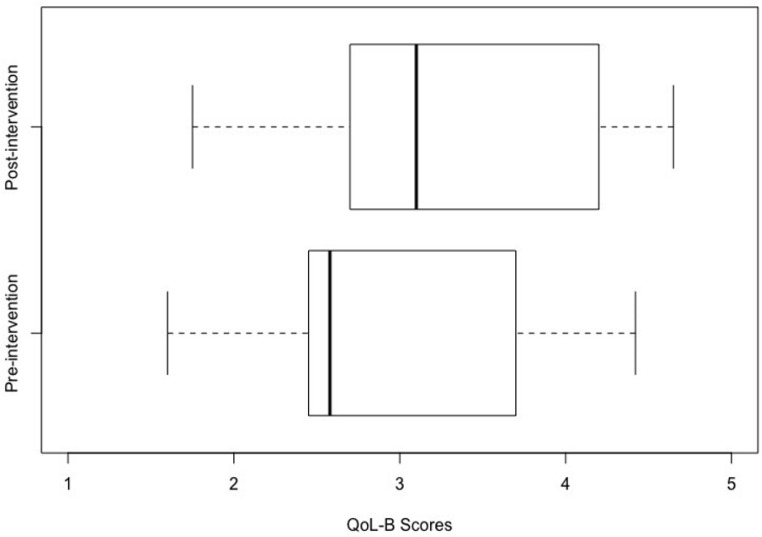
The intervention led to a statistically significant improvement in parent-reported quality of life (t28 = 3.09, = 0.005) and parent-reported perception of autism-specific difficulties (t28 = 2.99, = 0.006). Parents also reported improved access to resources and relevant information and increased confidence in using visual supports at home. The home visit model was strongly supported by the parents.
The results provide initial evidence of the acceptability, practicality, and utility of the home-based visual supports intervention. These findings suggest that outreach into the family home may be a beneficial mechanism for delivering interventions related to visual supports. This study highlights the potential of home-based interventions to improve access to resources and information for families and the importance of visual supports in the home setting.
视觉支持是自闭症患者和其他神经发育差异人士的重要干预措施。然而,家庭通常报告说,获得视觉支持的机会有限,并且在家中使用视觉支持的信息和信心不足。这项初步研究旨在评估基于家庭的视觉支持干预的可行性和有效性。
29 个有孩子的家庭(n=20 名男性;平均年龄 6.59 岁[范围 3.64-12.21 岁,SD=2.57])参与了这项研究,他们为自闭症或相关需求提供支持。父母通过家访参与了个性化的评估和干预过程,完成了前后测。采用定性方法探索了父母对干预的体验。
干预导致父母报告的生活质量(t28=3.09,p=0.005)和父母报告的自闭症特定困难感知(t28=2.99,p=0.006)有统计学上的显著改善。父母还报告说,他们更容易获得资源和相关信息,并且在家中使用视觉支持的信心增强。家访模式得到了父母的大力支持。
研究结果初步证明了基于家庭的视觉支持干预的可接受性、实用性和有效性。这些发现表明,将干预措施扩展到家庭中可能是提供与视觉支持相关的干预措施的有益机制。本研究强调了家庭干预措施在改善家庭获取资源和信息方面的潜力,以及视觉支持在家中的重要性。