Department of Computer Science and Systems Engineering, Universidad de Zaragoza, 50018 Zaragoza, Spain.
Sensors (Basel). 2023 Feb 28;23(5):2662. doi: 10.3390/s23052662.
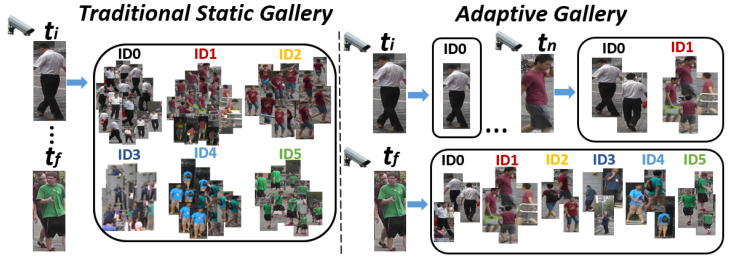
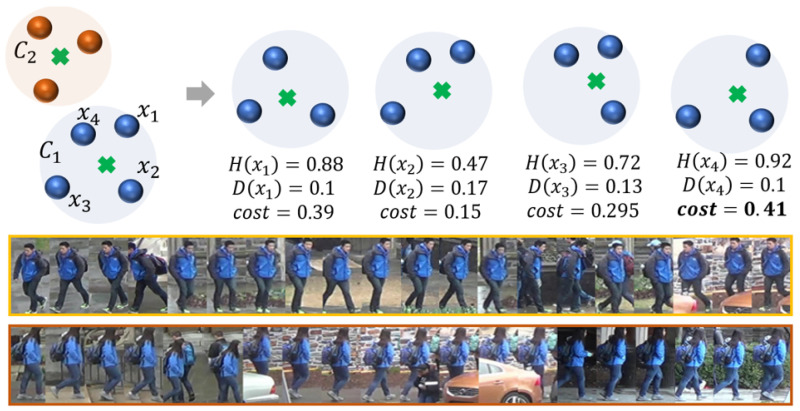
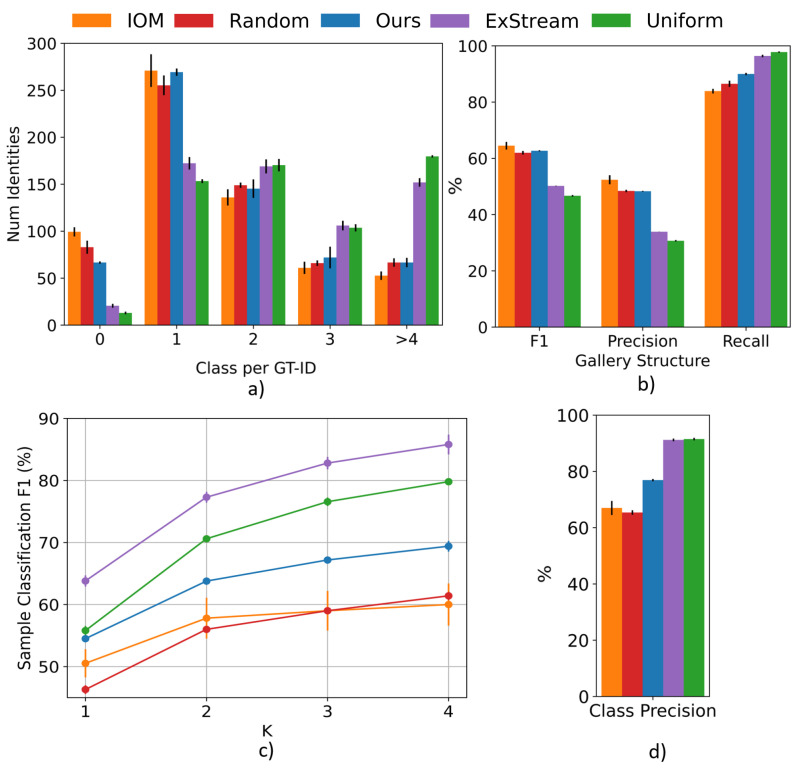
Person re-identification, or simply re-id, is the task of identifying again a person who has been seen in the past by a perception system. Multiple robotic applications, such as tracking or navigate-and-seek, use re-identification systems to perform their tasks. To solve the re-id problem, a common practice consists in using a with relevant information about the people already observed. The construction of this gallery is a costly process, typically performed offline and only once because of the problems associated with labeling and storing new data as they arrive in the system. The resulting galleries from this process are static and do not acquire new knowledge from the scene, which is a limitation of the current re-id systems to work for open-world applications. Different from previous work, we overcome this limitation by presenting an unsupervised approach to automatically identify new people and incrementally build a gallery for open-world re-id that adapts prior knowledge with new information on a continuous basis. Our approach performs a comparison between the current person models and new unlabeled data to dynamically expand the gallery with new identities. We process the incoming information to maintain a small representative model of each person by exploiting concepts of information theory. The uncertainty and diversity of the new samples are analyzed to define which ones should be incorporated into the gallery. Experimental evaluation in challenging benchmarks includes an ablation study of the proposed framework, the assessment of different data selection algorithms that demonstrate the benefits of our approach, and a comparative analysis of the obtained results with other unsupervised and semi-supervised re-id methods.
人员再识别,简称 re-id,是指通过感知系统再次识别过去见过的人员的任务。多个机器人应用程序,如跟踪或导航和搜索,使用再识别系统来执行其任务。为了解决再识别问题,一种常见的做法是使用包含有关已经观察到的人员的相关信息的 。这个画廊的构建是一个昂贵的过程,通常是离线进行的,并且由于与标记和存储新数据相关的问题,只有在一次构建后才能在系统中使用。由于当前再识别系统用于开放世界应用程序的限制,因此由此过程产生的画廊是静态的,不会从场景中获取新知识。与以前的工作不同,我们通过提出一种无监督的方法来克服这一限制,该方法自动识别新人员并逐步构建一个适用于开放世界再识别的画廊,该画廊可以在不断的基础上利用先前的知识和新信息进行自适应。我们的方法在当前人员模型和新的未标记数据之间进行比较,以动态地用新身份扩展画廊。我们通过利用信息论的概念来处理传入的信息,以保持每个人的小代表模型。分析新样本的不确定性和多样性,以确定应将哪些样本纳入画廊。在具有挑战性的基准测试中的实验评估包括对所提出框架的消融研究,对不同数据选择算法的评估,这些算法证明了我们方法的优势,以及与其他无监督和半监督再识别方法的比较分析。