
针刺治疗腕管综合征:随机对照试验的系统评价与Meta分析
Acupuncture for carpal tunnel syndrome: A systematic review and meta-analysis of randomized controlled trials.
作者信息
Dong Qinjian, Li Xiaoyan, Yuan Ping, Chen Guo, Li Jianfeng, Deng Jun, Wu Fan, Yang Yongqiu, Fu Hui, Jin Rongjiang
机构信息
Yilong County Hospital of Traditional Chinese Medicine, Nanchong, Sichuan, China.
Department of Rehabilitation Medicine, West China Second University Hospital, Sichuan University, Chengdu, China.
出版信息
Front Neurosci. 2023 Feb 23;17:1097455. doi: 10.3389/fnins.2023.1097455. eCollection 2023.
BACKGROUND
The evidence for the effectiveness of acupuncture for patients with carpal tunnel syndrome (CTS) is insufficient. Therefore, this systematic review and meta-analysis aimed to evaluate the effectiveness of acupuncture on CTS through a comprehensive literature search.
METHODS
English and Chinese databases were searched from their inceptions until 27 October 2022 to collect randomized controlled trials (RCTs) that investigated the effect of acupuncture on CTS. Two reviewers independently selected studies that met the eligibility criteria, extracted the required data, assessed the risk of bias using version 2 of the Cochrane risk-of-bias tool for randomized trials (ROB 2), and evaluated the quality of reporting for acupuncture interventions using the Revised Standards for Reporting Interventions in Clinical Trials of Acupuncture (STRICTA). The primary outcomes were symptom severity and functional status, while secondary outcomes included pain intensity, responder rate, and electrophysiological parameters. Review Manager software (version 5.4.1) was used for data analysis. The certainty of the evidence was rated with GRADEpro (version 3.6) software.
RESULTS
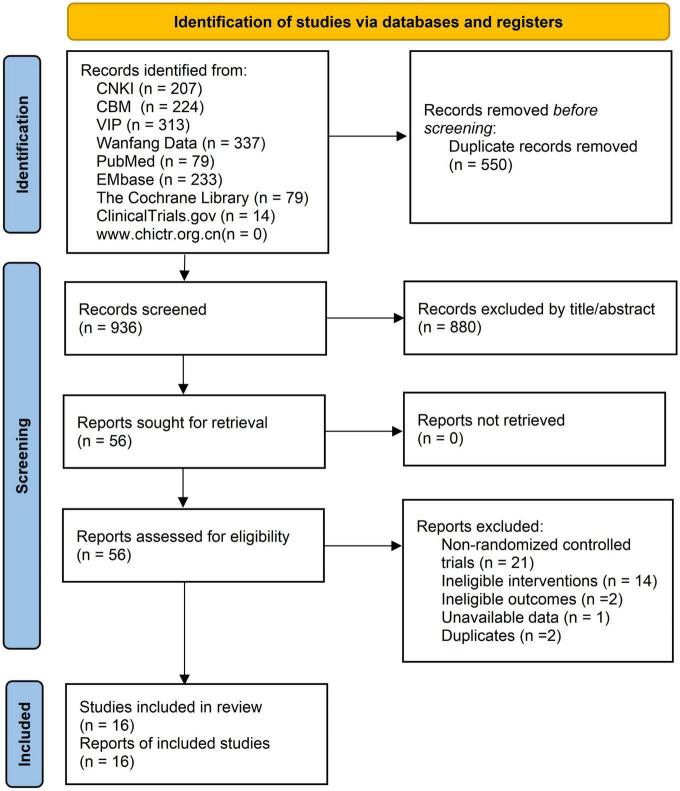
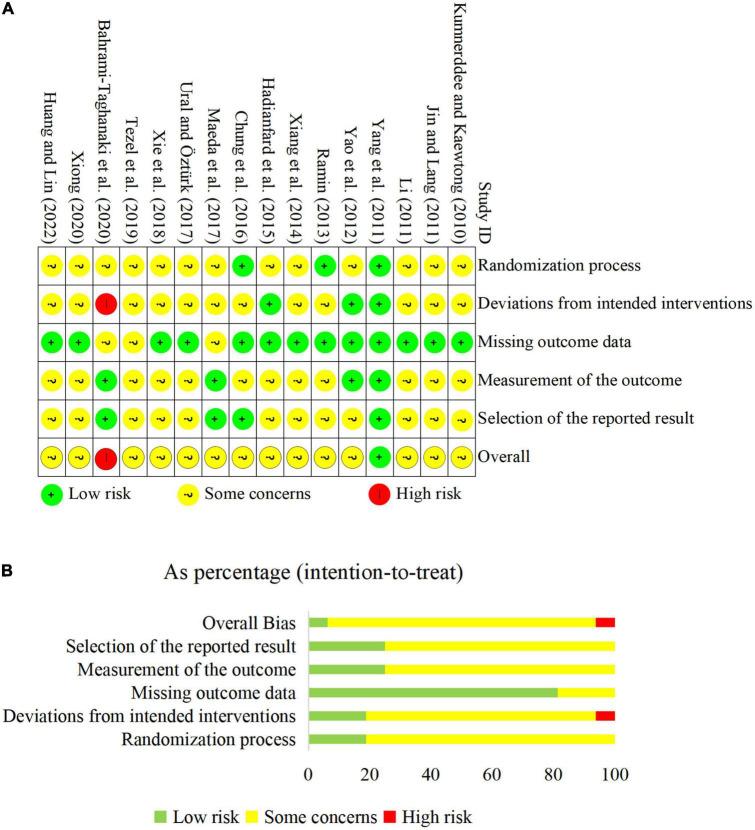
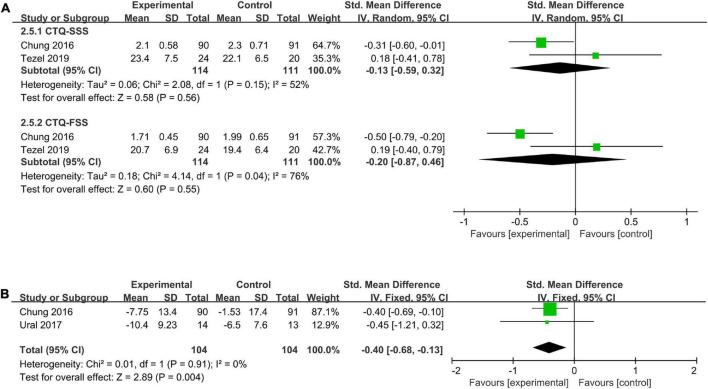
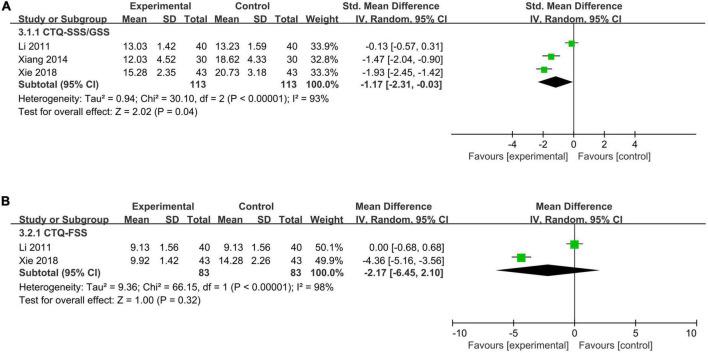
We included 16 RCTs with a total of 1,025 subjects. The overall risk of bias was rated as low in one RCT, some concerns in 14, and high in one. Compared with night splints, acupuncture alone was more effective in relieving pain, but there were no differences in symptom severity and functional status. Acupuncture alone had no advantage over medicine in improving symptom severity and electrophysiological parameters. As an adjunctive treatment, acupuncture might benefit CTS in terms of symptom severity, functional status, pain intensity, and electrophysiological parameters, and it was superior to medicine in improving the above outcomes. Few acupuncture-related adverse events were reported. The above evidence had a low or very low degree of certainty.
CONCLUSION
Acupuncture as an adjunctive treatment may be effective for patients with CTS. Additionally, more rigorous studies with objective outcomes are needed to investigate the effect of acupuncture in contrast with sham acupuncture or other active treatments.
SYSTEMATIC REVIEW REGISTRATION
https://www.crd.york.ac.uk/PROSPERO/display_record.php?RecordID=329925, identifier CRD42022329925.
背景
针刺治疗腕管综合征(CTS)患者有效性的证据不足。因此,本系统评价和荟萃分析旨在通过全面的文献检索评估针刺对CTS的有效性。
方法
检索英文和中文数据库自建库至2022年10月27日的数据,以收集调查针刺对CTS疗效的随机对照试验(RCT)。两名研究者独立筛选符合纳入标准的研究,提取所需数据,使用Cochrane随机试验偏倚风险工具第2版(ROB 2)评估偏倚风险,并使用《针刺临床试验干预报告修订标准》(STRICTA)评估针刺干预报告的质量。主要结局为症状严重程度和功能状态,次要结局包括疼痛强度、缓解率和电生理参数。使用Review Manager软件(版本5.4.1)进行数据分析。采用GRADEpro(版本3.6)软件对证据的确定性进行评级。
结果
我们纳入了16项RCT,共1025名受试者。总体偏倚风险在1项RCT中被评为低,14项存在一些担忧,1项为高。与夜间夹板相比,单纯针刺在缓解疼痛方面更有效,但在症状严重程度和功能状态方面无差异。单纯针刺在改善症状严重程度和电生理参数方面并不优于药物。作为辅助治疗,针刺在症状严重程度、功能状态、疼痛强度和电生理参数方面可能对CTS有益,且在改善上述结局方面优于药物。很少有针刺相关不良事件的报告。上述证据的确定性程度为低或极低。
结论
针刺作为辅助治疗可能对CTS患者有效。此外,需要开展更多具有客观结局的严谨研究,以调查针刺与假针刺或其他积极治疗相比的效果。
系统评价注册
https://www.crd.york.ac.uk/PROSPERO/display_record.php?RecordID=329925,标识符CRD42022329925。


 Zotero 插件