Shapira Nadav, Donovan Kevin, Mei Kai, Geagan Michael, Roshkovan Leonid, Gang Grace J, Abed Mohammed, Linna Nathaniel B, Cranston Coulter P, O'Leary Cathal N, Dhanaliwala Ali H, Kontos Despina, Litt Harold I, Stayman J Webster, Shinohara Russell T, Noël Peter B
Department of Radiology, Perelman School of Medicine of the University of Pennsylvania, 3400 Civic Center, Philadelphia, PA 19104, USA.
Penn Statistics in Imaging and Visualization Center, Department of Biostatistics, Epidemiology and Informatics, University of Pennsylvania, 423 Guardian Drive, Philadelphia, PA 19104, USA.
PNAS Nexus. 2023 Feb 1;2(3):pgad026. doi: 10.1093/pnasnexus/pgad026. eCollection 2023 Mar.
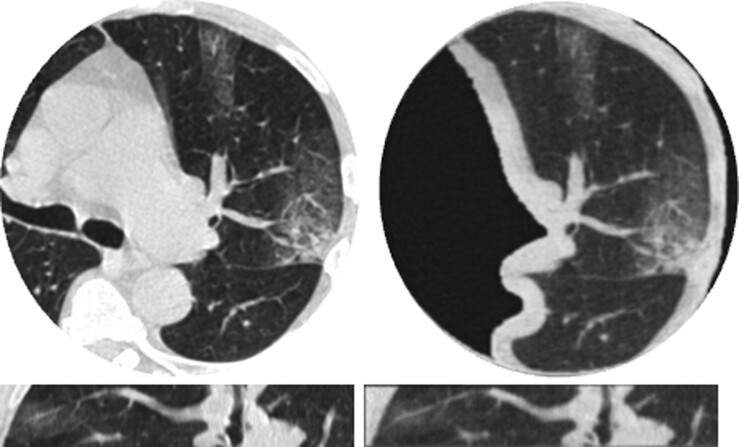
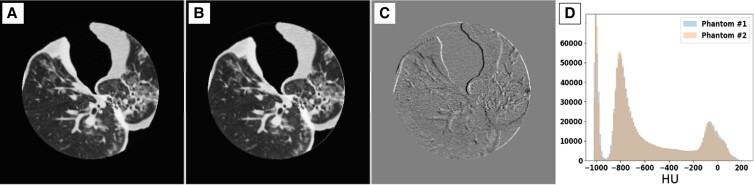
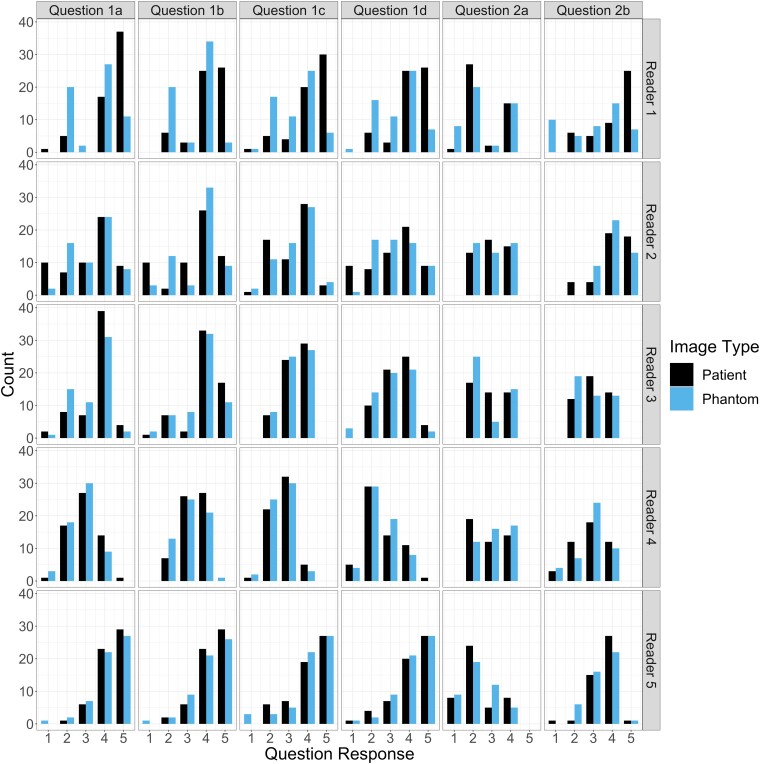
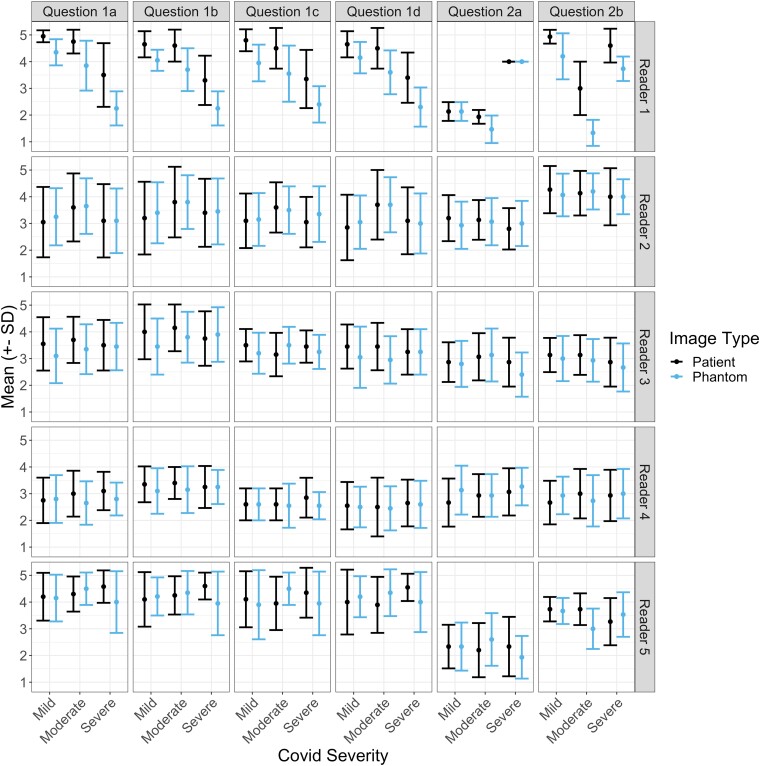
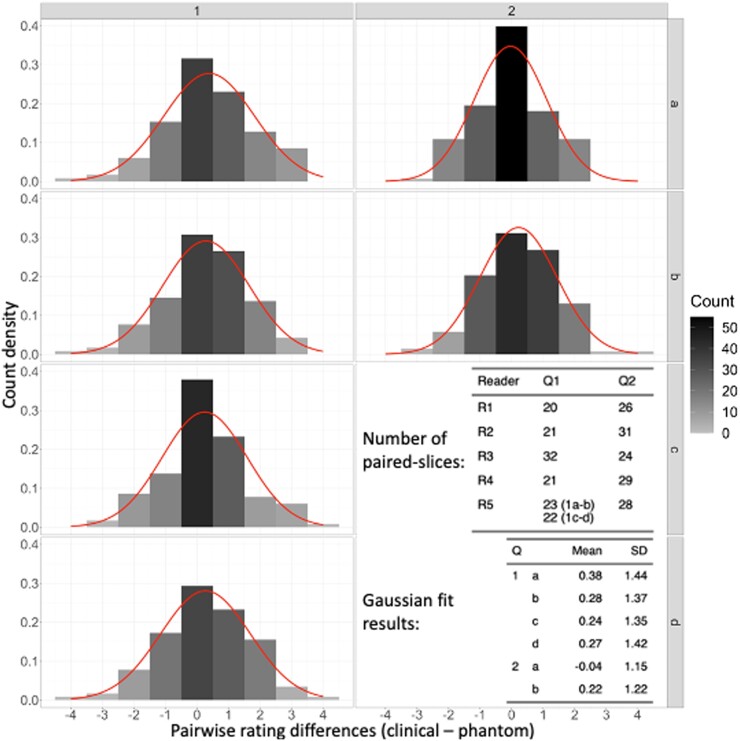
In modern clinical decision-support algorithms, heterogeneity in image characteristics due to variations in imaging systems and protocols hinders the development of reproducible quantitative measures including for feature extraction pipelines. With the help of a reader study, we investigate the ability to provide consistent ground-truth targets by using patient-specific 3D-printed lung phantoms. PixelPrint was developed for 3D-printing lifelike computed tomography (CT) lung phantoms by directly translating clinical images into printer instructions that control density on a voxel-by-voxel basis. Data sets of three COVID-19 patients served as input for 3D-printing lung phantoms. Five radiologists rated patient and phantom images for imaging characteristics and diagnostic confidence in a blinded reader study. Effect sizes of evaluating phantom as opposed to patient images were assessed using linear mixed models. Finally, PixelPrint's production reproducibility was evaluated. Images of patients and phantoms had little variation in the estimated mean (0.03-0.29, using a 1-5 scale). When comparing phantom images to patient images, effect size analysis revealed that the difference was within one-third of the inter- and intrareader variabilities. High correspondence between the four phantoms created using the same patient images was demonstrated by PixelPrint's production repeatability tests, with greater similarity scores between high-dose acquisitions of the phantoms than between clinical-dose acquisitions of a single phantom. We demonstrated PixelPrint's ability to produce lifelike CT lung phantoms reliably. These phantoms have the potential to provide ground-truth targets for validating the generalizability of inference-based decision-support algorithms between different health centers and imaging protocols and for optimizing examination protocols with realistic patient-based phantoms. CT lung phantoms, reader study.
在现代临床决策支持算法中,由于成像系统和协议的差异导致图像特征的异质性阻碍了可重复定量测量方法的发展,包括特征提取管道。在一项阅片者研究的帮助下,我们研究了使用患者特异性3D打印肺模型提供一致的真实目标的能力。PixelPrint是通过将临床图像直接转换为逐体素控制密度的打印机指令来开发用于3D打印逼真的计算机断层扫描(CT)肺模型的。三名新冠肺炎患者的数据集用作3D打印肺模型的输入。在一项双盲阅片者研究中,五名放射科医生对患者和模型图像的成像特征和诊断置信度进行了评分。使用线性混合模型评估与患者图像相比评估模型的效应大小。最后,评估了PixelPrint的生产再现性。患者和模型的图像在估计平均值上几乎没有差异(使用1-5分制,范围为0.03-0.29)。当将模型图像与患者图像进行比较时,效应大小分析表明差异在阅片者间和阅片者内变异性的三分之一以内。PixelPrint的生产重复性测试表明,使用相同患者图像创建的四个模型之间具有高度一致性,模型高剂量采集之间的相似性得分高于单个模型临床剂量采集之间的相似性得分。我们证明了PixelPrint可靠地生产逼真的CT肺模型的能力。这些模型有可能为验证基于推理的决策支持算法在不同健康中心和成像协议之间的通用性提供真实目标,并有可能使用基于真实患者的模型来优化检查协议。CT肺模型,阅片者研究。